The Essential Parents Adopting Guide for 2025
In 2025, more families than ever are exploring adoption, with parents adopting at record rates as the process continues to evolve. The journey can feel overwhelming, but having a clear, up-to-date guide makes all the difference.
This essential roadmap empowers you to navigate every step—legal, financial, emotional, and practical—with confidence. Discover expert insights, actionable strategies, and the latest trends, so you can move forward as informed and prepared parents adopting in today’s world.
Understanding the Adoption Landscape in 2025
The adoption landscape in 2025 is more dynamic and accessible than ever before. For parents adopting, understanding the options, legal changes, and current trends is essential. This section will guide you through the latest developments, dispel common myths, and highlight the challenges and motivations shaping adoption today.

Types of Adoption Available
In 2025, parents adopting can choose from several paths: domestic, international, foster care, and kinship adoption. Each option has distinct eligibility rules, timelines, and expected outcomes.
- Domestic adoption typically involves infants within the U.S., with 63% of all adoptions in 2023 falling into this category.
- International adoption allows families to adopt from abroad, though numbers have declined.
- Foster care adoption offers a route to provide permanent homes for children in state care.
- Kinship adoption involves relatives stepping in as legal parents.
Recent years have seen a significant rise in domestic infant adoptions, reflecting shifting preferences among parents adopting. Choosing the right type depends on your goals, resources, and family situation.
Legal Framework and Recent Changes
The legal landscape for parents adopting in 2025 includes both federal and state laws. Major updates have shaped how adoptions proceed.
The Interstate Compact on the Placement of Children (ICPC) has undergone reforms to streamline interstate placements. The Adoption and Safe Families Act (ASFA) received amendments, tightening timelines and prioritizing child safety.
A key change is the introduction of more rigorous background checks for prospective parents adopting, ensuring child welfare remains paramount. Staying informed about these evolving requirements is crucial for a smooth process.
Adoption Statistics and Demographics
Adoption in the U.S. remains robust, with around 120,000 adoptions in 2024. The landscape is changing, with growing diversity among adoptive families. Age, race, and family structure have all shifted, reflecting broader social trends.
- 37% of adoptions in 2023 involved single-parent households.
- More families from varied backgrounds are choosing to adopt.
- The average age of adopted children is becoming younger.
For a deeper dive into the numbers and new trends, see the Adoption Statistics Infographic. Understanding these statistics helps parents adopting make informed decisions and set realistic expectations.
Motivations for Adoption
Why are more parents adopting in 2025? The motivations are as diverse as the families themselves.
Infertility remains a leading factor, but many are also motivated by a desire to expand their families or help children in need. Altruism, step-parent, and kinship adoptions are increasingly common.
Societal attitudes have shifted, making adoption a celebrated way to build a family. Notably, 55% of adoptive parents cite both infertility and a wish to support vulnerable children as their reasons for adopting.
Common Myths and Misconceptions
Despite growing awareness, myths about adoption persist. Many believe adoption costs are prohibitive or that wait times stretch for many years. In reality, the average wait for domestic infant adoption is 12 to 24 months, much shorter than most assume.
Another misconception is that birth parents remain heavily involved post-adoption. In truth, open and closed adoptions offer a spectrum of contact, allowing parents adopting to choose what fits best.
Understanding the facts empowers families to navigate the process with confidence and avoid unnecessary worry.
Challenges in the Current Adoption Process
While adoption in 2025 is more accessible, challenges remain. Parents adopting often face bureaucratic hurdles, emotional ups and downs, and significant financial commitments.
On average, adoption costs range from $20,000 to $50,000, depending on the type and agency involved. Navigating paperwork, background checks, and legal requirements can feel overwhelming. Being prepared and informed helps families overcome these barriers and move forward with clarity.
Step 1: Preparing for Adoption—Self-Assessment and Education
Embarking on the adoption journey is both exciting and life-changing. For parents adopting in 2025, preparation is key to a positive experience. This step focuses on honest self-assessment, gaining essential knowledge, and building a strong foundation for your adoption path.

Assessing Readiness and Motivation
Before starting the process, parents adopting need to reflect on their motivations and level of preparedness. Honest self-assessment helps ensure you are emotionally, financially, and relationally ready for this commitment.
Consider your reasons: Are you motivated by infertility, a desire to grow your family, or a wish to provide a loving home? Many adoption professionals recommend counseling or workshops to help parents adopting explore their expectations and address any concerns. This self-reflection phase builds resilience for the journey ahead.
Educating Yourself on Adoption
Parents adopting should actively seek out reliable information to guide their decisions. In 2025, a wealth of resources is available, from books and podcasts to interactive webinars and support groups. Participating in events like National Adoption Month webinars helps you stay current on best practices.
For a comprehensive support network and up-to-date information, explore Adoption resources and support. Taking time to learn empowers parents adopting to confidently navigate each stage of the process and anticipate challenges.
Discussing Adoption with Family and Friends
Open communication is vital for parents adopting to build a strong support network. Start by sharing your plans with close family and friends, addressing any concerns or misconceptions they may have.
Host a family meeting or informational session to explain your reasons and the realities of adoption. This approach helps parents adopting lay the groundwork for a nurturing environment, ensuring your child will be welcomed with understanding and love.
Understanding the Needs of Adopted Children
Adopted children often have unique emotional and developmental needs. Parents adopting must become familiar with trauma-informed parenting and the lifelong impact adoption can have on identity and attachment.
Research studies show that understanding these factors improves outcomes for children. Parents adopting should seek out training, read case studies, and connect with experts to prepare for the challenges and joys of supporting an adopted child's growth.
Budgeting and Financial Planning
Financial preparation is a cornerstone for parents adopting. Adoption costs can vary widely, from agency fees to travel and legal expenses. Begin by estimating the costs for your chosen adoption type.
Investigate grants, low-interest loans, and employer assistance programs. In 2025, the Federal Adoption Tax Credit offers up to $15,950, providing meaningful relief for parents adopting. Careful planning ensures you can meet your child's needs without unexpected financial stress.
Step 2: Choosing the Right Adoption Path
Choosing the right path is one of the most important decisions for parents adopting. With so many routes and evolving trends in 2025, understanding your options is essential to a successful adoption journey.
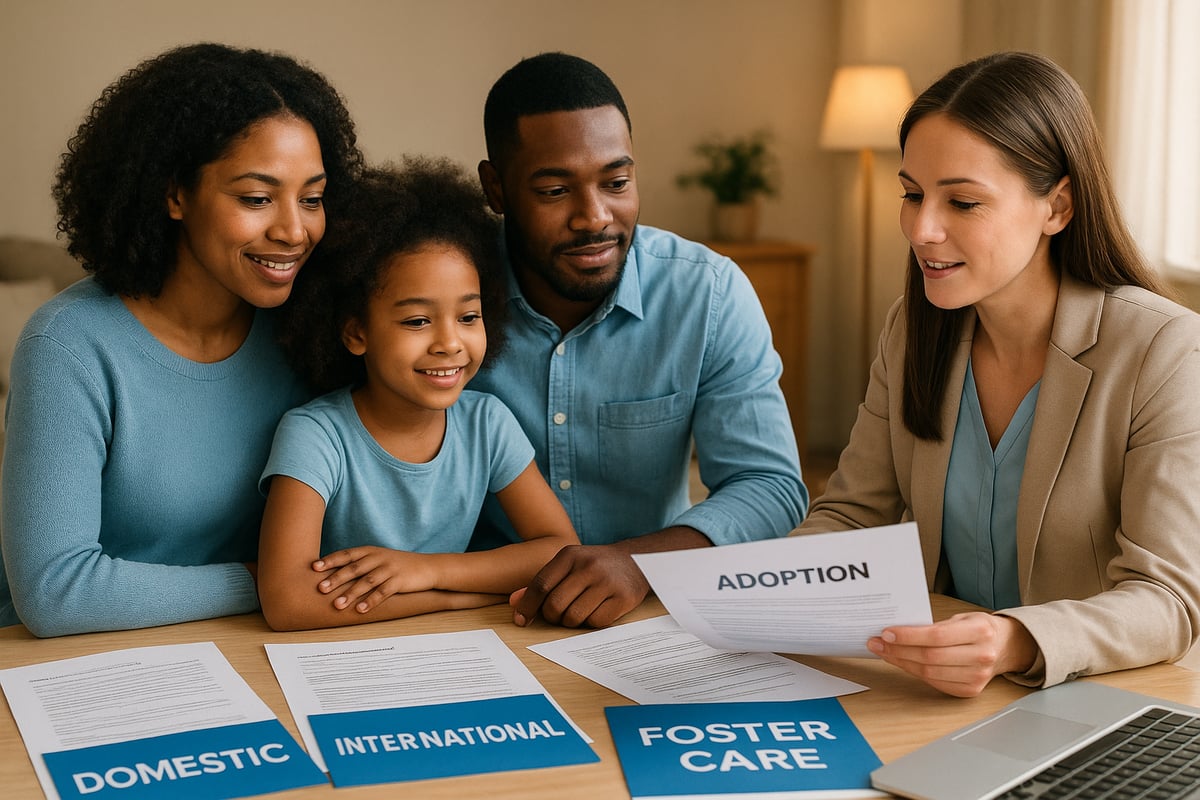
Domestic vs. International Adoption
For parents adopting in 2025, the choice between domestic and international adoption has never been more significant. Domestic adoption involves adopting a child within your home country, often resulting in shorter travel times and more direct contact with birth families. International adoption, on the other hand, connects families with children from other nations, but recent years have seen a dramatic decline in these placements.
| Adoption Type | Pros | Cons | 2025 Trends |
|---|---|---|---|
| Domestic | Familiar laws, shorter travel, open adoptions possible | Wait times, varying state laws | 63% of adoptions |
| International | Cultural diversity, global impact | Higher costs, longer wait, stricter requirements | Down 20% since 2020 |
According to Adoption by the Numbers, domestic adoptions still make up the majority for parents adopting, with international options continuing to decrease.
Working with Agencies vs. Independent Adoption
Parents adopting must choose whether to work with an agency or pursue an independent adoption. Agencies provide structured support, legal guidance, and screening, making the process smoother and safer. Independent adoption can offer more flexibility, but may carry greater risks and less oversight.
- Agency adoption: 70% of adoptions in 2024 were agency-facilitated, reflecting trust in professional guidance.
- Independent adoption: Can be faster and less expensive, but requires more personal responsibility.
For parents adopting, agencies often provide post-adoption support and access to resources that independent routes may lack.
Foster Care Adoption
Foster care adoption is an accessible path for many parents adopting. It involves adopting children in the foster system whose parental rights have been terminated. The process is typically less expensive, and many states offer subsidies and support.
- Over 50,000 children were adopted from foster care in 2023.
- Subsidies may include monthly financial assistance and health care for the child.
- Foster care adoption can be a rewarding choice for parents adopting who want to provide a stable home for a child in need.
Step-Parent and Kinship Adoption
Step-parent and kinship adoption streamline the process for parents adopting a relative or stepchild. Legal requirements are often less intensive, especially when compared to unrelated adoptions.
- Many states have simplified paperwork and background checks for these adoptions.
- These arrangements help maintain family bonds and continuity for the child.
- For parents adopting within their own family, the focus is often on preserving existing relationships and providing legal security.
Key Questions to Ask Adoption Professionals
Before moving forward, parents adopting should ask critical questions to ensure they are making informed decisions:
- What are your agency’s credentials and placement history?
- What support do you provide after placement?
- How are birth parents involved in the process?
- What are the estimated costs and timelines?
- Can you share references from other parents adopting through your agency?
A thorough interview helps parents adopting avoid surprises and build trust with their chosen professionals.
Evaluating Fit for Your Family
Finally, parents adopting need to reflect on which path best fits their family’s values, lifestyle, and long-term goals. Consider your family structure, openness to different backgrounds, and willingness to engage with birth families or international cultures.
By exploring case studies and honest self-assessment, parents adopting can confidently choose the adoption journey that aligns with their dreams.
Step 3: Navigating the Application and Home Study Process
Beginning the journey as parents adopting, the application and home study stage is where preparation meets paperwork and personal reflection. This step is essential for ensuring a safe, welcoming environment for your future child.

Completing the Application
The application is the official starting point for parents adopting. You’ll need to gather essential documents, such as birth certificates, marriage licenses, and financial statements. Background checks and references are also required to ensure a safe environment.
Digital platforms have streamlined this process in 2025. Many agencies now use secure online portals, making it easier for parents adopting to upload documents and track progress. Begin early, and double-check requirements to avoid delays.
Helpful tip: Create a checklist for all necessary paperwork. Staying organized will set a positive tone for the rest of your adoption journey.
The Home Study Explained
For parents adopting, the home study is a thorough assessment led by a licensed social worker. It includes interviews, home visits, and reference checks. The process is designed to ensure you can provide a stable, loving home.
Expect the home study to last between three and six months. During this time, the social worker will ask about your family dynamics, parenting philosophy, and motivations for adopting. Common questions focus on your support network and readiness for challenges.
Being open and honest helps the home study proceed smoothly. Remember, this is a chance to learn and grow as prospective parents adopting.
Preparing Your Home and Family
A safe, welcoming environment is vital for parents adopting. Begin by childproofing your home, securing hazardous items, and ensuring there’s adequate space. Agencies often provide a detailed home safety checklist.
Involve your family in the preparation process. Hold discussions about the changes ahead and address any concerns. This helps everyone feel included and ready for the arrival of a new child.
Preparation isn’t only physical—it’s emotional, too. Encourage open conversations and set realistic expectations for your family as parents adopting.
Working with Social Workers and Case Managers
Building a positive relationship with your social worker is key for parents adopting. Social workers and case managers guide you through placement decisions, offer advice, and help you overcome obstacles.
Clear communication is crucial. Be responsive to requests, ask questions, and express your needs. Social workers appreciate proactive parents adopting who stay engaged and informed.
Remember, these professionals are your allies. Their expertise supports your success and ensures the best outcome for your future family.
More articles
- What Happens at the Hospital When You Place a Baby for Adoption
- Adoption After the Baby Is Born: Rights, Risks, Recovery
- Open vs. Semi-Open Adoption: What Actually Changes
- Financial Help for Pregnant Women Considering Adoption in Indiana
- Choosing an Adoptive Family in Indiana: What to Weigh
- Placing a Baby Up for Adoption in Indiana