What Happens at the Hospital When You Place a Baby for Adoption
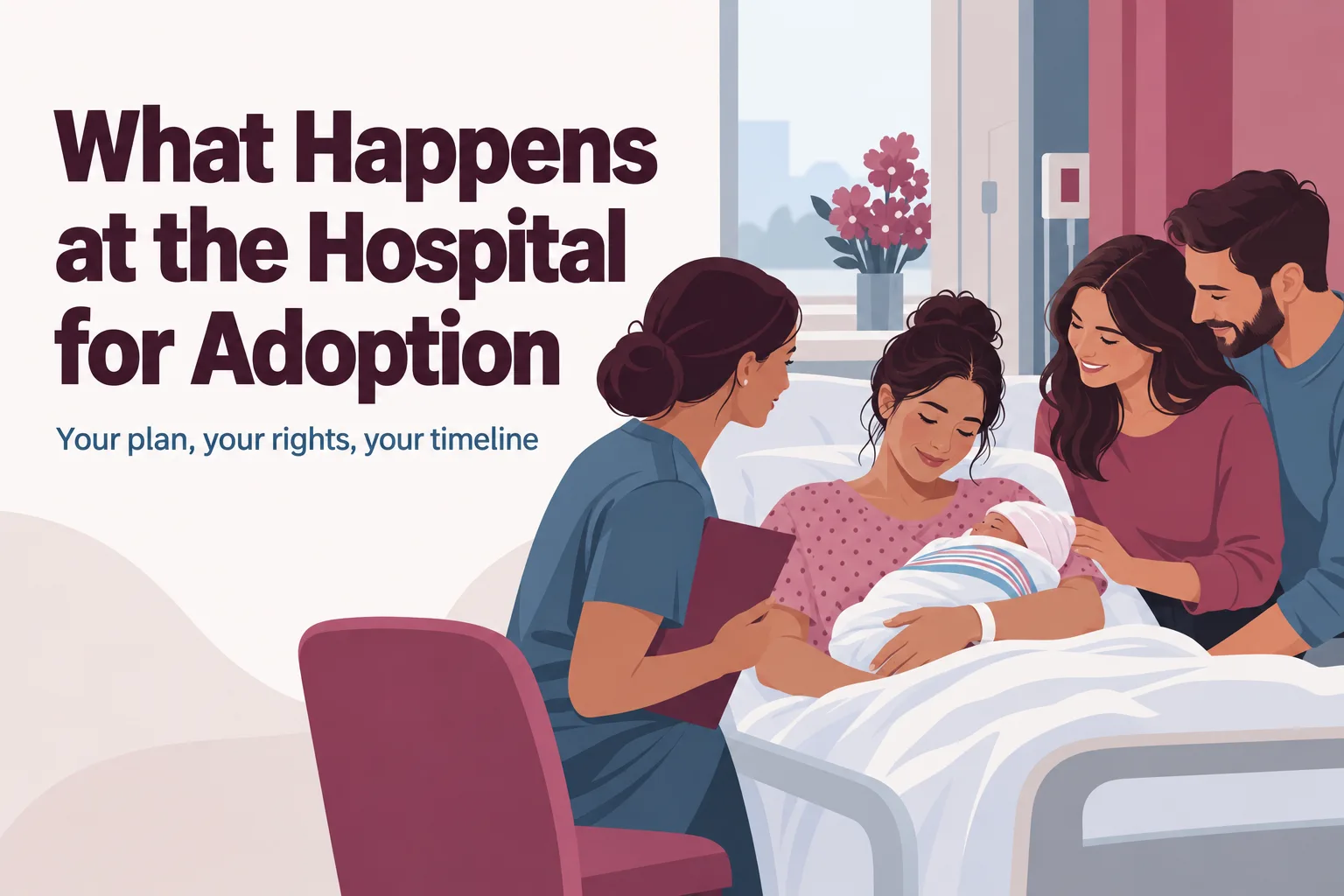
A hospital stay for an adoption plan looks like any other hospital stay, with two differences. You decide in advance who holds the baby and who doesn't. And nothing about the adoption becomes legally final while you're still in the building. Delivery happens the way it would for any birth. A birth plan filed ahead of time tells the nursing staff your preferences. The paperwork that makes an adoption permanent waits for a window set by state law, not hospital policy.
Here's the sequence, broken into what you control and what the law controls.
You decide who's in the room and how much time you spend with your baby
Before labor starts, you and your counselor put together a hospital plan. It covers who's present for delivery — the adoptive family in the room, in the waiting room, or not there at all — and whether you want to hold the baby, feed the baby, room-in overnight, or let the nursery handle care. Nursing staff follow whatever you decide. You can change your mind mid-stay too — more time, less time, different visitors — and staff will adjust. Nothing here locks in once it's written down. Writing it early just means nobody's guessing in the moment. It doesn't mean you're bound to a script.
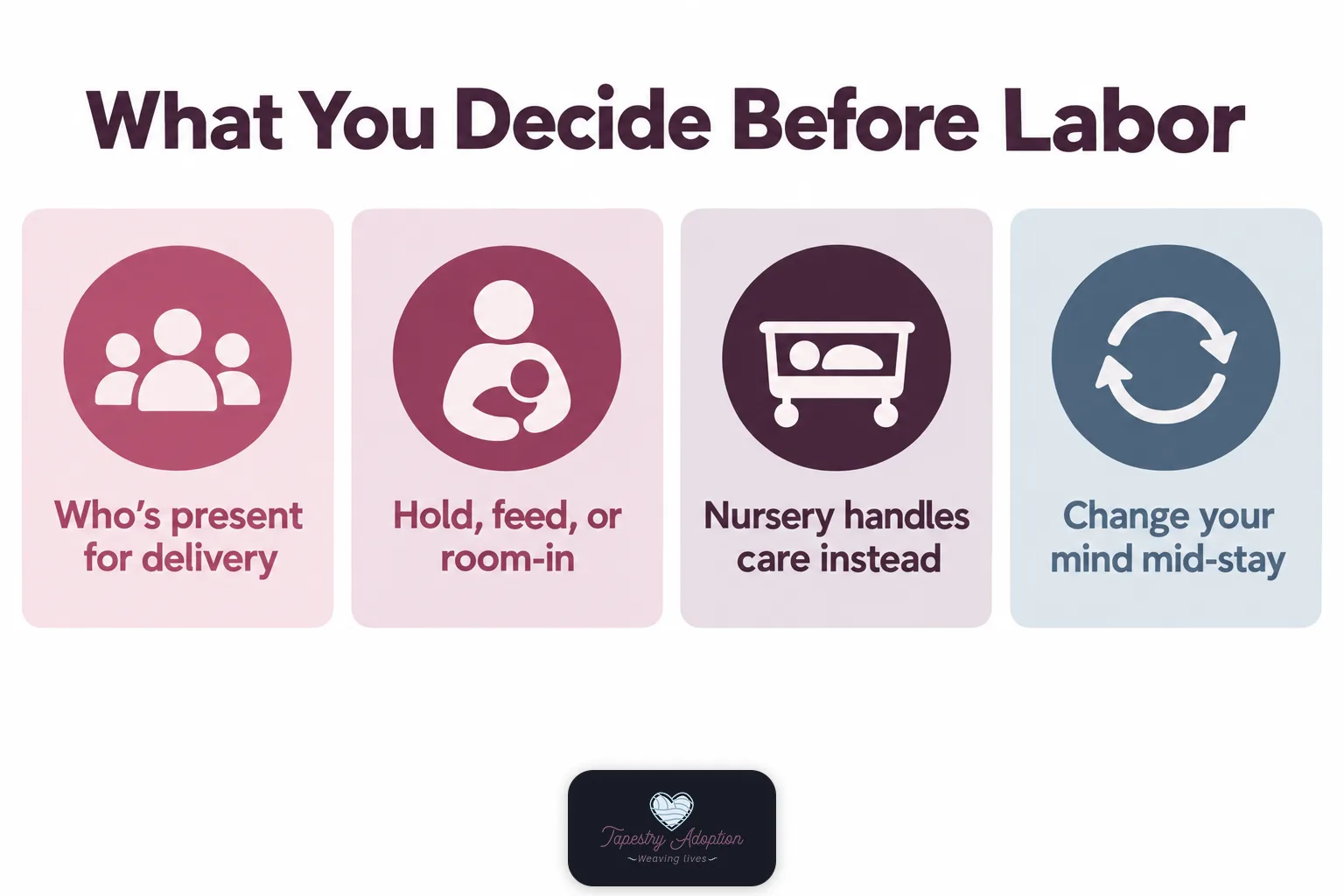
If you haven't settled these details, work through them with a counselor before your due date, not during labor. It makes the hospital stay calmer. Making an adoption plan ahead of time is mostly decision-making like this, not paperwork.
What happens if you decide to place your baby for adoption at the hospital?
In practice: a hospital social worker or your adoption counselor gets notified when you arrive, so floor staff already know your plan and don't ask questions you've answered twice already. You deliver and recover like any other patient. Your medical care isn't affected by the adoption plan — nurses and doctors treat you and the baby based on medical need, period. When discharge comes, you leave on your own timeline, whenever you're medically ready, separate from whatever happens with the baby.
The baby's discharge is a separate question, governed by your state's consent laws and the plan you've made. Often the baby goes home with the adoptive family under a temporary custody arrangement while your legal consent period runs. You're not required to sign anything before you leave the hospital — a reputable agency won't ask you to. And if you change your mind before consent is legally final, that's your right. It doesn't make you a difficult patient.
Indiana law sets the waiting period before consent is final — not the hospital, not the agency
Here's where people most often get it wrong: nobody can make you sign consent in the delivery room. No hospital staff member or adoption professional sets the clock on how long you have — state law does. The exact number of hours or days varies and can change, so ask your attorney or counselor for the current figure instead of trusting a number from any blog post, including this one. What matters is the mechanism. Consent can't be signed before birth, and there's a built-in period afterward before it becomes irrevocable. That gap exists so nobody signs anything from a hospital bed, exhausted, while second-guessing the decision an hour later. Use the time. It's yours by design.
If you're the hopeful adoptive family: how long does it take to adopt a baby from the hospital?
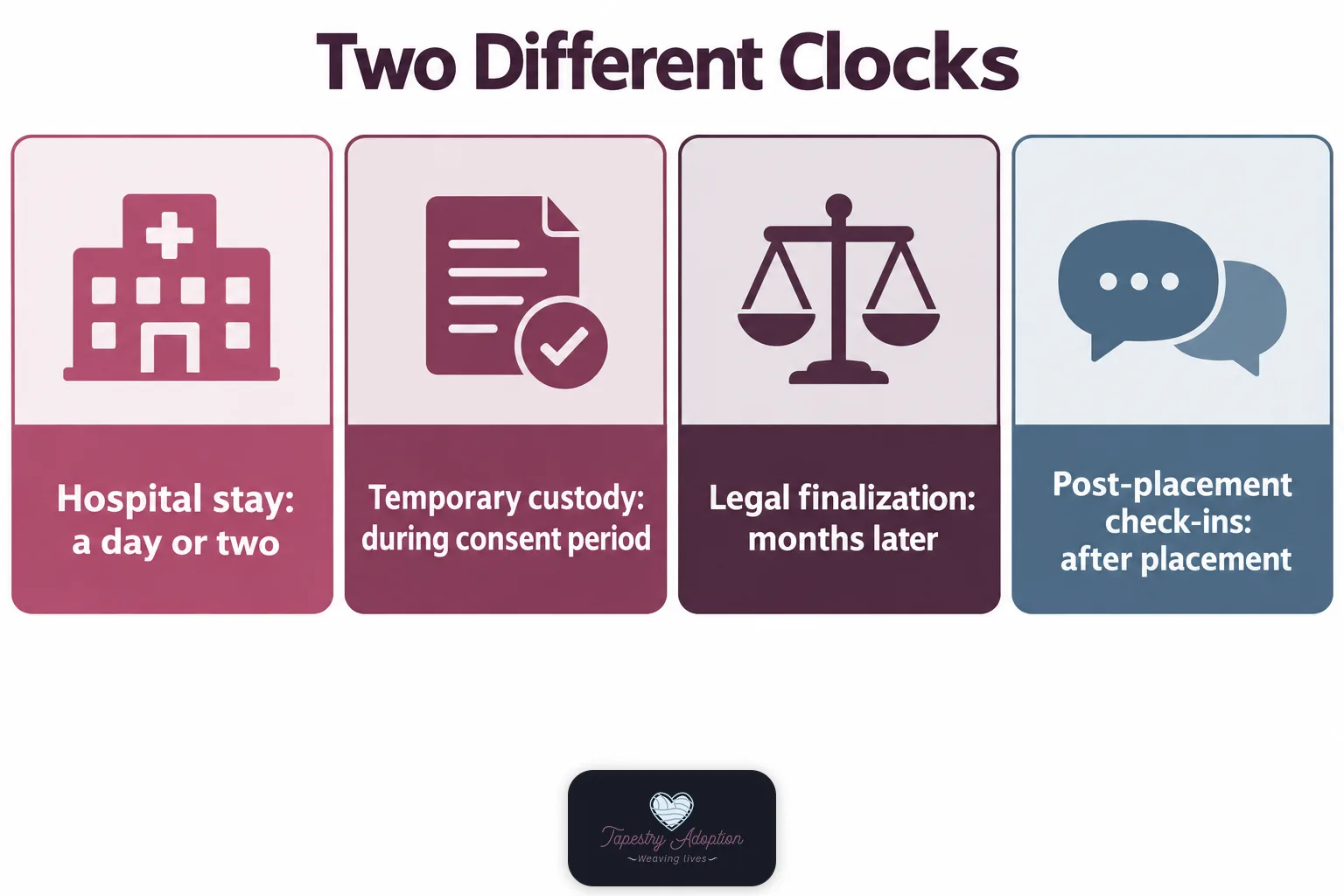
Physical placement and legal finalization run on two different clocks, and mixing them up is where most confusion starts. The hospital stay itself usually runs a day or two — a typical birth timeline. Taking the baby home afterward, if the birth mother's plan allows it, usually happens under a temporary or interim custody arrangement while her consent period runs its course. Finalizing the adoption in court — the step that makes you the legal parent, permanently — comes months later, after a required waiting period and a post-placement check-in process. A family further along in the home study process going into the hospital day tends to have fewer loose ends, simply because the paperwork a court wants is already assembled.
How much does it cost to adopt a baby from the hospital?
Costs here usually fall into three buckets. The birth mother's medical and living expenses, which many states and agencies allow families to help cover within legal limits so she isn't paying out of pocket for care tied to the adoption plan (see what financial and medical support typically covers). Agency or counseling fees. And legal fees for both the birth mother's independent attorney and the family's attorney. None of these numbers are fixed by law or consistent across agencies. Any professional who quotes you a flat total without knowing your state and situation is skipping steps. Ask for an itemized estimate before the hospital stage, not during it.
What disqualifies you from adopting a baby?
Two filters apply here. Legal bars come from state law and are usually specific: certain felony convictions — especially anything involving child abuse, neglect, or violent crime — and substantiated findings in a child protection registry will stop an adoption no matter what else is in your file. Beyond that, a home study checks practical readiness: stable housing and income, physical and mental health as it relates to parenting, and whether your home passes a basic safety check. None of this is a judgment on your worth as a person. It's the specific information a court and a birth mother are entitled to have before a placement is finalized.
Where an agency fits into the hospital day
An agency like Tapestry Adoption typically handles the coordination around the hospital stay: confirming the birth plan with hospital staff, making sure everyone in the room understands the legal consent timeline, and serving as a point of contact if something doesn't go the way either side expected. That coordination doesn't replace your own attorney or your own decisions. It just keeps the logistics from becoming one more thing you're managing while recovering from childbirth.

Questions people ask about the hospital stay
Can I change my mind at the hospital?
Yes. Nothing is legally final until your state's consent period has run and the paperwork is signed after that window opens, not before. Changing your mind at the hospital, or at any point before consent is irrevocable, is within your rights.
Does the adoptive family have to be at the hospital?
No. Their presence, timing, and level of involvement are entirely up to what you put in your hospital plan. Some birth mothers want them in the delivery room. Others prefer they wait until after discharge. Both are normal.
Will the hospital staff know about the adoption plan?
They should, if it's communicated ahead of time through your counselor or agency and documented in your chart. That's one reason to work out the plan with a counselor before your due date rather than explaining it for the first time during labor.
More articles
- Adoption After the Baby Is Born: Rights, Risks, Recovery
- Open vs. Semi-Open Adoption: What Actually Changes
- Financial Help for Pregnant Women Considering Adoption in Indiana
- Choosing an Adoptive Family in Indiana: What to Weigh
- Placing a Baby Up for Adoption in Indiana
- Adoption Agency Near South Bend: What Expectant Mothers in Michiana Should Know