Choosing an Adoptive Family in Indiana: What to Weigh
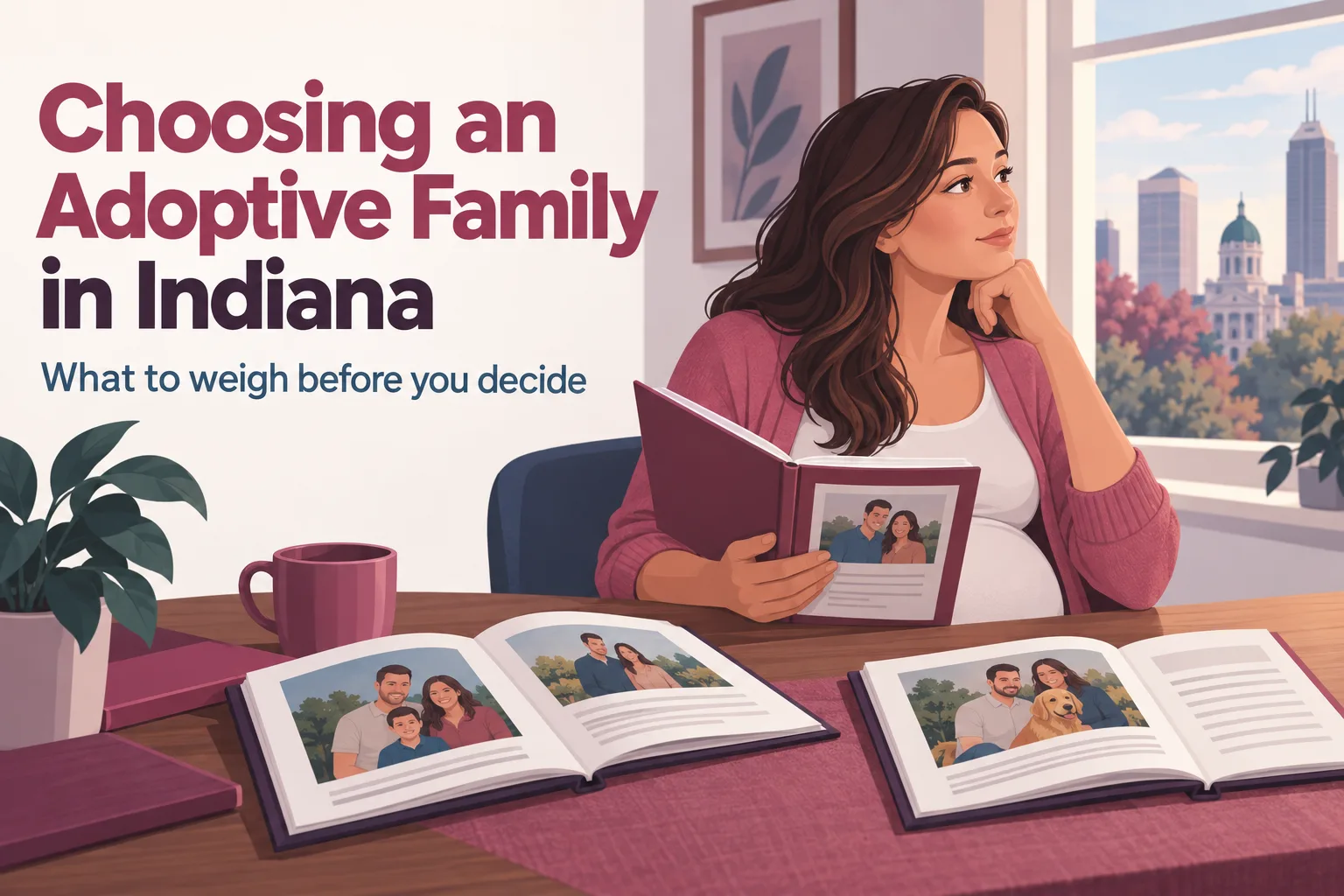
Pick your contact level first. Then read and talk to finalists against that standard — not the other way around. Most expectant mothers start by flipping through family profile books looking for a feeling. That feeling matters. But it's not enough on its own, because every profile is written to be liked. The families who actually help you are the ones whose answers hold up once you push past the nursery photos.
This is your decision, start to finish. An agency's job is to bring you families who match what you're looking for, then get out of the way while you decide. If you haven't already, get clear on your own options before you get clear on anyone else's — review the full range of choices so that picking a family is a decision you're making, not one you're defaulting into.
Decide your contact level before you open a single profile
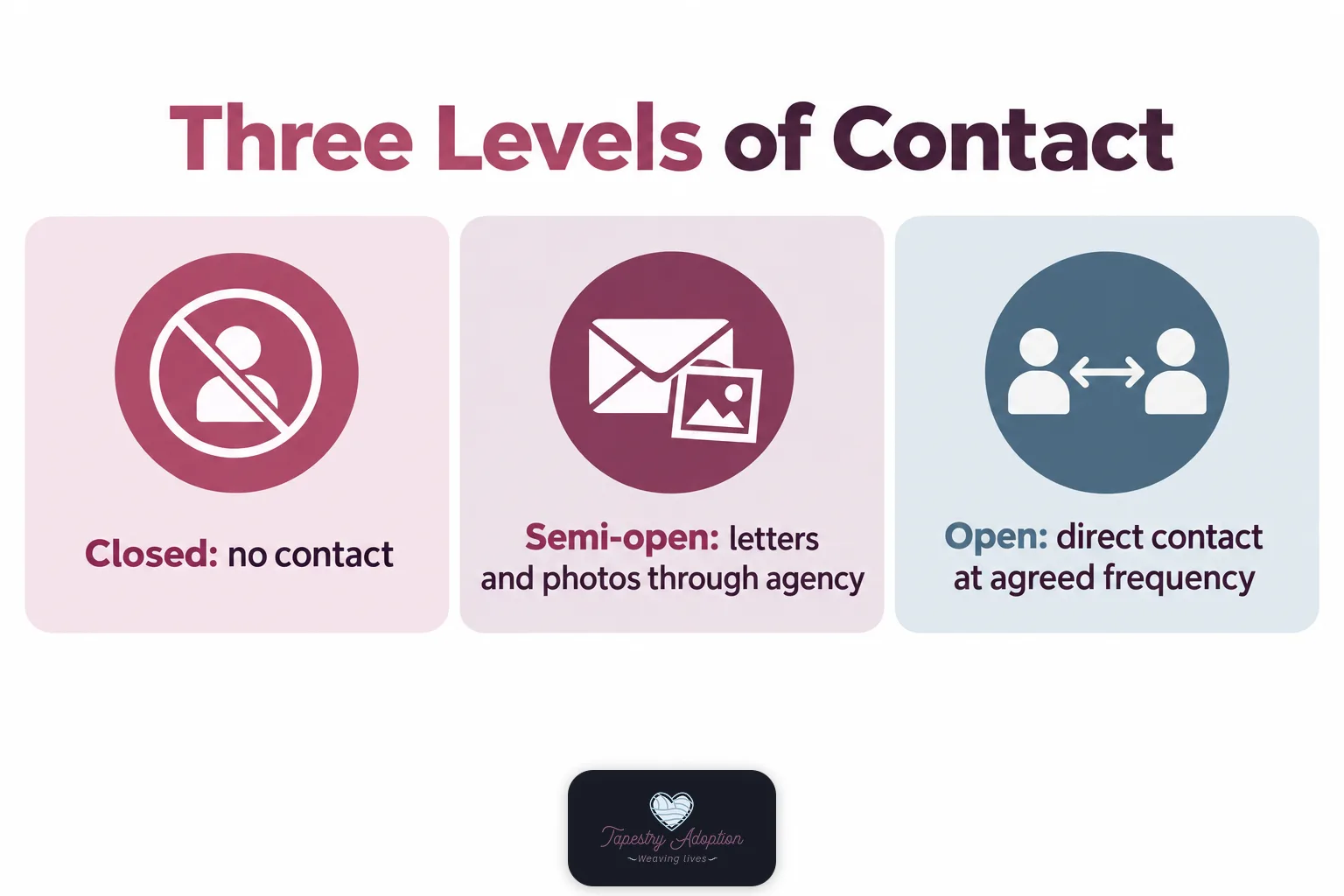
Contact after placement runs on a spectrum: closed (no contact), semi-open (letters and photos through the agency, sometimes on a schedule), and open (direct contact — calls, visits, social media — at whatever frequency you and the family agree on). Pick a point on that spectrum before you start reading, even if it's a rough guess. Skip that step, and you'll end up choosing whoever seems nicest in print, then negotiating contact after you're already attached to a family that wanted something different. Decide the spectrum point first. Let it rule families in or out before their house, their dog, or their vacation photos get a vote.
Not sure where you land yet? That's normal this early. A counselor can walk through what each level actually looks like month to month — easier to sort out now than while you're reading profiles under time pressure. Talk to a counselor privately about it first if that would help.
Read past the nursery photos — ask about these things
A profile book is a highlight reel. Clean kitchen, well-behaved dog, a line like “we can't wait to love this baby.” None of that tells you how the family will talk to your child about adoption when he's seven and asking hard questions, or how they'll handle it if you want more contact than they expected. Ask, or have your counselor ask on your behalf:
- How do you plan to talk about adoption with your child as he or she grows up?
- What does your extended family think about open contact, specifically?
- Have you disagreed about anything in this process, and how did you work through it?
- What would you do if I asked for less contact than we agreed on? More?
- Who else lives in or regularly visits your home?
Watch for answers that are all reassurance and no specifics. “We'll love this baby no matter what” answers a question you didn't ask. A good answer to the contact question sounds like a plan, not a promise.
A phone call tells you more than the whole profile book
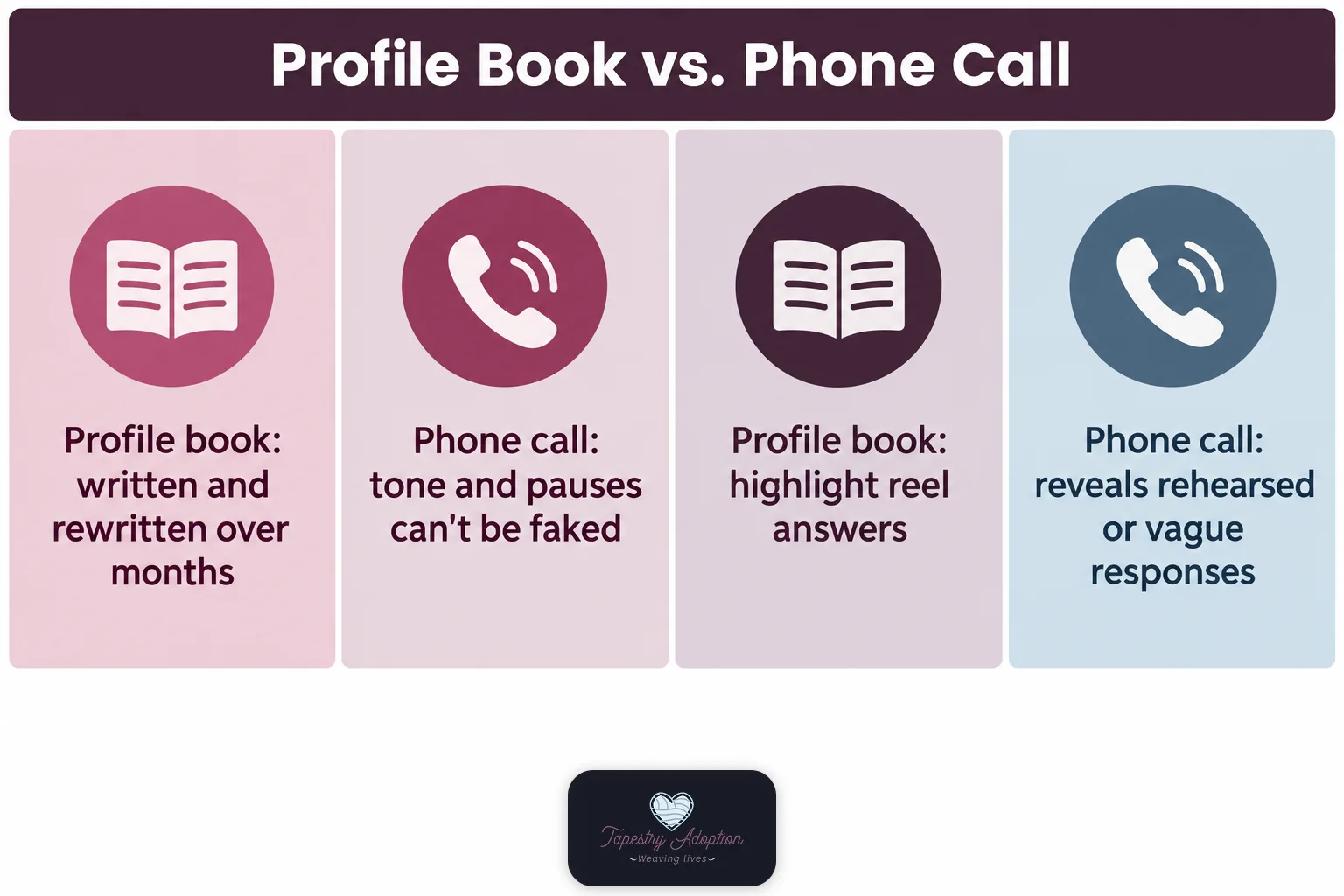
Profile books get written and rewritten, sometimes over months. A phone call doesn't get that treatment. Tone, pauses, what someone brings up unprompted — none of that can be faked on a page. If a family's written profile felt warm but their answers on a call feel rehearsed or vague, trust the call. Talk to more than one finalist if you can. Even a short conversation with two or three families will make the differences between them sharper than reading ten more profiles ever would.
You're also allowed to ask the same question twice, in different words, and see if the answer holds up. That's not rude. It's how you'd vet anyone you were about to trust with something this big.
Nothing is final until you say it is
Choosing a family isn't a contract. You can change your mind about a specific family before placement, and in most states you can change your mind about placing at all. Consent isn't legally final until after the baby is born, and the exact timing depends on Indiana law — your counselor can walk you through it in plain terms. Knowing this upfront changes how you read profiles: picking a favorite isn't signing anything. It's starting a conversation you can still walk back from.

If you choose a family and something feels off during the pregnancy, say so. A good agency reopens that conversation instead of pushing you to stay the course just because paperwork has started.
What a contact agreement actually locks in
Many families and birth mothers write down what they've agreed to — photos twice a year, a call on birthdays, visits at an agreed interval. Ask your counselor directly how enforceable that written agreement is where you live, and get the answer before you place, not after. An agreement you understand is worth more than one you assumed.
One more thing worth knowing
Agencies vary in how many families they show you and how much coaching those families get before you ever see a profile. Tapestry Adoption's waiting family profiles are one place to see how one agency presents its families — useful mainly as a comparison point if you're still deciding where to even start looking.
Frequently asked questions
What if the family I pick isn't a good fit after we talk?
Say so and keep looking. Choosing a family is a process, not a one-time decision, and a counselor can bring you other profiles without treating your first choice as a commitment you broke.
Do I have to meet the adoptive family in person?
No. Some expectant mothers choose a family entirely through profiles and phone calls and meet in person later, at the hospital or afterward, or never at all if they've chosen closed contact. The format of your search is up to you.
Can I get help with medical bills or housing while I'm deciding?
Often, yes — support for medical, housing, and other needs during an unplanned pregnancy is usually available separately from which family you choose, or whether you place at all. Ask about this early, before you've picked a family, so it never feels tied to a decision it isn't actually tied to.
Can I change my mind about placing after I've chosen a family?
Yes. Choosing a family isn't the same as finalizing an adoption plan. Consent to adoption isn't legally final until after birth, and the specifics vary by state — ask your counselor to walk you through how an adoption plan actually comes together so you know exactly where the point of no return sits, and how far you are from it at every step.
More articles
- What Happens at the Hospital When You Place a Baby for Adoption
- Adoption After the Baby Is Born: Rights, Risks, Recovery
- Open vs. Semi-Open Adoption: What Actually Changes
- Financial Help for Pregnant Women Considering Adoption in Indiana
- Placing a Baby Up for Adoption in Indiana
- Adoption Agency Near South Bend: What Expectant Mothers in Michiana Should Know