Financial Help for Pregnant Women Considering Adoption in Indiana
Real financial help exists for expectant mothers in Indiana who are weighing an adoption plan, and no, you don't pay it back. It can cover rent, utilities, food, maternity clothes, rides to appointments, counseling, and medical bills tied to the pregnancy. What it is not: a salary, a loan, or payment for the baby. Indiana law draws a hard line around that last point. Any agency worth talking to will explain the line before you even ask about it.
If you typed this phrase into a search bar, you've probably also tripped over a few confusing terms along the way — the Pregnancy Promise Program, adoption subsidy, and a widely repeated claim about $1,000 a month. None of these mean “help paying rent while you decide.” Mix them up and you either end up disappointed, or worse, someone offers you money they have no legal right to offer. So here's what each one actually is.
Living-expense help covers bills, not income
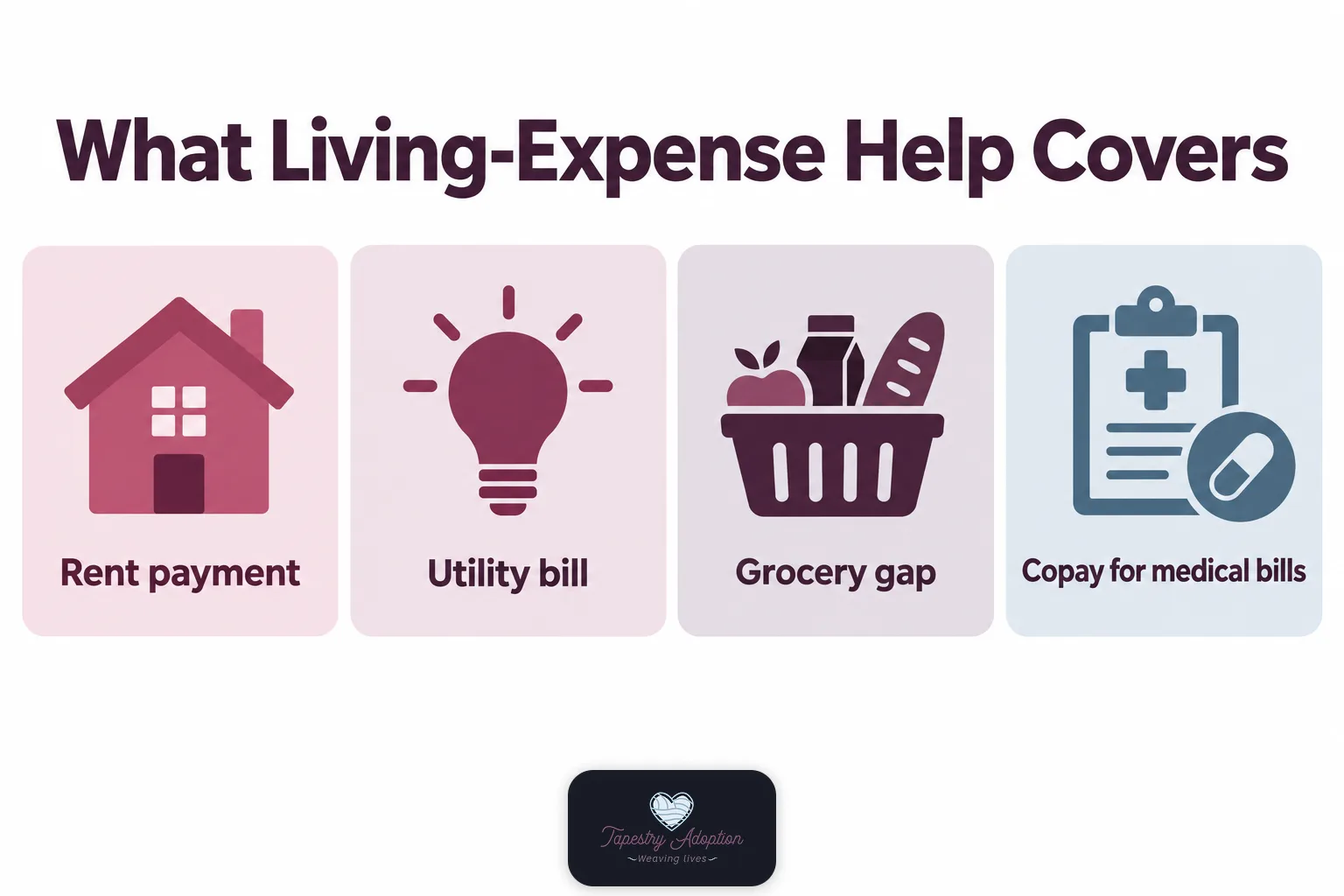
When an agency or an adoptive family helps with living expenses during a pregnancy, the money is tied to specific, documented costs — a rent payment, a utility bill, a grocery gap, a copay. Nobody hands over a lump sum or a weekly check with no paper trail behind it. That's not bureaucratic fussiness. It's the mechanism that keeps the whole arrangement legal. Indiana, like every state, prohibits paying an expectant mother for the child itself. Expense assistance has to track to real costs connected to the pregnancy and a limited recovery period afterward, and a court has to be able to review it if the adoption is finalized. An agency that lays this out upfront, including what's covered and what isn't, is doing exactly what it should. You can see how this kind of support is structured on a page like medical, housing, and financial help for birth mothers instead of taking someone's word for it over the phone.
There is no statewide program that pays pregnant women $1,000 a month
This claim gets repeated a lot, usually with no source attached, so let's say it plainly: no standing Indiana or federal program sends every pregnant woman a flat $1,000 monthly check tied to adoption. Guaranteed-income pilots do exist in some cities, for different populations and different reasons — they are not adoption programs. If someone offers to wire you a fixed monthly amount with no bill behind it, slow down. Ask who is paying, why, and what happens if you decide to parent instead. A legitimate plan lets you change your mind at any point before you sign relinquishment paperwork, and the expense help you already received doesn't need to be repaid if you do. That protection is the whole reason assistance stays expense-based instead of income-based.
What is the Indiana Pregnancy Promise Program?
It's a state-run care coordination program, not an adoption benefit. It's aimed at pregnant women dealing with opioid use disorder, connecting them to prenatal care, treatment, and support services through Indiana's Medicaid managed care system. It doesn't pay living expenses, and no adoption agency administers it. If you're pregnant and dealing with substance use, ask your OB or managed care plan about it directly — separately from any conversation about adoption. The two are not the same decision, and treatment access shouldn't hinge on which parenting option you choose.

How much is the adoption subsidy in Indiana?
This term almost never means what the person searching for it expects. Adoption subsidy — sometimes called adoption assistance — is money and Medicaid coverage paid to adoptive parents after they adopt a child with special needs out of Indiana's foster care system. It's negotiated case by case before the adoption finalizes, based on the child's documented needs, and it has nothing to do with an expectant mother's living expenses during pregnancy. If you're pregnant now and considering placing your baby with a family, this term simply doesn't apply to you. If a family mentions adopting through foster care and discussing subsidy, understand that's a different process entirely from a direct, private adoption plan.
How much does it cost to adopt a baby in the US?
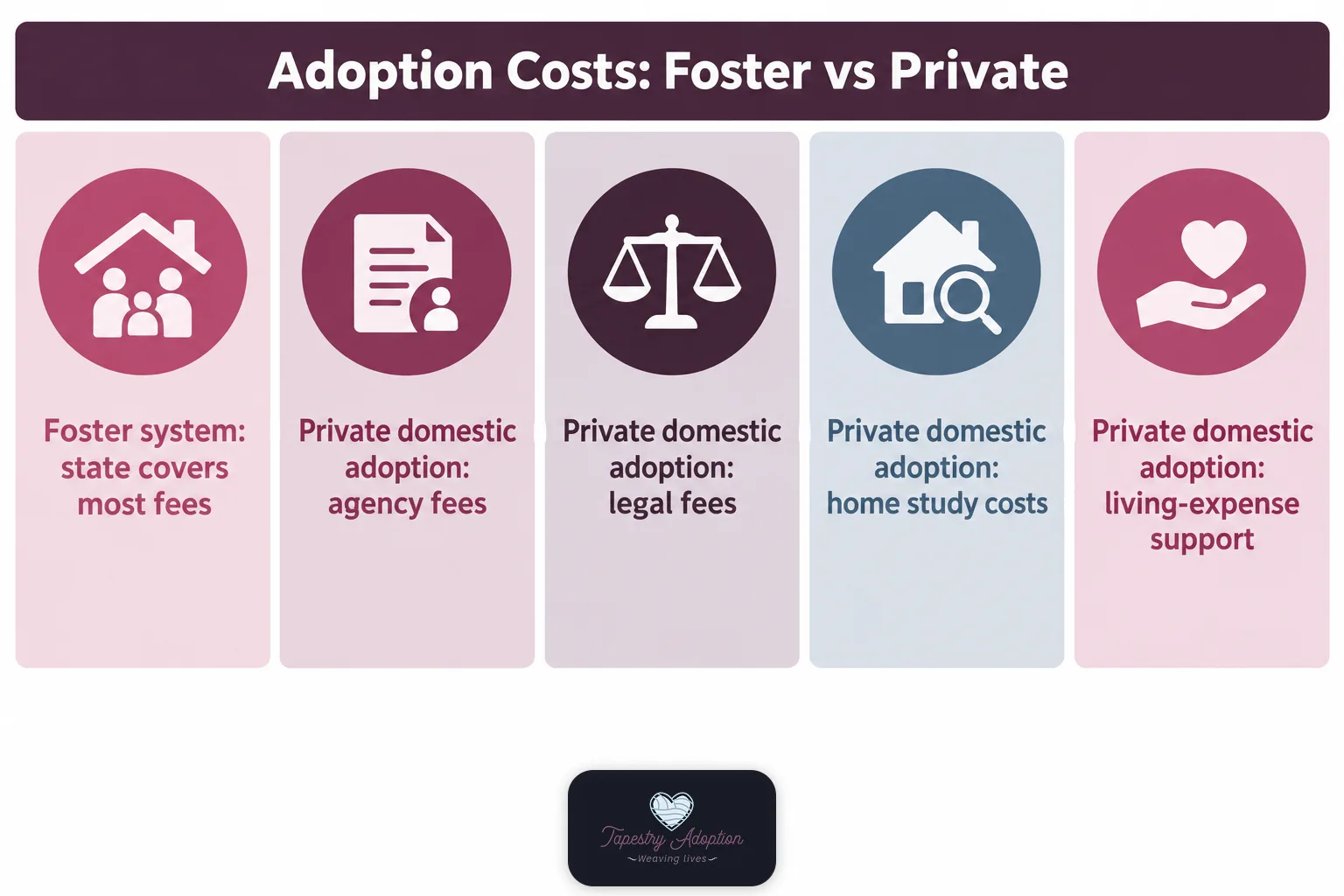
From the adoptive family's side, it depends heavily on the route. Adopting through the foster system typically costs very little, because the state covers most fees. Private domestic adoption — the kind most expectant mothers considering adoption are part of — involves agency fees, legal fees, home study costs, and the living-expense support described above. Totals quoted online vary wildly because they bundle different things: some include legal and court costs, some don't; some include the home study, some don't. Skip the search for one magic number and ask any family or agency to break down what's included instead. And if you're an expectant mother, this number touches you less than it seems to — it doesn't change what expense help you're entitled to, and it's not a budget you're expected to negotiate. Families looking at this from the other side can see how the process and fees for adopting a baby in Indiana are structured before they ever match with an expectant mother.
Ask who is paying before you ask how much
“How much” is the wrong first question. “Who, and under what rule” is the right one. A licensed agency has to document expense assistance, disclose it to the court, and stop if you decide to parent. An individual arranging a private adoption without an agency may follow none of that — and that's exactly the gap where women get promised more than is legal, then feel pressured to go through with a plan because they've already taken the money. Indiana regulates this closely enough that a reputable agency walks you through the rules before you ask, not after you've already cashed a check.
Tapestry Adoption lays out what counts as legitimate expense help, what the timeline for receiving it looks like, and what stays true no matter what you decide, in a private, no-pressure conversation. You can see how an adoption plan in Indiana actually works before deciding anything.
What is $1,000 a month for pregnant mothers?
It's not a recognized Indiana or federal adoption benefit. The phrase usually traces back to guaranteed-income pilot programs run by specific cities or nonprofits for low-income residents generally — not pregnant women specifically, and not tied to adoption at all. If you've seen it attached to an adoption offer, ask directly what the money is for, who is documenting it, and what happens to it if you choose to parent. A legitimate answer sounds like “reimbursement for rent and utilities, stops if you parent, no repayment either way,” not a flat monthly figure with no accounting behind it.
How much is the adoption subsidy in Indiana?
It applies to adoptive parents finalizing a special-needs adoption out of foster care, not to an expectant mother's pregnancy expenses. The amount is set case by case based on the child's needs and negotiated with the Department of Child Services before the adoption is final. If you're pregnant and weighing a private adoption plan, this program simply doesn't apply to you, and no legitimate source should tell you otherwise.
How much does it cost to adopt a baby in the US?
It depends on the route. Foster adoption is usually low-cost because the state covers much of it; private domestic adoption includes agency, legal, home study, and living-expense costs that shift by situation. There's no single reliable national figure, because what's bundled into any quoted total differs from source to source — ask for an itemized breakdown instead of comparing round numbers. And whatever that total turns out to be, it doesn't touch the expense help an expectant mother is entitled to. Those are separate budgets, governed by separate rules, and you can confirm exactly where those lines sit through a private conversation with an adoption counselor.
More articles
- What Happens at the Hospital When You Place a Baby for Adoption
- Adoption After the Baby Is Born: Rights, Risks, Recovery
- Open vs. Semi-Open Adoption: What Actually Changes
- Choosing an Adoptive Family in Indiana: What to Weigh
- Placing a Baby Up for Adoption in Indiana
- Adoption Agency Near South Bend: What Expectant Mothers in Michiana Should Know