Adoption After the Baby Is Born: Rights, Risks, Recovery
Birth is not the end of the adoption process. It's the start of the part with real legal weight. First there's the hospital stay, then a required waiting period before consent can even be signed, then a separate window during which that signed consent can still be pulled back. Each of those steps has a hard deadline attached to it, and the deadlines come from state law — not from an agency, not from a family, not from anyone's preference. If you're heading toward this moment, two things matter more than anything else: what rights you hold at each stage, and what your body and mind are about to go through no matter what you decide.
Indiana law sets the exact number of hours that must pass after delivery before a birth mother can sign consent, plus a separate window afterward during which that consent can be withdrawn. Those numbers matter far more than anything you'll find in a general search, so get them from your counselor or attorney in writing — not from a blog post. Everything below is about what happens around those dates.
What rights do birth parents have after adoption?
Before consent is signed, you keep full parental rights. That includes the right to change your mind, turn down a specific family, or decide to parent after all. Nothing is final until consent is signed and the revocation period has run out.
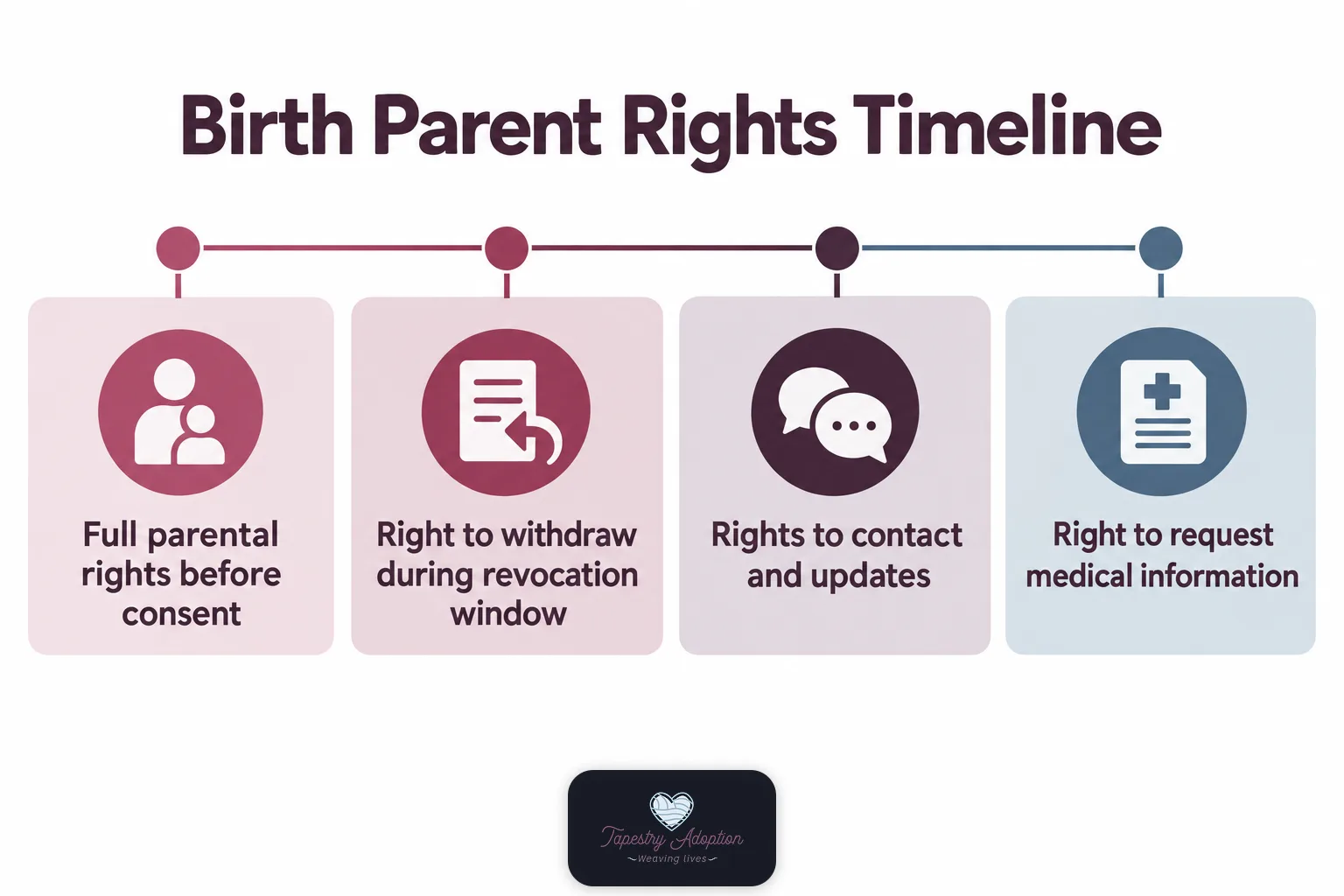
Once consent becomes irrevocable, legal custody and decision-making rights pass to the adoptive family. What survives past that point is whatever was agreed to for contact — photos, updates, visits — and in most states, that agreement isn't a court order. It runs on trust and relationship, not legal enforcement. That's exactly why contact terms need to be written down and discussed in detail before placement, never just assumed. Building that plan, including what level of contact you want and what happens if it changes later, is part of what making an adoption plan actually involves.
You also generally keep the right to request certain identifying or medical information down the road, though the rules on original birth certificates and registries vary by state and shift over time. Ask about this directly. Don't assume either way.
What is the “333 rule” for adoption?
There is no standard, nationally recognized “333 rule” in adoption law. If you've come across the phrase, it's most likely being mixed up with something else entirely — a newborn feeding and sleep guideline that has nothing to do with placement, or a half-remembered waiting period that varies by state regardless. Treat any specific number you find online as unverified until your counselor or attorney confirms it applies in Indiana.
What actually controls the timeline is two separate windows: how long after birth consent can be signed, and how long after signing it can still be revoked. Both come from Indiana statute. Both are short. Both should be explained to you clearly, in writing, well before you're anywhere near a hospital bed.
Can you get postpartum if you adopt?
Yes. Placing a baby doesn't pause biology. A birth mother who places still goes through the same physical recovery as any birth — bleeding, the hormone drop, milk coming in — often while grieving the placement at the exact same time. That combination hits harder than either one alone, and it deserves real medical follow-up, not just a check-in before hospital discharge. Arranging postpartum care should happen before delivery, as part of the medical and housing support conversation, not something sorted out afterward in a scramble.
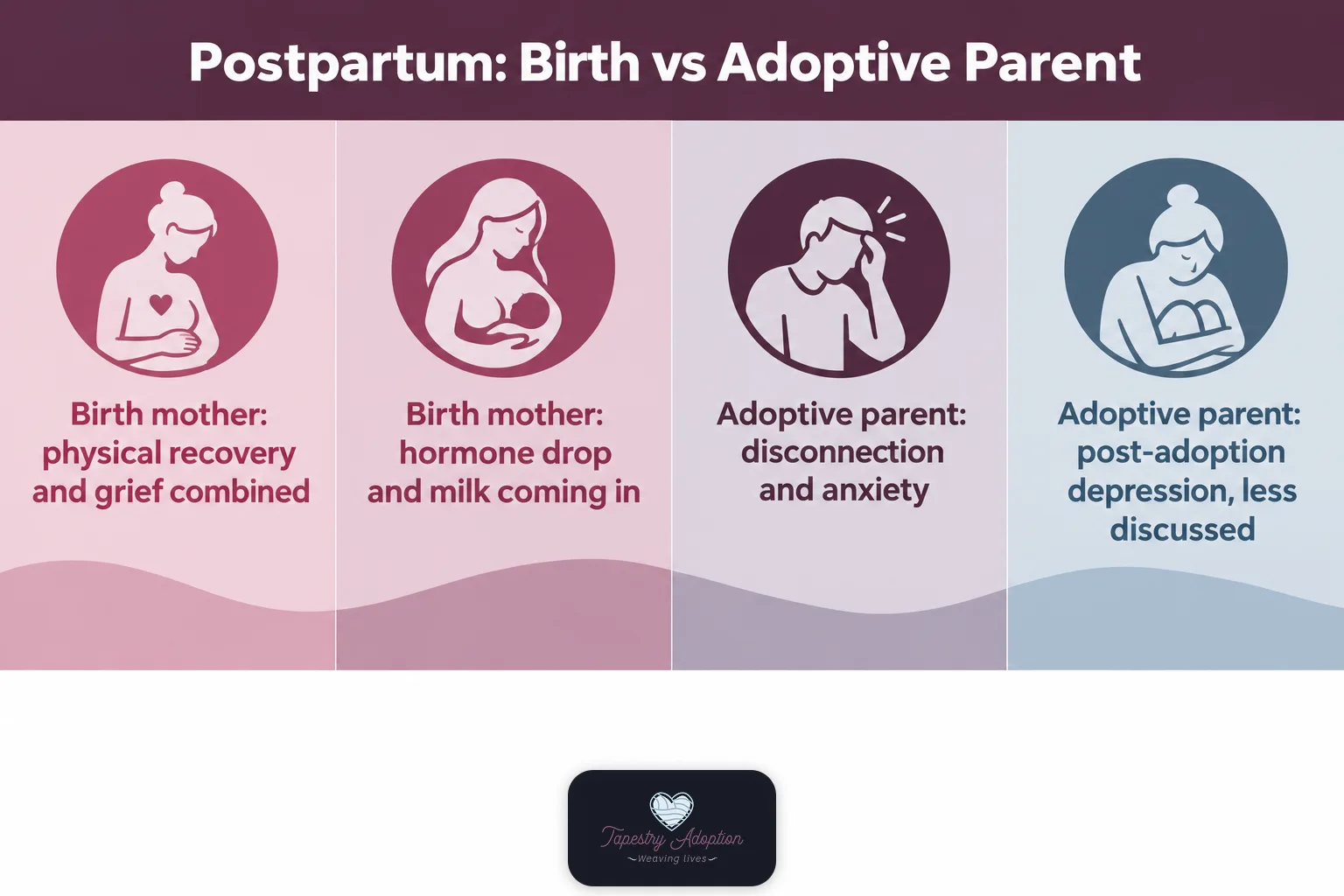
Adoptive parents can go through something related but distinct, sometimes called post-adoption depression: disconnection, anxiety, exhaustion that shows up after placement even without the hormonal shift of childbirth. It gets talked about far less. But it's real, and it's worth naming early rather than assuming new parents are fine just because the paperwork is done.
What are the psychological impacts of placing a child for adoption?
Grief after placement doesn't move in a straight line. It can hit hardest in the first weeks, fade for a while, then come back hard around a birthday or the anniversary of placement — sometimes years later. Relief and grief can both be true in the same week. Feeling at peace with the decision doesn't mean the loss stops showing up, and feeling the loss doesn't mean the decision was wrong.

How much ongoing contact you have shapes how that grief gets processed, but not the same way for everyone. Some birth mothers find updates and visits make the loss easier to carry. Others need more distance for a while, and that's just as valid. There's no single right amount of contact, which is part of why matching expectations matters as much as liking a family — something worth working through directly with the families actually waiting rather than sorting out in the abstract.
What tends to help, no matter the contact level, is counseling before placement and after, a written agreement everyone reads the same way, and not being rushed into any part of the decision. Tapestry Adoption's counselors walk through post-placement rights and support options before anything is signed, not after, so none of this lands as a surprise in a hospital room. Want that conversation now? Reach out directly.
Quick answers
Can a birth mother change her mind after signing consent? Only during the revocation window set by state law. Once that window closes, consent is final and custody has transferred.
Is an open adoption contact agreement legally enforceable? In most states, no — it functions as a relationship agreement rather than a court order, which is exactly why the terms need to be specific and genuinely agreed to by both sides before placement.
How soon after birth does a birth mother need to decide? She doesn't need to decide anything in the hospital. Consent can't legally be signed until the state-required waiting period after birth has passed — time built in on purpose, so no one is deciding under pressure.
More articles
- What Happens at the Hospital When You Place a Baby for Adoption
- Open vs. Semi-Open Adoption: What Actually Changes
- Financial Help for Pregnant Women Considering Adoption in Indiana
- Choosing an Adoptive Family in Indiana: What to Weigh
- Placing a Baby Up for Adoption in Indiana
- Adoption Agency Near South Bend: What Expectant Mothers in Michiana Should Know