Open vs. Semi-Open Adoption: What Actually Changes
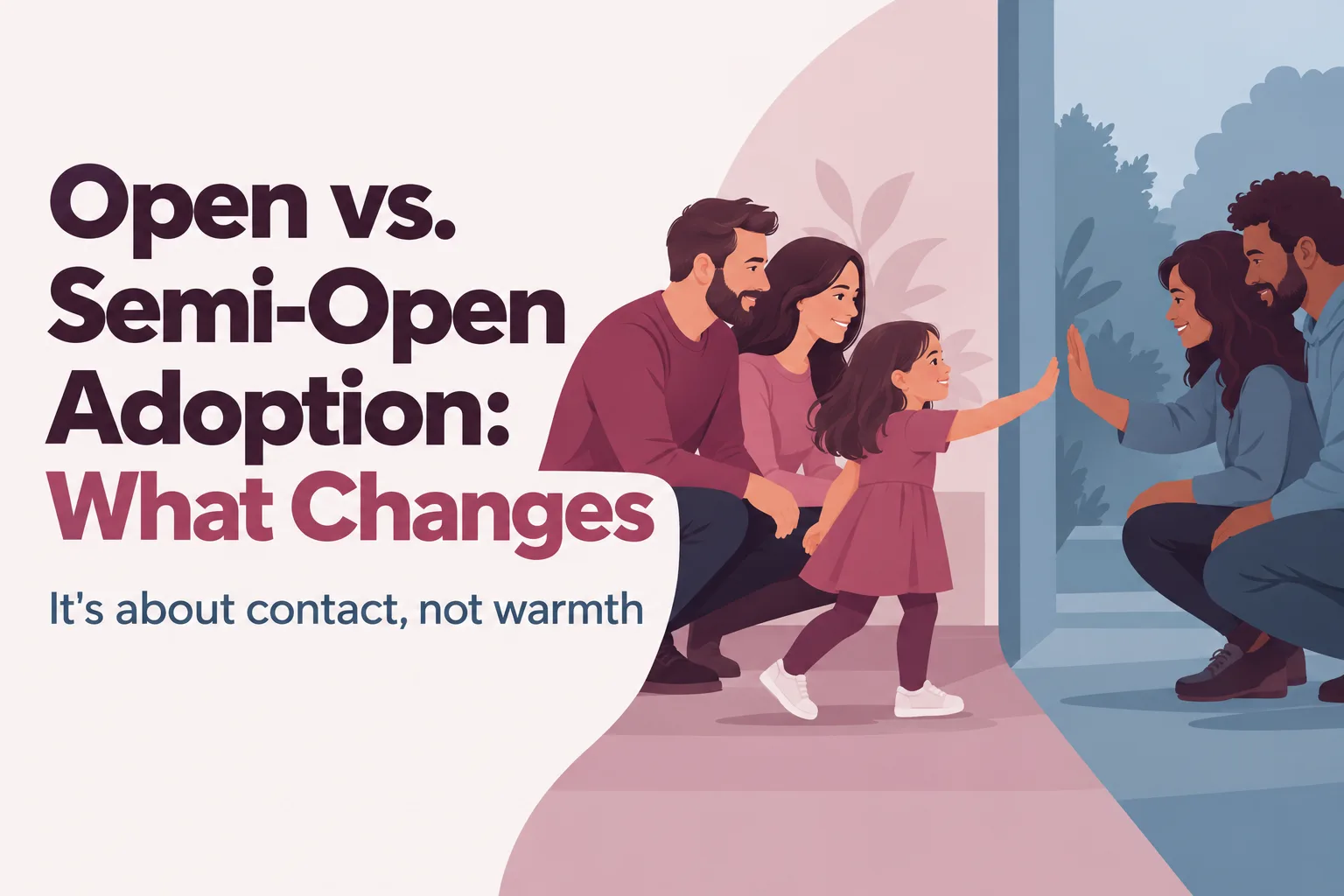
Open vs. semi-open adoption, explained simply: the two differ in one concrete thing — who holds the contact information and how directly messages travel between the birth mother and the adoptive family. In open adoption, both sides usually have each other's full names and a direct way to reach each other — phone, text, email — and they set up visits or calls themselves. In semi-open adoption, contact still happens, but it moves through a third party: the agency, an attorney, or a letter-and-photo service. Everything else people worry about — whether the relationship feels warm, whether it lasts, whether the child grows up happy with it — depends on whether the two families keep up their end of the arrangement, not on which label they picked at placement.
The difference is who holds the contact info, not how much warmth is involved
Open adoption means direct lines: both parties know each other's full names, and visits or calls get arranged between them without anyone forwarding messages. Semi-open means the agency (or a go-between) sits in the middle — typically first names only at first, no direct phone numbers, and every letter or photo passes through someone else before it reaches the other side. Closed adoption, where no identifying information is shared at all, is rare now mostly because expectant mothers are routinely offered a choice about contact level before they ever sign anything; see how that conversation usually starts.
None of these three are a single fixed thing. They're points on a spectrum of how much is shared and how directly, and families move along that spectrum more often than the labels suggest.
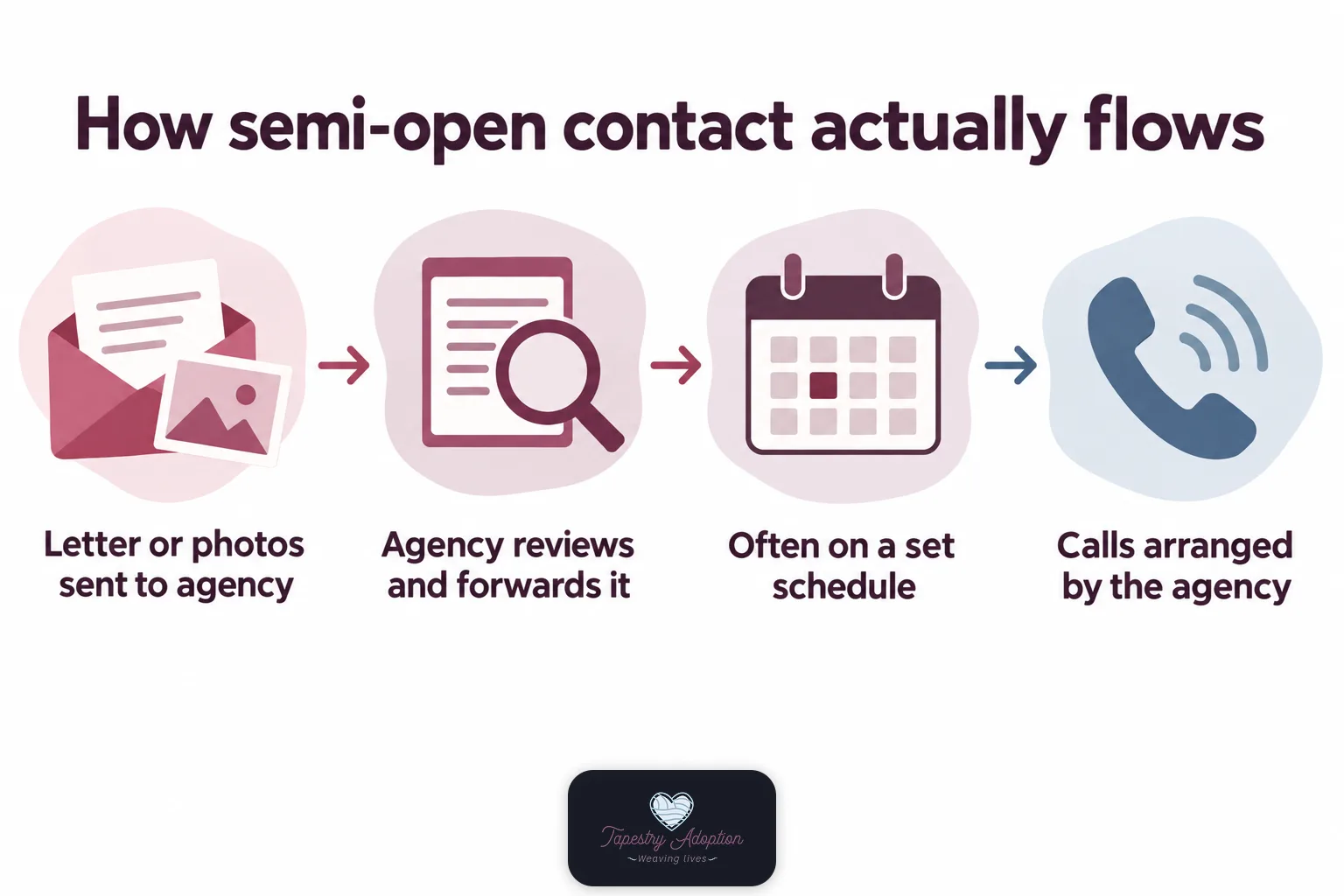
In practice, semi-open means the agency forwards letters, photos, and sometimes calls
Here's what semi-open actually looks like day to day. A birth mother writes a letter or sends photos; the agency reviews it and forwards it to the adoptive family, often on a set schedule — twice a year is a common rhythm, though the actual cadence is whatever the two sides agreed to. If calls are part of the plan, they're usually set up as a scheduled call the agency arranges, not a phone number exchanged directly. Nobody is improvising this in the moment — it runs on whatever structure got written down at the start, which is one more reason that structure matters more than the label does.
What adoptees actually ask isn't “open or semi-open” — it's “did the plan survive?”
Adult adoptees who get asked whether they'd be happy with semi-open contact tend to answer a different question than the one that was asked. The real issue isn't the category — it's whether the contact that was promised when they were an infant is still happening once they're old enough to want more of it, or different information, or a different kind of relationship than a few letters a year. The amount of contact that satisfies an expectant mother and an adoptive family at placement is a guess about a need that's going to keep changing as the child grows up and starts asking their own questions.
So the honest answer to “would semi-open make an adoptee happy” is: it depends whether anyone is still sending the letter five years in, not whether the word “semi” was attached to the plan. The failure mode that actually upsets adoptees isn't picking semi-open over open — it's an arrangement that quietly lapses. A photo that stops coming. A letter that goes unanswered until nobody tries again. That erosion is what breaks trust, regardless of which box got checked on the original agreement.
Contact can usually grow; it rarely survives being locked down tighter
Arrangements tend to move in one direction more easily than the other. Going from semi-open to open — sharing full names, exchanging direct contact — is something most agencies can help facilitate once both sides want it. Going the other way, from open back to semi-open or from semi-open to no contact, is harder, because someone has to give up access they already have, and that's a much heavier ask than adding more.
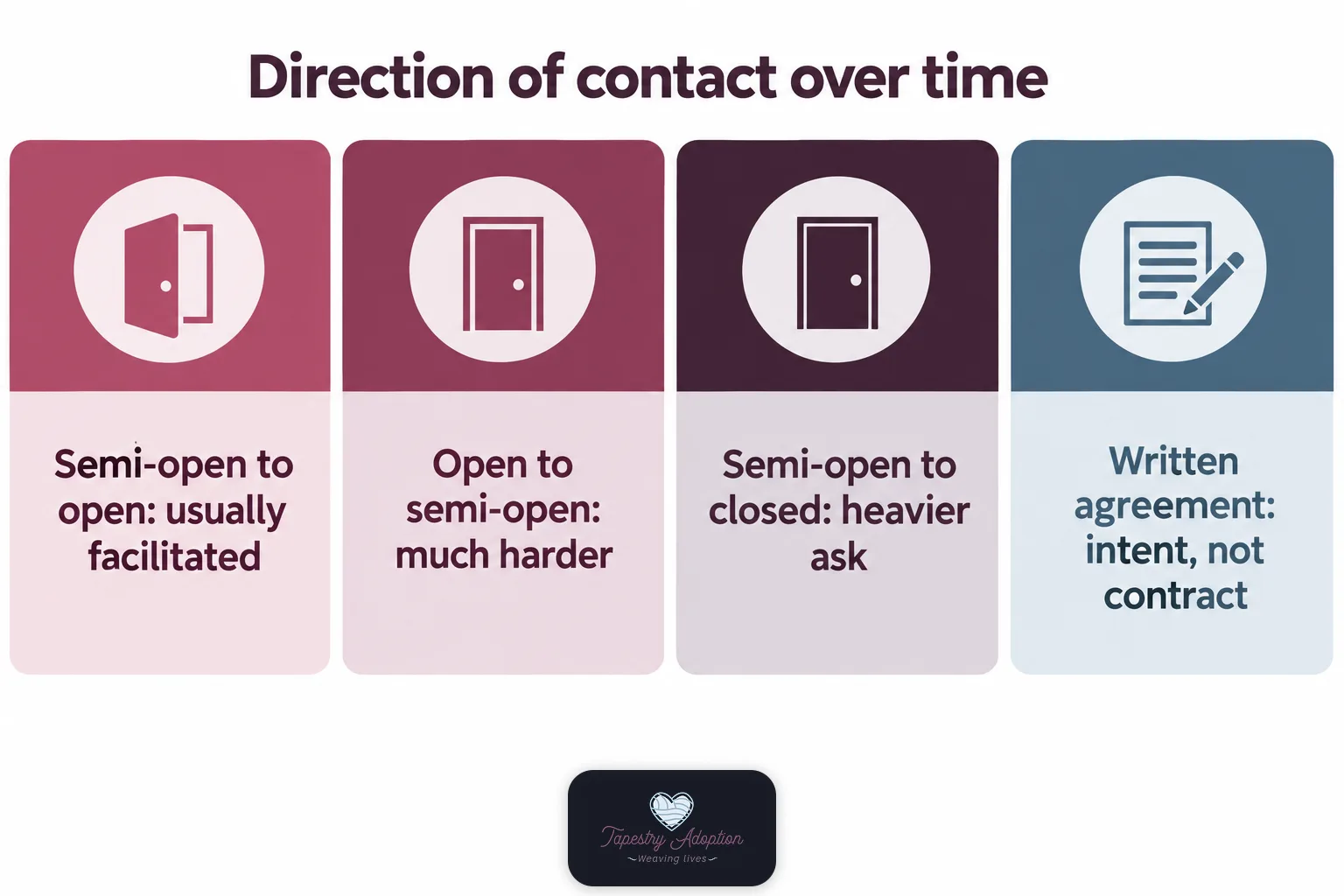
It also helps to know that a written contact agreement is usually a statement of intent, not a contract a court will force either side to keep — the specifics vary by state, so ask directly how Indiana treats this before you put too much weight on the paperwork alone. Building the contact plan into the broader adoption plan from the start, rather than bolting it on at the end, makes it more likely to actually hold.
Choose semi-open for a stated reason, not as a default hedge
Semi-open isn't automatically the “safer middle option.” It works best when there's a specific reason behind it — the birth mother isn't ready to share her full name yet, the families live far apart and want time before meeting, or the situation has some legal complexity that makes a go-between useful early on. A deliberate reason survives renegotiation better than a vague sense of caution, because everyone involved can revisit the actual reason later and decide together whether it still applies.
If you're an expectant mother weighing how much contact you want, or a hopeful family trying to figure out what you're comfortable committing to, it's worth talking through what each option looks like week to week before you settle on a label — Tapestry Adoption walks expectant mothers through exactly this at a private conversation with a counselor, and walks hopeful families through the same questions when they start a home study or adoption plan.
Can semi-open adoption become open later?
Usually, yes. Most agencies can help both sides transition toward more direct contact once everyone wants it — sharing full names, exchanging phone numbers, moving from forwarded letters to direct calls. It's a far more common shift than going the other direction.
Would adoptees be happier with open adoption?
There's no single answer, because adoptees aren't a single group. Many adult adoptees say, looking back, that they would have wanted more contact or more information than they ended up with. Others are satisfied with what they had. What seems to matter more than the open-versus-semi-open label is whether the contact that was promised actually kept happening, consistently, as they grew up.
Is semi-open adoption safer for a birth mother who's nervous about contact?
It can feel safer in a narrow sense — it lets her keep her full name private at first and route early contact through the agency instead of directly. But it isn't inherently safer long-term, and it doesn't lower the standard for honesty or follow-through. Check the adoption FAQ for more on how contact choices work in Indiana specifically before deciding.
More articles
- What Happens at the Hospital When You Place a Baby for Adoption
- Adoption After the Baby Is Born: Rights, Risks, Recovery
- Financial Help for Pregnant Women Considering Adoption in Indiana
- Choosing an Adoptive Family in Indiana: What to Weigh
- Placing a Baby Up for Adoption in Indiana
- Adoption Agency Near South Bend: What Expectant Mothers in Michiana Should Know