Indiana Adoption Attorney: Your Essential Legal Guide
Choosing the right legal representation can transform your adoption experience from overwhelming to empowering. Whether you're an expectant mother exploring your options or a family hoping to grow through adoption, working with an experienced indiana adoption attorney ensures your rights are protected, your voice is heard, and the legal process moves forward smoothly. In Indiana, adoption law involves complex procedures, strict timelines, and specific requirements that demand professional guidance. The right attorney doesn't just process paperwork-they become your advocate, translator, and partner throughout one of life's most significant journeys.
Why You Need an Indiana Adoption Attorney
Legal representation in adoption isn't optional-it's essential for protecting everyone involved. An indiana adoption attorney specializes in navigating the intricate state laws that govern consent, parental rights, home studies, and finalization procedures. These professionals understand the nuances that general family law attorneys might miss.
The stakes are incredibly high in adoption proceedings. A single missed deadline or improperly executed consent form can delay or derail an entire adoption. Expectant mothers need attorneys who explain their rights clearly, ensure their decisions are voluntary and informed, and protect them from coercion. Adoptive families require legal counsel who can identify potential complications early and navigate interstate or international requirements when necessary.
Legal Protections for Expectant Mothers
For expectant mothers considering adoption, an attorney provides critical safeguards during an emotionally challenging time. Your indiana adoption attorney ensures that you understand:
- All available options and alternatives to adoption
- Your right to change your mind before signing consent
- The specific waiting period required under Indiana law
- Financial assistance available for pregnancy-related expenses
- Your ability to choose the adoptive family and determine openness levels
Indiana law requires a 72-hour waiting period after birth before a birth mother can legally consent to adoption. Your attorney confirms that no one rushes you through this decision and that you fully comprehend the permanence of your choice. They also review any adoption plan to ensure it reflects your true wishes regarding contact and communication.

Types of Adoption Cases Indiana Attorneys Handle
Adoption encompasses multiple legal pathways, each with distinct requirements and procedures. Understanding which type applies to your situation helps you find an attorney with the right expertise.
Private Infant Adoptions
Private infant adoptions involve expectant mothers placing newborns directly with adoptive families, typically with agency facilitation. An indiana adoption attorney in these cases manages consent procedures, adoption plan documentation, and finalization hearings. They ensure compliance with the Interstate Compact on the Placement of Children (ICPC) when the birth mother and adoptive family live in different states.
These adoptions often include openness agreements outlining future contact. While Indiana courts don't enforce these agreements as binding contracts, having them properly drafted by an attorney clarifies expectations and demonstrates good faith on all sides.
Stepparent and Second-Parent Adoptions
When a stepparent wants to adopt their spouse's biological child, the process seems simpler but still requires legal precision. The indiana adoption attorney must secure consent from the non-custodial biological parent or prove grounds for terminating their rights. These cases demand sensitivity, as they often involve complicated family dynamics and contested proceedings.
| Adoption Type | Timeline | Key Requirements | Attorney Role |
|---|---|---|---|
| Private Infant | 6-12 months | Birth parent consent, home study, ICPC clearance | Coordinate agencies, draft consents, file petitions |
| Stepparent | 3-6 months | Spouse consent, biological parent termination | Navigate consent issues, prove fitness |
| Agency | 4-10 months | Agency placement, home study approval | Review agency documents, finalize adoption |
| Interstate | 8-18 months | ICPC compliance, dual state requirements | Manage multi-state regulations |
Agency Adoptions
Even when working with licensed agencies like Tapestry Adoption, families still need independent legal representation. Agencies cannot provide legal advice to adoptive parents. Your attorney reviews agency contracts, ensures the home study process meets legal standards, and represents you at finalization hearings.
The Indiana adoption process involves multiple stakeholders-social workers, counselors, agency staff, and court personnel. Your attorney coordinates with all parties while keeping your interests paramount.
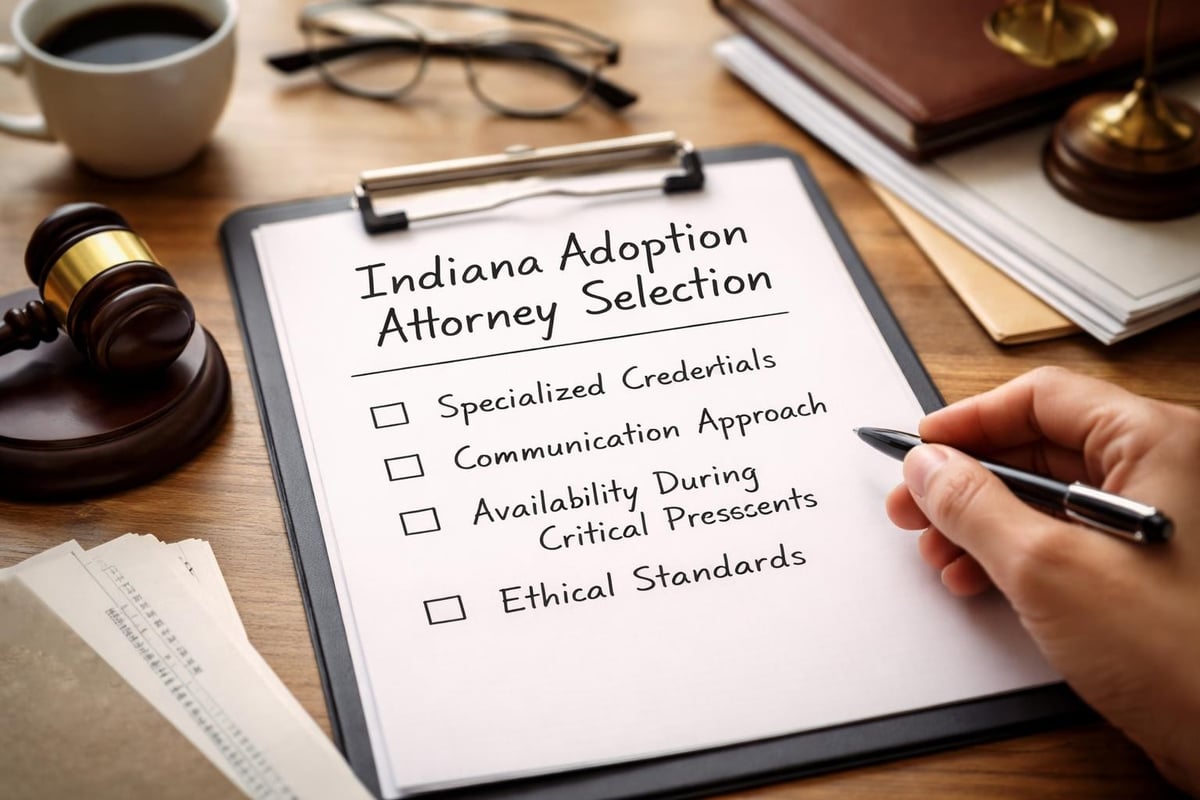
What to Look for in Your Legal Representation
Not all attorneys possess equal expertise in adoption law. Selecting the right professional requires evaluating their specific qualifications and approach.
Specialized Experience and Credentials
Prioritize attorneys who dedicate significant portions of their practice to adoption. Membership in the American Academy of Adoption Attorneys indicates advanced knowledge and ethical commitment. These fellows maintain high professional standards and stay current on evolving adoption law.
Ask potential attorneys about their annual adoption caseload. Someone handling two or three adoptions yearly cannot match the depth of knowledge of an attorney completing dozens annually. Experience with your specific adoption type matters most-infant adoption differs significantly from stepparent or foster care adoption.
Communication Style and Availability
Your indiana adoption attorney should explain complex legal concepts in plain language without condescension. During your initial consultation, assess whether they listen carefully to your concerns or rush through a standard presentation.
Adoption doesn't follow a nine-to-five schedule. Birth mothers may go into labor unexpectedly. Interstate approvals might arrive on weekends. Your attorney should be reasonably accessible during critical moments, even if that means evening or weekend communication.
The Legal Process: What to Expect
Understanding the procedural steps demystifies the adoption journey and helps you prepare mentally and financially.
Initial Consultation and Retainer
Most attorneys offer free or low-cost initial consultations. During this meeting, you'll discuss your situation, learn about applicable laws, and receive a cost estimate. Legal fees for adoption typically range from $2,500 to $7,500 depending on complexity.
Be prepared to ask about:
- Total anticipated costs including filing fees and administrative expenses
- Payment schedules and whether fees are flat-rate or hourly
- What services the retainer covers and what incurs additional charges
- How the attorney handles unexpected complications
- Their success rate with cases similar to yours
Transparent fee structures demonstrate professionalism. An experienced indiana adoption attorney can estimate costs accurately based on your specific circumstances.
Petition Filing and Court Procedures
After completing preliminary requirements like home studies and background checks, your attorney files the adoption petition with the appropriate Indiana court. This document formally requests the court to grant the adoption and terminate biological parents' rights.
The petition includes extensive information about the adoptive family, the child, and the birth parents. Your attorney ensures every detail is accurate because errors cause delays. They also handle service of notice to required parties and coordinate with the court's schedule.
Consent and Termination of Parental Rights
Indiana law requires written consent from both biological parents unless rights have been involuntarily terminated. The indiana adoption attorney ensures consents meet statutory requirements:
- Executed at least 72 hours after birth
- Signed before a notary or judge
- Include specific statutory language
- Demonstrate voluntary, informed decision-making
For expectant mothers working with supportive services, understanding your adoption rights protects you from pressure or manipulation. Your attorney verifies that you received independent counseling and adequate time to consider your decision.
Interstate and Special Circumstances
Modern families often span state lines, creating jurisdictional complexities. An indiana adoption attorney with interstate experience navigates these challenges efficiently.
Interstate Compact Compliance
The Interstate Compact on the Placement of Children (ICPC) governs adoptions where the child and adoptive family reside in different states. This administrative process requires extensive documentation and approval from both states before the child can cross state lines.
Your attorney prepares ICPC packets including home study reports, medical records, adoption placement agreements, and financial documentation. They track the approval process, communicate with ICPC administrators, and ensure you understand timeline expectations. Various adoption types involve different ICPC requirements.
Birth Father Rights and Involvement
Birth fathers possess legal rights that must be addressed in every adoption. An indiana adoption attorney helps identify and notify the biological father, secure his consent, or establish grounds for proceeding without it.
Indiana law provides specific procedures for birth fathers to assert parental rights. When the father's identity is unknown or he cannot be located, your attorney publishes legal notices and demonstrates diligent search efforts. These steps protect the adoption's validity and prevent future challenges.

Financial Considerations and Support
Adoption involves significant costs, but multiple resources help families afford the process. Your attorney should guide you toward available assistance.
Legal Fee Structures
Adoption attorneys typically use flat-fee arrangements for straightforward cases, charging $3,000 to $5,000 for private infant adoptions. Complex situations involving contested terminations or interstate complications may incur hourly billing at $200 to $400 per hour.
Request detailed written fee agreements specifying what's included. Standard services should cover consultations, petition drafting, court appearances, and finalization. Additional charges might apply for:
- Emergency weekend or evening services
- Travel to out-of-state hearings
- Contested proceedings requiring litigation
- Multiple court appearances due to delays
Available Financial Resources
Adoptive families can access tax credits, employer benefits, and grants to offset costs. The federal adoption tax credit provides up to $15,950 per child for qualified adoption expenses in 2026. Many employers offer adoption assistance benefits ranging from $2,000 to $20,000.
For expectant mothers, Indiana law permits adoptive families to pay pregnancy-related medical expenses, housing costs, counseling fees, and legal representation. Your indiana adoption attorney ensures these payments comply with state limits and don't constitute illegal inducement. Understanding available financial support helps expectant mothers make informed decisions without financial pressure.
Questions to Ask Before Hiring
Selecting your legal representative requires thorough vetting. Prepare specific questions that reveal their competence and compatibility with your needs.
Experience and Approach
- How many adoptions do you complete annually?
- What percentage of your practice focuses on adoption law?
- Have you handled cases similar to mine?
- What's your approach to open adoption agreements?
- How do you stay current on changing adoption laws?
Process and Timeline
Strong attorneys provide realistic expectations rather than overpromising quick resolutions. Indiana adoptions typically require six months to one year from match to finalization, depending on circumstances.
Ask about their typical timeline for each phase:
- Initial consultation to petition filing: 2-4 weeks
- Petition filing to hearing: 3-6 months
- Hearing to finalization: 1-3 months
- Interstate cases: Add 2-4 months for ICPC
Emergency Availability
Birth situations sometimes develop rapidly, requiring immediate legal attention. Confirm your attorney's availability for urgent matters like unexpected labor, last-minute consent questions, or emergency hearings.
Working with Adoption Agencies and Attorneys
The relationship between your indiana adoption attorney and your adoption agency significantly impacts your experience. These professionals should complement each other's roles.
Distinct but Complementary Roles
Adoption agencies provide social services-home studies, family matching, counseling, and post-placement support. Attorneys handle legal matters-petitions, consents, court representation, and rights termination. Neither can substitute for the other.
Quality agencies like those serving Indiana families maintain strong relationships with experienced adoption attorneys. They coordinate seamlessly, ensuring you don't receive conflicting advice or fall through communication gaps.
Coordinated Communication
Your attorney should communicate regularly with your agency social worker, sharing information about legal requirements, timeline updates, and potential complications. This coordination prevents duplicated efforts and ensures everyone works toward the same goal.
Request permission for your attorney and agency to speak directly rather than relaying messages through you. This streamlines the process and reduces misunderstandings.
Red Flags to Avoid
Unfortunately, not all legal practitioners maintain the highest ethical standards. Recognizing warning signs protects you from problematic representation.
Pressure and Guarantees
Legitimate attorneys never pressure expectant mothers toward adoption or guarantee adoptive families a specific timeline. Any indiana adoption attorney making absolute promises about outcomes should raise immediate concerns.
Be wary of attorneys who:
- Discourage you from consulting other professionals
- Rush you through important decisions
- Minimize potential complications or risks
- Represent both birth parents and adoptive parents (conflict of interest)
More articles
- What Happens at the Hospital When You Place a Baby for Adoption
- Adoption After the Baby Is Born: Rights, Risks, Recovery
- Open vs. Semi-Open Adoption: What Actually Changes
- Financial Help for Pregnant Women Considering Adoption in Indiana
- Choosing an Adoptive Family in Indiana: What to Weigh
- Placing a Baby Up for Adoption in Indiana