



State Adoption Agency: Your Complete 2026 Guide
Choosing the right adoption path can feel overwhelming, especially when you're trying to understand the difference between public and private options. A state adoption agency operates under government oversight and typically focuses on placing children from foster care, while private agencies like Tapestry Adoption offer specialized services for infant adoption. Understanding how these agencies function, their licensing requirements, and the services they provide will empower you to make informed decisions about your adoption journey. Whether you're an expectant mother exploring your options or a family hoping to adopt, knowing what a state adoption agency offers versus private alternatives can completely transform your experience.
What Is a State Adoption Agency and How Does It Operate
A state adoption agency is a government-run organization that facilitates adoptions of children in the public child welfare system. These agencies operate under strict regulatory oversight and are funded primarily through state and federal programs. Unlike private agencies, they focus predominantly on children who have entered foster care due to abuse, neglect, or parental rights termination.
State agencies typically provide these core services:
- Recruitment and training of foster and adoptive families
- Case management for children in state custody
- Legal support throughout the adoption process
- Post-adoption resources and counseling
- Home study assessments and family evaluations
The operational structure varies significantly by state. Some states run centralized systems while others delegate responsibilities to county-level departments. Each state maintains specific regulations that govern how these agencies must operate, ensuring consistent standards of care and ethical practices.
Funding and Resource Allocation
State adoption agencies receive funding through multiple channels. Federal programs like Title IV-E provide substantial support, especially for children with special needs. State budgets supplement these funds, though economic conditions directly impact available resources.
This funding model creates both advantages and limitations. Families adopting through state agencies often pay minimal or no fees, making adoption financially accessible. However, resource constraints can lead to larger caseloads for social workers and longer processing times.

State Adoption Agency Licensing and Regulatory Requirements
Every state adoption agency must meet rigorous licensing standards established by state departments of social services. These requirements ensure child safety, ethical practices, and professional competency. States conduct regular audits, inspect facilities, and review case files to maintain compliance.
Key licensing requirements include:
- Staff qualifications – Social workers must hold appropriate degrees and certifications
- Facility standards – Offices must meet safety and accessibility codes
- Record keeping – Comprehensive documentation of all cases and communications
- Financial transparency – Clear accounting of all funds and expenditures
- Background checks – Thorough screening of all employees and volunteers
California’s comprehensive directory of licensed adoption agencies demonstrates the depth of oversight required. Each agency must prove ongoing compliance with evolving standards, submit to periodic reviews, and demonstrate positive outcomes for children and families.
Interstate Compact Considerations
When adoptions cross state lines, the Interstate Compact on the Placement of Children (ICPC) comes into play. State adoption agencies must navigate these complex regulations to ensure legal compliance. This process protects children's welfare but can extend placement timelines significantly.
Understanding ICPC requirements becomes crucial for families considering out-of-state adoptions. Each state has an ICPC administrator who reviews and approves placements, adding another layer of bureaucracy that families should anticipate.
Services Offered Through State Adoption Agencies
State agencies provide comprehensive services designed to support children transitioning from foster care to permanent homes. Their primary mission centers on finding stable, loving families for children who cannot safely return to their biological parents.
| Service Type | Description | Typical Timeline |
|---|---|---|
| Foster-to-Adopt | Concurrent planning allowing foster parents to adopt | 12-24 months |
| Waiting Child Adoption | Matching families with children legally free for adoption | 6-18 months |
| Relative/Kinship Adoption | Supporting family members adopting related children | 8-16 months |
| Special Needs Adoption | Specialized support for children with medical or behavioral needs | Varies widely |
The range of adoption services extends beyond simple placement. Case managers work intensively with both children and prospective parents, providing counseling, education, and ongoing support throughout the process.
Post-adoption services often include:
- Subsidies for children with special needs
- Access to medical and therapeutic services
- Support groups and training workshops
- Crisis intervention resources
- Educational advocacy assistance
These comprehensive supports recognize that adoption is a lifelong journey requiring sustained resources and community connection.
Home Study Process in State Systems
Every prospective adoptive family must complete a home study, regardless of adoption type. State adoption agencies conduct these assessments using standardized protocols that evaluate family readiness, home safety, and parenting capabilities.
The process typically requires multiple home visits, extensive documentation, background checks, and personal references. While thorough, this can feel invasive to families. However, these safeguards protect children and ensure appropriate placements.
For families seeking more personalized service during this critical phase, home study services through specialized providers can offer more flexibility while meeting state requirements.
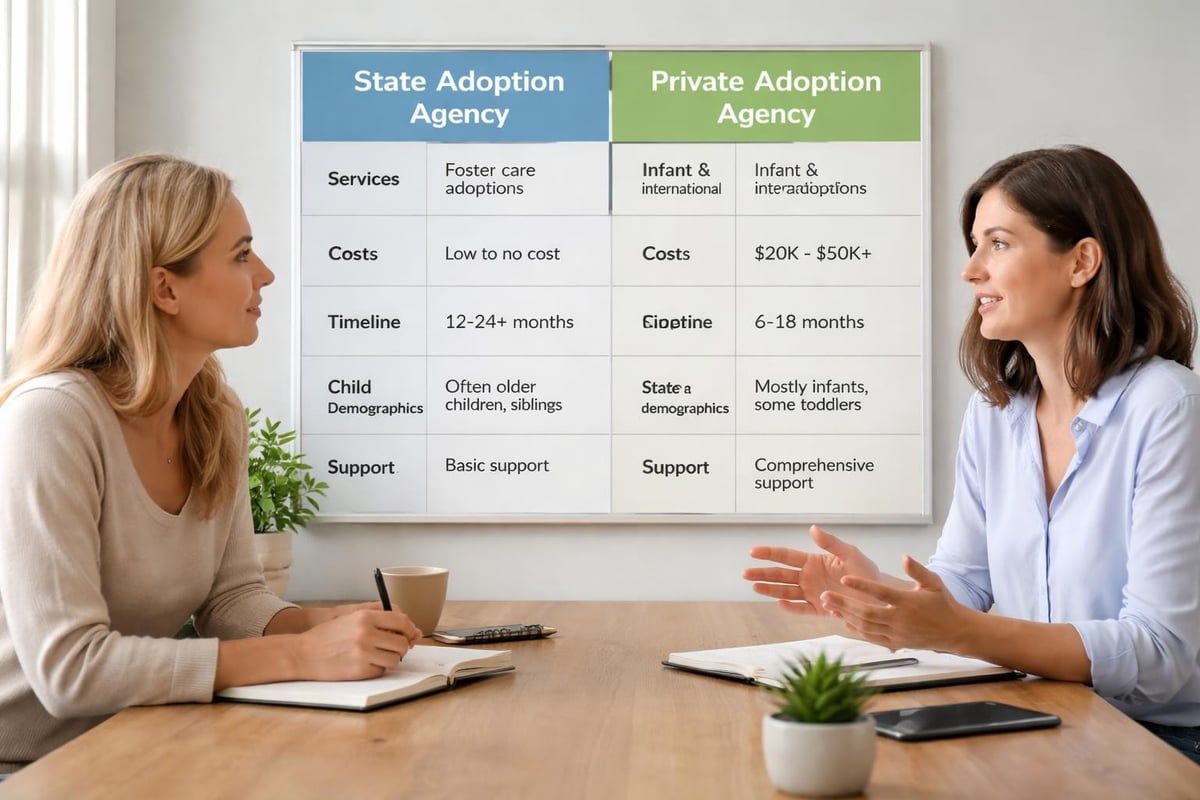
State vs Private Adoption Agencies: Understanding the Differences
The distinction between state and private adoption agencies significantly impacts your adoption experience. While both serve children and families, their structures, funding models, and client populations differ substantially.
Primary differences include:
- Child demographics – State agencies primarily serve older children and sibling groups from foster care, while private agencies like Tapestry Adoption specialize in newborn adoption
- Cost structure – State adoptions typically involve minimal fees; private agencies charge for services but provide more personalized support
- Timeline expectations – State processes can extend years due to legal complexities; private infant adoptions often proceed more quickly
- Birth parent involvement – State cases rarely involve birth parent contact; private agencies facilitate open adoption arrangements
- Service intensity – Private agencies offer more individualized counseling and matching services
Neither option is inherently superior. Your choice depends on your family's goals, resources, and preferences. Families hoping to adopt infants often find private agencies better suited to their needs, while those open to older children may prefer working with their state adoption agency.
Financial Considerations and Support
Cost represents a significant factor in adoption decisions. State adoption agencies offer virtually free adoptions, with many states covering legal fees and providing monthly subsidies for special needs adoptions. This accessibility opens adoption to families who couldn't afford private agency fees.
Private agencies charge for their services, but these fees support comprehensive counseling for expectant mothers, extensive family preparation, and personalized matching processes. Many private agencies offer financial assistance and guidance to make adoption more accessible.
Navigating State Adoption Agency Requirements in 2026
Requirements continue evolving as states refine their child welfare systems. Current trends emphasize trauma-informed care, cultural competency, and evidence-based practices. Understanding these requirements helps families prepare effectively.
Current state requirements typically mandate:
- Minimum age requirements (usually 21 or older)
- Stable income and suitable housing
- Comprehensive background checks
- Medical examinations and health clearances
- Personal and professional references
- Completion of pre-adoption training
- Home study approval
Oregon’s adoption agency regulations exemplify modern standards that prioritize child well-being while supporting adoptive families. These protocols ensure families understand the complexities of adopting children with trauma histories.
Training and Education Expectations
Pre-adoption training has expanded significantly in recent years. State adoption agencies require prospective parents to complete courses covering trauma-informed parenting, attachment issues, cultural competency, and managing challenging behaviors. These requirements reflect growing understanding of adoptees' unique needs.
Training duration varies by state but typically ranges from 12 to 30 hours of instruction. While time-intensive, this preparation proves invaluable for family success. Studies consistently show that well-prepared families experience better outcomes and fewer adoption disruptions.
For families exploring the adoption process, understanding these educational requirements helps set realistic expectations and timelines.
Working With Multiple Agency Types for Comprehensive Support
Many families benefit from engaging both state and private resources throughout their adoption journey. This hybrid approach leverages strengths of different systems while addressing individual family needs.
For example, families completing state-required home studies might work with private agencies for additional counseling or support services. Conversely, families initially connecting with private agencies might later explore state programs for specific resources or subsidies.
| Scenario | State Agency Role | Private Agency Role |
|---|---|---|
| Infant adoption with open contact | Licensing oversight only | Primary service provider for matching, counseling, placement |
| Older child adoption | Primary service provider | Supplemental post-adoption therapy and support |
| Step-parent adoption | Legal processing and approval | Home study completion and family preparation |
| Interstate adoption | ICPC compliance and approval | Case management and family support |
This collaborative model recognizes that no single agency meets every need. Ethical adoption practices require transparency about what each provider offers and honest guidance about which services best serve individual situations.
Coordinating Between Agencies
When working with multiple providers, clear communication becomes essential. Families should ensure all agencies understand their role, share necessary information appropriately, and coordinate timelines effectively.
Document everything in writing, maintain organized files, and designate a primary point person for agency communications. This organization prevents confusion and keeps your adoption moving forward smoothly.

State Adoption Agency Resources for Expectant Mothers
While state adoption agencies primarily focus on foster care adoptions, they also maintain resources for expectant mothers considering adoption plans. These resources vary significantly by state and typically include referrals to licensed private agencies and adoption information.
Support available through state systems includes:
- Neutral information about adoption options
- Referrals to licensed adoption agencies
- Legal rights education
- Access to independent legal counsel
- Connection to community resources
Expectant mothers deserve comprehensive, unbiased support when considering adoption. State agencies provide baseline information, but specialized private agencies typically offer more extensive counseling, financial assistance, and emotional support throughout the pregnancy and placement process.
Rights and Protections
Every state maintains specific laws protecting expectant mothers' rights during the adoption process. These include waiting periods before consent becomes final, revocation rights, and protections against coercion. Texas’s helpful resources page demonstrates how states compile information about these critical protections.
Understanding your legal rights empowers informed decision-making. Whether working with a state adoption agency or private provider, expectant mothers should receive clear explanations of their rights, timelines, and options.
Choosing the Right Path for Your Adoption Journey
Your adoption path should align with your unique circumstances, goals, and values. State adoption agencies serve crucial roles in child welfare systems, providing homes for children who need families. Private agencies like Tapestry Adoption specialize in different aspects of adoption, particularly infant placements and comprehensive support services.
Consider these factors when determining your path:
For families hoping to adopt:
- Age and needs of children you're prepared to parent
- Timeline expectations and flexibility
- Financial resources and constraints
- Desired level of birth parent contact
- Support services you'll need post-placement
For expectant mothers exploring adoption:
- Desired level of involvement in family selection
- Preferences for ongoing contact and communication
- Need for counseling and emotional support
- Financial assistance requirements
- Cultural or religious considerations
Neither state nor private agencies offer one-size-fits-all solutions. The best choice honors your specific situation while prioritizing children's best interests and ethical practices.
Questions to Ask Any Adoption Agency
Before committing to work with any agency, gather comprehensive information:
- What licenses and accreditations do you maintain?
- What services are included in your fees?
- What is your average timeline from application to placement?
- How do you support families post-placement?
- What are your policies on birth parent contact?
- How do you handle disrupted adoptions?
- What training do you provide prospective parents?
- Can you provide references from families you've served?
These questions apply whether you're engaging a state adoption agency or private provider. Thorough vetting ensures you partner with an organization aligned with your values and needs.
Regional Variations in State Adoption Agency Practices
Adoption regulations and practices vary considerably across states. What's required in California differs substantially from Indiana's requirements, affecting timelines, costs, and procedures. Understanding your state's specific landscape proves essential for realistic planning.
Some states maintain centralized adoption divisions while others distribute responsibilities across counties. Certain states offer robust post-adoption subsidies; others provide minimal ongoing support. These variations reflect different policy priorities, funding levels, and political landscapes.
Notable regional differences include:
- Waiting periods before adoption finalization
- Consent revocation timelines for birth parents
- Home study requirements and costs
- Post-adoption support availability
- Interstate adoption procedures
- Adoption tax credits and subsidies
For families in Indiana, understanding local adoption options helps navigate state-specific requirements efficiently. Regional expertise becomes invaluable when managing bureaucratic complexities.
Staying Current With Changing Regulations
Adoption laws and policies continually evolve. Court decisions, legislative changes, and administrative updates regularly impact how state adoption agencies operate. Staying informed about these changes protects your interests and prevents unexpected obstacles.
Subscribe to updates from your state's child welfare department, join adoption advocacy organizations, and maintain regular communication with your agency. When regulations change, your agency should proactively inform you about implications for your case.
Building Your Support Network Beyond Agency Services
While state adoption agencies provide essential services, successful adoptions require broader support networks. Connect with adoptive parent groups, post-adoption therapists, educational advocates, and community resources that understand adoption-related needs.
Many families find tremendous value in connecting with others who share their experiences. Support groups offer practical advice, emotional validation, and lasting friendships. Both state agencies and private providers typically facilitate these connections, but families can also seek independent community resources.
Valuable support network components:
- Adoption-competent therapists and counselors
- Pediatricians experienced with adopted children
- Educational advocates familiar with adoption issues
- Legal professionals specializing in adoption law
- Faith communities supporting adoptive families
- Online forums and social media groups
Building these connections early, ideally during the waiting period, provides resources you'll need throughout your adoption journey. Don't wait for challenges to arise before seeking support.
Understanding how state adoption agencies operate, what services they provide, and how they differ from private agencies empowers you to make informed decisions about your adoption journey. Whether you're an expectant mother exploring options or a family hoping to grow through adoption, knowing your choices creates confidence and clarity. If you're seeking personalized support, comprehensive counseling, and ethical guidance throughout the adoption process, Tapestry Adoption provides the specialized services, compassionate care, and expert assistance that transform adoption dreams into reality.