


Guide to Information Adoption: Essential Strategies for 2026
In today’s fast-paced digital landscape, staying ahead means mastering how we absorb and use new knowledge. As we approach 2026, the stakes are higher than ever. Those who excel at information adoption will lead innovation, drive efficiency, and outperform the competition.
This guide is your roadmap to success. You’ll discover proven frameworks, actionable strategies, and expert insights designed to help you thrive in the information-rich future. Ready to transform the way you learn, adapt, and win? Let’s dive in.
Understanding Information Adoption: Concepts and Importance
In today's digital landscape, the way we approach information adoption can make or break success. As organizations and individuals face a constant influx of new data, mastering the process of absorbing and utilizing relevant knowledge is now a top priority. Let's break down what information adoption truly means, why it is crucial for the future, and how real-world examples can guide your strategic decisions.

Defining Information Adoption
Information adoption is the process by which individuals and organizations internalize new data, knowledge, or practices and put them into action. Unlike information diffusion, which focuses on spreading ideas, information adoption is about truly assimilating and implementing what is learned.
This difference is critical. While diffusion gets information out, adoption ensures it is understood, used, and embedded into workflows. For example, in the tech sector, a software update is diffused to all users, but only those who integrate its features into their daily tasks have achieved information adoption.
Key terms to know include:
- Adoption: Accepting and using new information.
- Assimilation: Absorbing information into existing knowledge structures.
- Implementation: Putting information into practical use.
Understanding these concepts is vital, as information adoption is the foundation for innovation, sound decision-making, and successful organizational change. For a deeper dive into how ideas spread and are adopted, see the Diffusion of Innovations Theory.
The Role of Information Adoption in 2026
By 2026, information adoption will be even more important due to the explosion of data and rapid digital transformation. AI, automation, and remote work have accelerated the pace at which new information enters organizations. This reality makes effective information adoption a core competitive advantage.
Recent studies indicate that over 75 percent of organizations cite information overload as a major challenge in the modern workplace. Without strong information adoption practices, companies risk lost productivity, missed opportunities, and falling behind competitors.
The cost of poor information adoption is significant. It leads to confusion, slow response times, and wasted resources. On the flip side, organizations that excel at information adoption can innovate faster, make better decisions, and adapt quickly to change.
Real-World Examples
Consider a leading tech company that embraced efficient information adoption by deploying AI-driven alerts and real-time knowledge sharing platforms. This move enabled teams to quickly absorb critical updates, outpacing competitors who struggled with outdated processes.
Conversely, some organizations failed to prioritize information adoption. One notable example from 2023 involved a global retailer that did not train staff on new compliance rules, resulting in costly fines and reputational damage.
These stories from the 2023-2024 business landscape underscore a vital lesson: information adoption is not just a buzzword, but a proven driver of success. As you plan for the future, make information adoption a central pillar of your strategy.
The Information Adoption Process: Key Steps for 2026
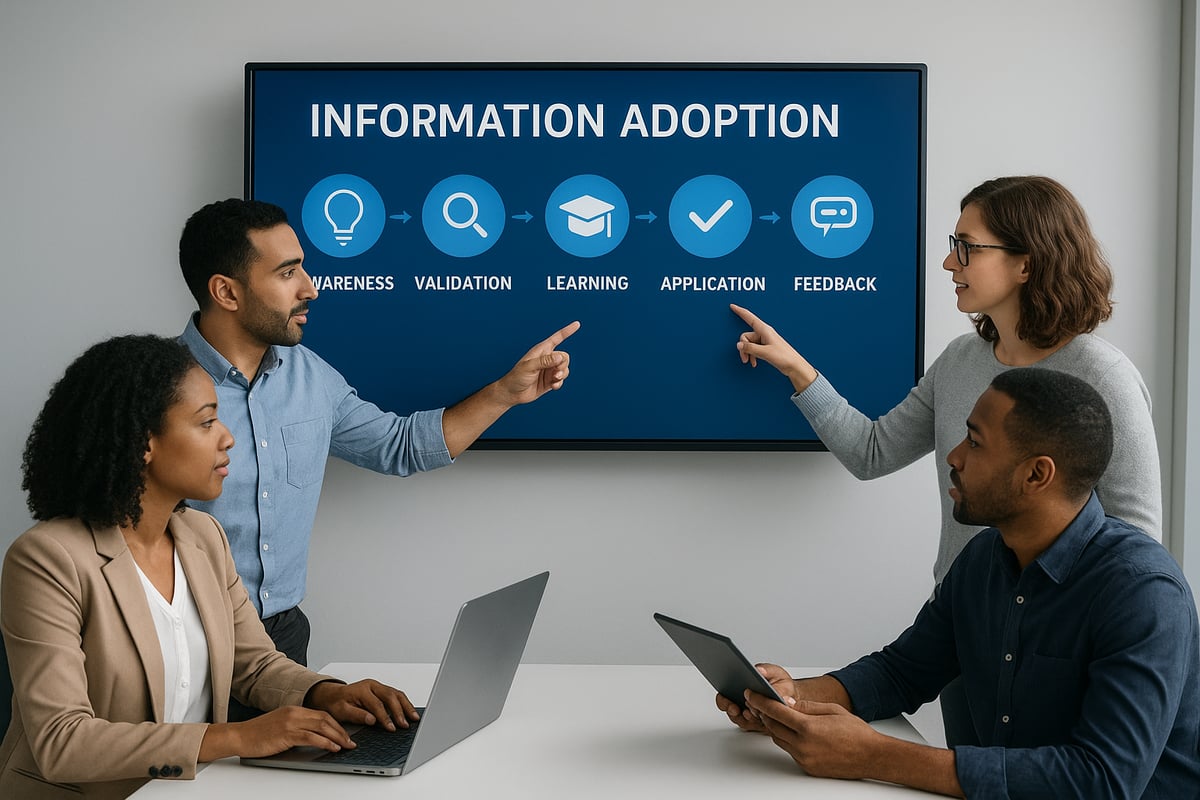
Mastering the information adoption process is crucial for thriving in 2026's fast-paced environment. Whether you are leading an organization or managing your own learning, understanding each stage of information adoption unlocks greater innovation and efficiency. Let's break down the essential steps, offering actionable insights for every phase. For a step-by-step look at adoption frameworks, see The Home Study Process Explained.
Step 1: Awareness and Information Sourcing
The first step in information adoption is becoming aware of new data and identifying where to find it. Organizations rely on a mix of internal communication channels and digital platforms to gather relevant information quickly.
Methods for effective sourcing include:
- Subscribing to industry news feeds and AI-driven alerts
- Engaging with professional networks and forums
- Leveraging internal dashboards for real-time updates
Timely awareness allows teams to respond to changes before competitors. For example, AI-powered tools can notify healthcare teams about emerging medical research, giving them a head start in information adoption.
Step 2: Evaluation and Validation
Once new data is identified, the next phase of information adoption involves evaluating its accuracy and relevance. Teams use frameworks, such as peer review or fact-checking software, to validate information before integrating it into workflows.
Key criteria for validation include:
- Source credibility and expertise
- Consistency with existing knowledge
- Timeliness and data accuracy
Data literacy is essential at this stage. For instance, healthcare organizations follow strict protocols to validate medical studies, ensuring only reliable insights are adopted. This step helps maintain trust in information adoption across all levels.
Step 3: Internalization and Learning
After validation, information adoption requires that individuals and teams internalize and learn the new knowledge. Microlearning, peer-to-peer sessions, and just-in-time training are popular strategies for effective transfer and retention.
Organizations often use learning management systems (LMS) to structure and track this process. A supportive culture that values continuous learning accelerates information adoption. For example, global enterprises implement LMS platforms to deliver bite-sized training, making it easier for employees to absorb and apply new information.
Step 4: Application and Integration
In this step, information adoption moves from theory into practice. Embedding new information into daily workflows and decision-making processes is critical for long-term success.
Strategies include:
- Updating standard operating procedures
- Using digital knowledge bases and workflow automation
- Implementing change management best practices
Financial institutions, for example, integrate regulatory updates directly into their systems to ensure compliance. This approach streamlines information adoption and minimizes disruption during transitions.
Step 5: Feedback and Continuous Improvement
The final step in the information adoption process is gathering feedback and refining strategies. Organizations use analytics, performance metrics, and real-time feedback loops to measure the effectiveness of adoption initiatives.
Feedback mechanisms include:
- Surveys and direct input from users
- Usage data from digital platforms
- Regular review meetings for iterative improvement
Tech companies frequently analyze onboarding data to optimize information adoption processes. Continuous improvement ensures organizations stay agile and can adapt quickly to new information.
Essential Strategies for Effective Information Adoption
Effective information adoption is not just a technical process. It is a cultural, technological, and behavioral journey that organizations must master to thrive in 2026. Let us break down the most essential strategies for ensuring your information adoption efforts deliver tangible results.

Building a Culture of Information Agility
Organizations that excel at information adoption are relentless about cultivating a culture of agility. Leaders set the tone by encouraging curiosity and openness to new knowledge. They reward experimentation and create safe spaces for sharing lessons learned, even from failures.
- Leadership models learning and transparency
- Teams are empowered to test and iterate quickly
- Knowledge sharing is incentivized across functions
For example, agile organizations often form cross-functional squads to tackle emerging challenges, making information adoption a collective mission. When everyone is invested, the process is faster and more resilient. Embedding information adoption into daily habits ensures the organization adapts to change rather than resists it.
Leveraging Technology for Adoption Acceleration
Technology is a powerful accelerator for information adoption. AI, machine learning, and automation streamline the flow of knowledge, surfacing relevant insights exactly when and where they are needed. Digital collaboration platforms, like Slack or Microsoft Teams, make real-time sharing effortless.
- AI-powered recommendation engines personalize learning
- Data visualization tools simplify complex information
- Automation eliminates repetitive manual updates
Understanding how users accept new tools is critical, and frameworks like the Technology Acceptance Model Overview can guide your approach. For instance, companies deploying AI-driven learning platforms see higher engagement and quicker adoption of critical updates, making information adoption seamless and efficient.
Structured Change Management Approaches
A structured approach is vital for effective information adoption. Models such as ADKAR or Kotter’s 8-Step Change Model provide proven frameworks to guide organizations through transformation.
- Communicate the need for change clearly and consistently
- Engage stakeholders early and often
- Offer training tailored to diverse learning styles
Consider a phased rollout of new software, where pilot groups provide feedback before a full launch. This builds confidence and addresses challenges proactively. Successful information adoption depends on clear plans, strong communication, and ongoing support at every stage.
Measuring and Rewarding Adoption Success
You cannot optimize what you do not measure. Setting clear KPIs ensures information adoption is tracked and improved over time. Recognizing and rewarding early adopters motivates teams to embrace new information enthusiastically.
| KPI | Measurement | Reward Example |
|---|---|---|
| Time-to-Adoption | Days from launch to usage | Bonus or recognition |
| Usage Rates | % of team actively engaged | Team incentives |
| Knowledge Transfer Rate | % completing training | Certificates, awards |
For example, sales teams that quickly adopt new CRM tools are often celebrated as knowledge champions. This fuels healthy competition and accelerates organization-wide information adoption.
Overcoming Resistance and Cognitive Biases
Resistance is natural in any information adoption initiative. Common sources include fear of change, information overload, and ingrained habits. Understanding these barriers is half the battle.
- Identify sources of resistance through surveys or interviews
- Use workshops and coaching to address concerns
- Apply psychological strategies to foster open-mindedness
For instance, organizations often run targeted workshops to help staff overcome biases and build confidence in new systems. Addressing resistance head-on turns skeptics into advocates and removes obstacles to effective information adoption.
Information Adoption at the Organizational vs. Individual Level
To master information adoption in 2026, organizations must implement strategies that align structure and culture with fast-changing knowledge demands. At the same time, individuals play a critical role in how information is absorbed, shared, and acted upon. Understanding the interplay between these levels is essential for building a truly agile organization.

Organizational Strategies and Structures
Organizations succeed at information adoption when they design structures that support both top-down guidance and bottom-up innovation. Leadership must set clear priorities, while middle management connects vision to execution. Many companies create cross-functional adoption task forces to break silos and accelerate learning.
For example, multinational corporations often leverage a “center of excellence” model, pooling expertise and resources to promote best practices. Theories from innovation research, as outlined in the Systematic Review of Innovation Adoption Theories, highlight the importance of aligning strategy, culture, and communication for effective information adoption. These approaches help organizations adapt quickly and stay ahead of the curve.
Individual Behaviors and Influencers
At the individual level, information adoption is shaped by motivation, digital literacy, and self-efficacy. Employees who feel empowered are more likely to engage with new information and take initiative. Informal leaders and peer networks often drive adoption by modeling positive behaviors and sharing success stories.
Employee advocacy programs encourage team members to become champions for change. Internal influencers help bridge gaps between leadership and frontline staff, making information adoption more relatable and achievable. Social proof, such as testimonials from early adopters, can inspire others to participate.
Synchronizing Organizational and Individual Efforts
True success in information adoption comes when organizational goals and individual actions are fully aligned. Incentives and communication strategies must motivate both groups. Leaders should create feedback loops that connect executive vision with on-the-ground insights.
Continuous improvement programs that combine organizational objectives with personal development help ensure lasting adoption. When both levels are synchronized, organizations are more resilient and responsive to change.
Metrics and Measurement at Both Levels
Measuring information adoption requires both organizational and individual metrics. At the company level, KPIs might include adoption rates, time-to-competency, or process efficiency. For individuals, performance metrics can track engagement, skill mastery, and contribution to knowledge sharing.
Analytics dashboards allow leaders to identify gaps and opportunities in adoption. By comparing data across teams and roles, organizations can tailor interventions that maximize impact. Transparent measurement also boosts accountability and motivation.
Case Study Comparison
Consider two organizations: One achieved rapid information adoption by empowering both leadership and employees, while the other struggled due to misaligned incentives and poor communication. The successful company used regular feedback, clear metrics, and recognition for early adopters. In contrast, the failed initiative lacked buy-in at the individual level, leading to resistance and low uptake.
The lesson is clear: Sustainable information adoption requires integrated efforts at every level. By combining strong organizational frameworks with empowered individuals, organizations can thrive in the digital era.
The Role of Technology in Information Adoption
Technology is the backbone of successful information adoption in 2026. As organizations race to keep up with constant change, the right digital tools can make or break their ability to absorb and act on new knowledge. Let’s explore how technology is transforming information adoption at every level.

Digital Tools and Platforms
Modern organizations rely on a mix of platforms to streamline information adoption. Learning management systems (LMS), company intranets, and digital workspaces like Microsoft Teams and SharePoint centralize knowledge, making it accessible to everyone.
- LMS: Supports structured learning and compliance.
- Intranets: Serve as hubs for announcements and resources.
- AI assistants: Offer quick answers and automate repetitive tasks.
Integration is key. When these platforms work together, they create a seamless environment for information adoption, ensuring updates and best practices reach every team member quickly.
Artificial Intelligence and Automation
Artificial intelligence is reshaping information adoption by curating, distributing, and personalizing content for users. AI-driven chatbots and recommendation engines deliver relevant information on demand, reducing manual search time.
Automation handles routine information processing, freeing up human talent for higher-level tasks. According to AI Adoption Trends for 2026, nearly half of global boards now prioritize AI adoption to accelerate digital transformation.
By leveraging these technologies, organizations can ensure that information adoption is timely and tailored to individual needs.
Data Security and Privacy Considerations
With the rise of information adoption, safeguarding data is more important than ever. Secure platforms must balance open sharing with strict privacy controls.
- Compliance: Regulations like GDPR and CCPA set clear rules for data use.
- Access controls: Limit sensitive information to authorized users.
- Encryption: Protects data in transit and at rest.
For example, financial institutions must integrate information adoption practices that keep customer data safe while enabling real-time updates for compliance and customer service.
Future Technology Trends for 2026
Emerging technologies promise to redefine information adoption in the coming years. Augmented and virtual reality (AR/VR) create immersive learning experiences, while blockchain technology ensures data integrity and transparent records.
Adaptive learning platforms will evolve, responding dynamically to user behavior and needs. As these trends accelerate, staying ahead in information adoption will require continuous investment in the latest tools and a proactive approach to change.
Overcoming Challenges in Information Adoption
In today’s digital landscape, organizations face a range of obstacles when implementing information adoption strategies. Success depends on recognizing these hurdles, proactively addressing them, and adapting to ongoing changes in the workplace environment.
Common Barriers to Adoption
Implementing information adoption often means navigating complex barriers. The most common include:
- Information overload and digital fatigue
- Resistance to change and established routines
- Insufficient training or digital literacy gaps
Recent surveys from 2024 reveal that more than 75% of organizations cite information overload as a top challenge. When employees feel overwhelmed, critical data gets missed. Resistance to change, whether due to comfort with old habits or fear of new technology, further slows progress. Without proper training, even the best systems go underutilized, stalling information adoption efforts.
Strategies for Mitigating Barriers
To overcome these challenges, simplify how information is delivered. Use targeted communication platforms that reduce noise and make it easier to find what matters. Personalized training and support ensure that employees build confidence with new tools and processes.
Leadership plays a crucial role by modeling openness and endorsing a culture of learning. When leaders champion information adoption, it motivates teams to follow suit. Combining these strategies creates a supportive environment where adoption is achievable for everyone.
Ensuring Equity and Accessibility
Equitable information adoption is essential for organizational growth. Addressing digital divides means providing access to technology and resources for all team members. Multilingual and accessible content formats help reach diverse audiences, ensuring no one is left behind.
Ethical considerations, such as those outlined in Ethical Practices in Adoption, remind organizations to prioritize fairness and transparency when sharing information. Nonprofits set strong examples by offering materials in multiple languages and formats, fostering an inclusive approach to information adoption.
Monitoring and Adapting to Ongoing Challenges
Continuous assessment is vital. Use real-time feedback loops to quickly identify and address new barriers as they arise. Agile adaptation ensures that information adoption strategies remain effective, even as workplace demands evolve.
Lessons from Recent Case Studies
Organizations that succeeded in information adoption over 2023 and 2024 credit their victories to proactive leadership, clear communication, and responsive support systems. By learning from these examples, any organization can build a stronger foundation for future adoption initiatives.
Future Outlook: Trends and Predictions for Information Adoption in 2026
The landscape of information adoption is evolving rapidly, driven by technology, globalization, and shifting workplace expectations. As we look toward 2026, organizations and individuals need to anticipate the trends shaping how new knowledge is absorbed and applied. Staying ahead requires understanding these emerging patterns and preparing to adapt.
The Evolution of Information Adoption Models
By 2026, information adoption will move from static, one-size-fits-all frameworks to dynamic, real-time models. These new approaches adapt instantly to user needs, leveraging behavioral science and neuroscience to personalize learning. Foundational frameworks, much like those outlined in resources such as Understanding Indiana Adoption, provide valuable blueprints for building flexible adoption strategies. Adaptive learning platforms will become the norm, evolving in response to user behavior and organizational context.
The Impact of Generative AI and Automation
Generative AI is set to revolutionize information adoption by automating content creation, curation, and distribution. Automated onboarding processes will help enterprises reduce manual barriers, ensuring faster and more consistent adoption. With AI tools, employees will receive personalized resources and guidance, streamlining the journey from learning to implementation. As automation handles routine tasks, people can focus on high-value decision-making, making information adoption more efficient and scalable.
The Rise of Data-Driven Decision Making
As analytics tools become more sophisticated, data-driven strategies will dominate information adoption. Organizations will rely on predictive analytics to anticipate adoption gaps and proactively address them. Retailers and service industries are already using data to tailor employee training, ensuring that learning is relevant and timely. This approach not only boosts engagement but also drives measurable results, creating a culture where information adoption is continuously optimized.
Globalization and Cross-Cultural Adoption
With businesses operating across borders, information adoption strategies must account for cultural and regional diversity. Multinational organizations will invest in localization, adapting content and processes for different audiences. Cross-cultural training, multilingual resources, and inclusive communication platforms will ensure equitable access to information. Successful information adoption in 2026 will hinge on bridging cultural gaps and customizing approaches to fit varied global contexts.
Preparing for the Next Decade
To thrive, future leaders in information adoption will need a blend of technical, analytical, and interpersonal skills. Continuous professional development will be essential. Key competencies include:
| Skill | Why It Matters |
|---|---|
| Digital literacy | Navigating new technologies |
| Data analysis | Making informed decisions |
| Cross-cultural fluency | Leading diverse teams |
| Change management | Driving successful adoption |
Investing in these areas now will ensure organizations and individuals are ready for whatever the next decade brings in information adoption.
As you explore the essential strategies for mastering information adoption in 2026, remember that the right resources can make all the difference—especially during life-changing moments. If you’re an expectant mom considering adoption, or supporting someone who is, you don’t have to navigate this journey alone. We’ve helped countless families and individuals find clarity, confidence, and support every step of the way. For compassionate guidance, legal and financial insights, and personalized counseling, grab your Free Expectant Mother Guide today. It’s your first step toward making informed, empowered decisions for your future.