



Your Complete Adoption Guide for 2026: What to Know
Choosing adoption represents one of the most significant decisions you'll ever make, whether you're an expectant mother considering an adoption plan or a family hoping to grow through adoption. This comprehensive adoption guide walks you through every critical step of the process, from your initial considerations through finalization and beyond. Understanding what lies ahead empowers you to make informed decisions that align with your values, circumstances, and vision for the future. At Tapestry Adoption, we've supported hundreds of families and expectant mothers through this journey, and we know that knowledge transforms uncertainty into confidence.
Understanding the Adoption Process from Start to Finish
The adoption journey follows a structured path designed to protect everyone involved while ensuring children find loving, stable homes. For expectant mothers, the process typically begins with reaching out to licensed adoption agencies to explore whether adoption aligns with your goals and circumstances. This initial consultation costs nothing and carries no obligation.
During this exploratory phase, you'll:
- Discuss your pregnancy, personal situation, and hopes for your baby's future
- Learn about different adoption types and what each involves
- Understand your rights throughout the entire process
- Receive information about available support services
- Ask questions without pressure or judgment
For prospective adoptive families, the journey begins differently but requires equal preparation. You'll complete a home study, undergo background checks, and work with professionals who help you understand what adoption truly means for your family.
Types of Adoption Plans Available
Modern adoption offers flexibility that wasn't available in previous generations. According to adoption trends tracked by the CDC, families increasingly choose open and semi-open arrangements that maintain some level of connection.
| Adoption Type | Contact Level | Best For |
|---|---|---|
| Closed Adoption | No contact or identifying information shared | Those preferring complete privacy |
| Semi-Open Adoption | Mediated contact through agency (letters, photos) | Those wanting updates without direct contact |
| Open Adoption | Direct contact between birth and adoptive families | Those valuing ongoing relationship |
The adoption plan you choose profoundly impacts everyone's experience. Many expectant mothers find comfort knowing they can receive updates and photos as their child grows. Adoptive families often appreciate the ability to answer their child's future questions with firsthand knowledge. Understanding adoption dynamics helps you select the arrangement that feels right.

Financial and Legal Support Throughout Your Adoption Journey
Money should never prevent you from making the best decision for your family. This adoption guide emphasizes a crucial truth: expectant mothers never pay for adoption services. In fact, comprehensive support addresses your needs during this challenging time.
Support Available for Expectant Mothers
When you work with ethical adoption professionals, you receive extensive assistance at no cost to you. These services typically include:
- Medical expenses not covered by insurance
- Legal representation separate from the adoptive family's attorney
- Counseling services before and after placement
- Living expenses including rent, utilities, and food
- Maternity clothing and pregnancy-related needs
- Transportation to appointments and meetings
Every state regulates what expenses agencies can cover, ensuring everything remains ethical and legal. At Tapestry Adoption, we provide transparent information about available support, helping you understand exactly what assistance you qualify for under Indiana law.
Investment for Adoptive Families
Prospective adoptive parents do incur costs throughout their journey. Understanding these expenses helps families plan appropriately and access available financial assistance.
Typical adoption expenses include:
- Home study fees ($1,500-$3,000)
- Agency fees ($20,000-$40,000)
- Legal fees ($2,500-$5,000)
- Travel and accommodation for placement
- Post-placement supervision visits
However, families shouldn't let these numbers discourage them. The adoption tax credit offers significant financial relief, and many employers provide adoption benefits. Additionally, agencies often offer payment plans and can connect families with grants and loans specifically designed for adoption.
The Home Study Process Demystified
For families pursuing adoption, the home study process represents a critical milestone. This comprehensive evaluation isn't designed to catch you doing something wrong but rather to ensure you're prepared for the realities of adoptive parenting.
What the Home Study Involves
A licensed social worker conducts your home study over several weeks or months. This adoption guide breaks down what you can expect:
The process includes multiple components that paint a complete picture of your family. You'll complete extensive paperwork documenting your background, financial stability, marriage history, and parenting philosophy. The social worker visits your home to ensure it's safe and has adequate space. You'll undergo background checks, provide medical clearances, and supply personal references.
Document requirements typically include:
- Birth certificates and marriage license
- Proof of income (tax returns, pay stubs)
- Medical evaluations for all household members
- Personal autobiographies
- Child abuse and criminal background clearances
- Home safety inspection completion
The social worker also conducts individual and joint interviews, exploring your motivations for adoption, parenting approach, and how you'll discuss adoption with your child. These conversations help prepare you for the unique aspects of adoptive parenting.

Timeline and Approval
Most families complete their home study within two to four months, though timelines vary based on how quickly you gather documents and schedule appointments. Once approved, your home study typically remains valid for one to two years, allowing time to match with an expectant mother.
Step parent adoptions require modified home studies that are generally less intensive than those for non-relative adoptions, though they still ensure the adoption serves the child's best interests.
Making an Adoption Plan as an Expectant Mother
If you're facing an unplanned pregnancy, this adoption guide addresses the specific considerations you're weighing. Your decision affects not only your life but your child's future, making it essential to have accurate information and genuine support.
Exploring Your Options Without Pressure
You have three primary options: parenting, adoption, or abortion. No one else can make this decision for you, and ethical adoption professionals never pressure you toward any particular choice.
When exploring adoption, consider these factors honestly:
- Your current life circumstances and readiness for parenting
- Your support system and available resources
- Your educational or career goals
- The birth father's involvement and wishes
- Your emotional preparedness for pregnancy and parenting
- What you envision for your child's future
The psychological impacts of adoption affect everyone involved differently. Some birth mothers find peace knowing they provided their child with a two-parent home they couldn't currently offer. Others experience grief that requires professional support to process healthily.
Selecting an Adoptive Family
This adoption guide emphasizes your control throughout the process. You review family profiles, select the family that feels right for your baby, and can even meet them before making a final decision.
When evaluating adoptive families, consider:
- Their parenting values and approach
- Their lifestyle and community
- Extended family involvement
- Religious or cultural preferences
- How they plan to honor your baby's heritage
- Their openness level and communication style
Many expectant mothers form meaningful connections with the adoptive family they select. These relationships, built on mutual respect and shared love for the child, often provide comfort during difficult moments.
Legal Protections and Rights in the Adoption Process
Understanding your legal rights constitutes a critical component of any adoption guide. Laws protect both expectant mothers and adoptive families, ensuring decisions are made freely and informed.
Rights of Expectant Mothers
You maintain full parental rights until you sign legal consent documents after your baby's birth. No one can force you to sign, and you can change your mind anytime before signing. Indiana law requires a waiting period before you can provide consent, ensuring you have time to meet your baby and confirm your decision.
Your rights include:
- Separate legal representation at no cost to you
- Full disclosure of all adoption terms and conditions
- Freedom from coercion or pressure
- Access to counseling before and after placement
- The right to change your mind during pregnancy
- Time to bond with your baby before making final decisions
Birth father consent in adoption varies by state and circumstance. Indiana law requires birth fathers to receive notification and opportunity to assert their rights, protecting everyone's interests throughout the process.
Legal Steps for Adoptive Families
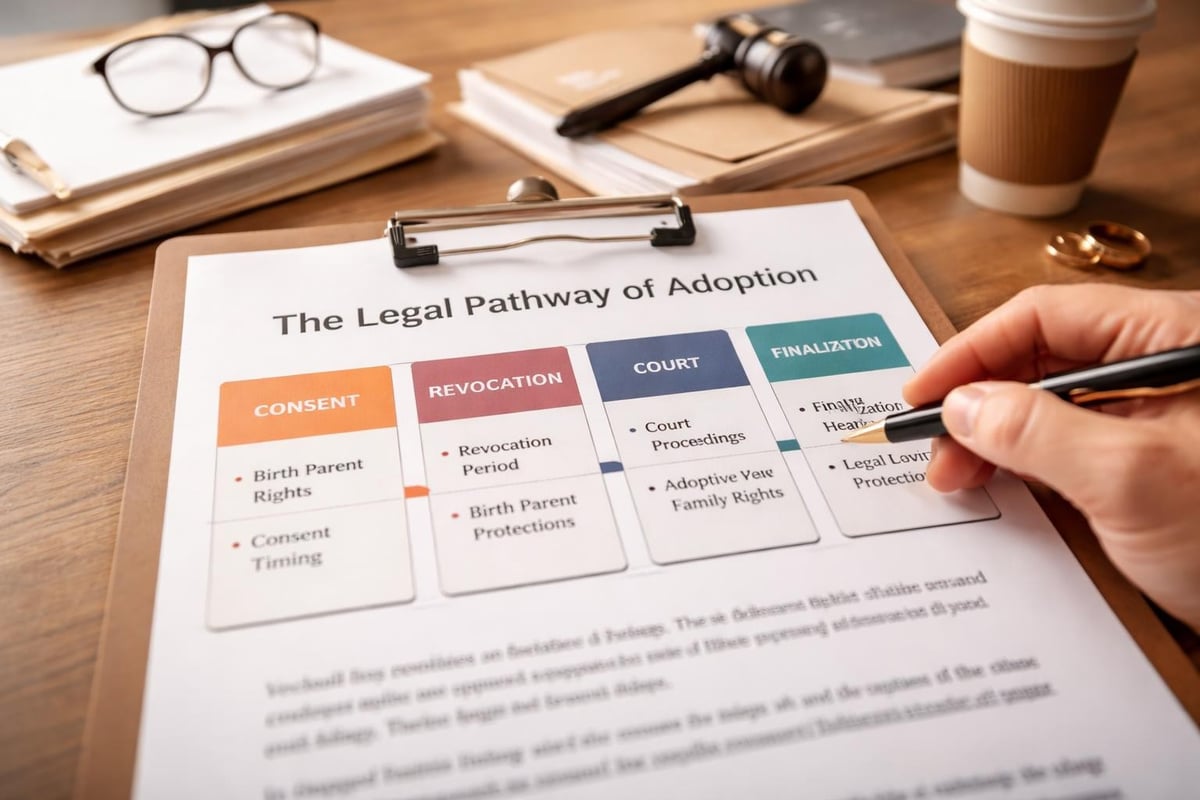
Adoptive families work with attorneys who specialize in adoption law, ensuring all procedures comply with state and federal requirements. The legal process includes petition filing, consent documentation, and finalization hearings where a judge grants permanent parental rights.
Support Services That Make the Difference
This adoption guide highlights the comprehensive support that transforms adoption from an overwhelming process into a manageable journey. Quality support addresses emotional, practical, and informational needs.
Counseling Throughout the Process
Professional counseling helps you process complex emotions, explore your options thoroughly, and develop coping strategies for challenges ahead. For expectant mothers, counseling addresses grief, loss, and healing after placement. For adoptive families, it prepares you for honest conversations with your child about their adoption story.
The relationship between adoption and mental health underscores why ongoing support matters. Everyone in the adoption constellation benefits from professional guidance at various points in their journey.
Counseling typically addresses:
- Decision-making and exploring feelings about adoption
- Relationship dynamics with the adoptive family or birth mother
- Grief and loss after placement
- Identity questions and adoption-related emotions
- Communication strategies for open adoption relationships
- Managing reactions from family and friends
Practical Assistance and Resources
Beyond emotional support, practical help addresses immediate needs. For expectant mothers, this includes medical care coordination, educational resources, and connections to community services. For adoptive families, it means preparation classes, matching assistance, and post-placement support.
The advocacy guide from the Donaldson Adoption Institute demonstrates how systemic support improves outcomes for everyone involved in adoption. Working with agencies committed to best practices ensures you receive comprehensive assistance.
Special Circumstances in Adoption
Every adoption journey is unique, and this adoption guide acknowledges that some situations require specialized support and understanding.
Kinship Care and Relative Adoption
When biological relatives adopt, the dynamics differ from traditional placements. Kinship care arrangements maintain family connections while addressing situations where parents cannot safely care for their children. Grandparents, aunts, uncles, and adult siblings often step forward, preserving family bonds while ensuring children's safety and stability.
These adoptions may qualify for simplified home studies and reduced fees, recognizing the existing relationship. However, legal protections remain essential to clarify custody, inheritance rights, and decision-making authority.
Unique Situations Requiring Specialized Support
Some circumstances demand additional consideration and resources:
| Situation | Special Considerations | Available Support |
|---|---|---|
| College Students | Balancing education with pregnancy and decision-making | Campus resources, educational planning, specialized counseling |
| Incarceration | Legal timing, limited access to services | Prison liaisons, expedited processes, video conferencing |
| Domestic Violence | Safety planning, confidentiality needs | Protected addresses, security measures, trauma counseling |
| Multi-Ethnic Families | Cultural preservation, identity development | Culturally competent matching, heritage education resources |
Choosing adoption as a college student or while experiencing domestic violence requires agencies with specific expertise in these areas. Don't settle for generic support when specialized services exist.
What Happens After Placement
This adoption guide wouldn't be complete without addressing life after placement day. The journey continues long past the initial placement, requiring ongoing support and adjustment.
For Birth Mothers: Healing and Moving Forward
The weeks and months following placement bring a complex mix of emotions. You may experience relief, grief, doubt, peace, and sadness simultaneously. This is entirely normal and doesn't mean you made the wrong decision.
Supporting your healing:
- Continue counseling as long as you find it helpful
- Join support groups with other birth mothers
- Maintain agreed-upon contact with the adoptive family
- Allow yourself to grieve while celebrating your strength
- Educate friends and family about supporting you appropriately
Many birth mothers find that addressing adoption stigma helps them own their story without shame. Your decision demonstrates love, courage, and selflessness.
For Adoptive Families: Bonding and Integration
Bringing your child home marks the beginning of your parenting journey, not the end of your adoption experience. Post-placement visits ensure your family is adjusting well and provide opportunities to address any concerns. Most states require these visits until finalization occurs, typically six months to one year after placement.
Early parenting focuses on:
- Establishing routines and attachment
- Managing well-meaning but intrusive questions from others
- Connecting with other adoptive families
- Planning age-appropriate adoption conversations
- Honoring your child's birth family and heritage
Understanding adoptees’ perspectives helps parents support their children's identity development as they grow. Adoption isn't a one-time event but an ongoing journey of love, identity, and family.
Geographic Considerations and Local Resources
Where you live impacts your adoption experience significantly. This adoption guide recognizes that state laws, available agencies, and support networks vary by location.
Working with Local Adoption Professionals
Indiana residents benefit from agencies specifically licensed to serve their communities. Whether you're in Indianapolis, southern Indiana, or Mishawaka, connecting with local adoption professionals ensures you understand state-specific laws and access nearby support services.
Proximity matters for expectant mothers receiving ongoing support and for adoptive families completing home visits and attending education classes. Local agencies also understand regional resources, hospital procedures, and community supports that enhance your experience.
Understanding State-Specific Requirements
Each state maintains distinct laws governing consent timing, revocation periods, birth father rights, and what expenses agencies can cover. Indiana adoption laws differ from neighboring states in important ways that affect your timeline and options.
Working with agencies licensed in your state prevents legal complications and ensures your adoption complies with all applicable regulations. Interstate adoptions require compliance with the Interstate Compact on the Placement of Children (ICPC), adding steps to the process.
Navigating adoption requires accurate information, compassionate support, and professionals committed to ethical practices. This adoption guide provides the foundation you need to make informed decisions, whether you're an expectant mother exploring your options or a family hoping to grow through adoption. At Tapestry Adoption, we walk alongside you throughout this journey, providing counseling, financial assistance, legal support, and the comprehensive services that transform uncertainty into confidence. Contact Tapestry Adoption today to speak with experienced professionals who prioritize your wellbeing and help you navigate every step of your unique adoption journey.