


Step Parent Adoption Indiana: Complete 2026 Guide
Blended families across Indiana face a unique opportunity to formalize the bonds they've already built through step parent adoption. This legal process transforms the relationship between a stepparent and stepchild into a permanent, recognized parent-child relationship with all the rights and responsibilities that come with it. For thousands of Indiana families each year, step parent adoption indiana procedures offer a pathway to security, stability, and official recognition of the family unit they've created together. Understanding the process, requirements, and benefits can help your family make an informed decision about whether this legal step is right for you.
Understanding Step Parent Adoption in Indiana
Step parent adoption represents one of the most common types of adoption in Indiana, accounting for a significant portion of all adoptions finalized in the state. Unlike infant adoption or foster care adoption, step parent adoption indiana cases involve a child who already lives with and has established a relationship with the adopting parent.
The legal framework governing these adoptions prioritizes the child's best interests while balancing the rights of biological parents. When finalized, the adoption permanently terminates the legal relationship between the child and one biological parent, transferring all parental rights and responsibilities to the stepparent.
Key benefits of step parent adoption include:
- Legal recognition of the parent-child relationship
- Inheritance rights for the child
- Medical decision-making authority
- Custody and visitation rights if the marriage ends
- Emotional security and family unity
The introduction to step parent adoption in Indiana provides families with essential foundational knowledge about this transformative legal process.
Who Qualifies for Step Parent Adoption
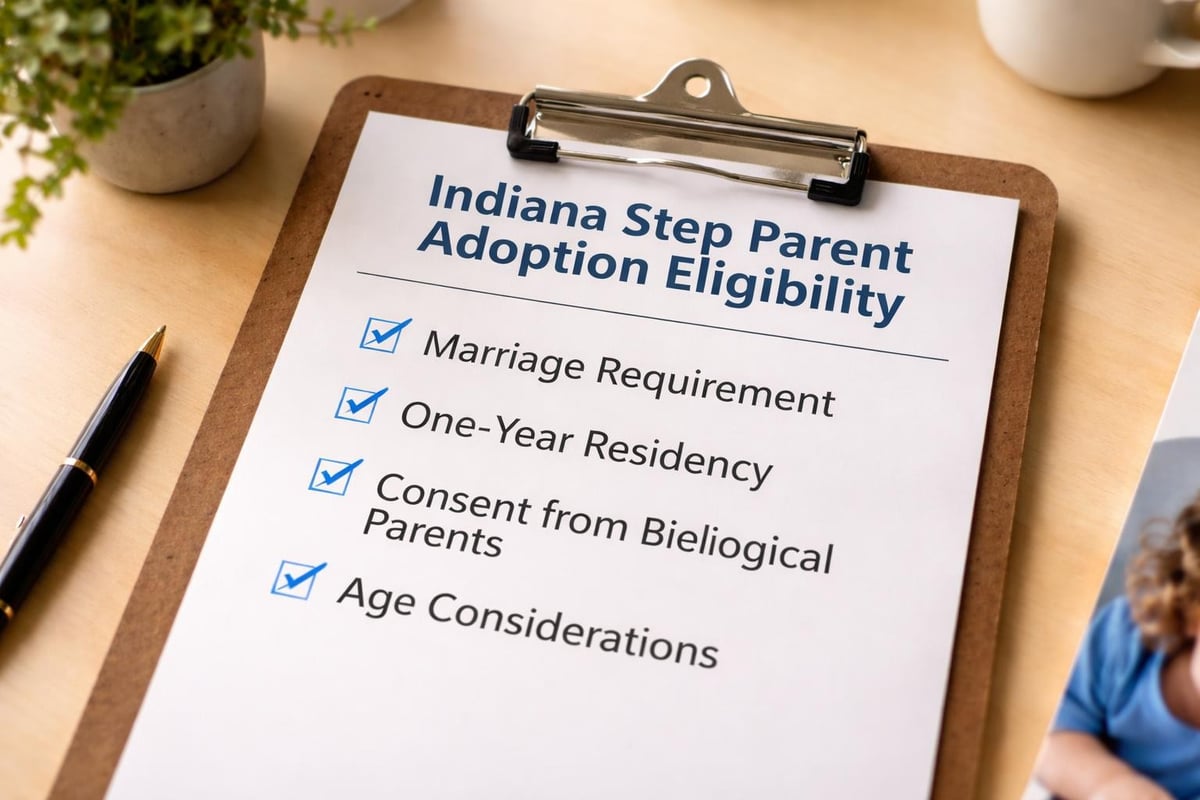
Indiana law establishes specific eligibility requirements that must be met before proceeding with step parent adoption. The stepparent must be legally married to the child's biological or adoptive parent. This marriage requirement is non-negotiable under current Indiana statutes.
Additionally, the child must have resided with the stepparent and their biological parent for at least one year before filing the adoption petition. This residency requirement ensures the relationship has stability and permanence before legal formalization.
The Legal Requirements and Documentation Process
Filing for step parent adoption indiana requires careful attention to legal procedures and documentation. The process begins with filing a petition in the county where the child resides. This petition must include specific information about the child, both biological parents, and the stepparent seeking adoption.
Understanding the cost of step-parent adoption in Indiana helps families budget appropriately for this important legal process. Court filing fees, attorney costs, and home study expenses can vary significantly based on your specific circumstances.
Consent Requirements and Termination of Rights
The most critical element in any step parent adoption involves obtaining proper consent or legally terminating the rights of the non-custodial biological parent. Indiana law recognizes several pathways to satisfy this requirement.
Consent can be achieved through:
- Voluntary consent from the biological parent
- Proof of abandonment (typically one year without contact or support)
- Court determination that consent is not required
- Previous termination of parental rights
When a biological parent voluntarily consents to the adoption, they must sign their consent before a notary public or in court. This consent becomes irrevocable after it's filed with the court, except in cases of fraud or duress. Families should review stepparent adoption laws and criteria in Indiana to understand these consent provisions thoroughly.
If the biological parent cannot be located or has abandoned the child, the petitioner must demonstrate reasonable efforts to find and notify them. The court may waive the consent requirement if abandonment or other statutory grounds exist.
Navigating the Home Study Process
Indiana requires a home study for step parent adoption indiana cases, though the process typically proves less intensive than home studies required for other adoption types. An approved agency conducts an assessment of the home environment, family relationships, and the stepparent's ability to provide for the child's needs.
The home study evaluates several critical factors that courts consider when making adoption decisions. Social workers interview family members, review financial stability, conduct background checks, and assess the overall home environment.
| Home Study Component | Purpose | Timeline |
|---|---|---|
| Background checks | Safety verification | 2-4 weeks |
| Financial review | Stability assessment | 1-2 weeks |
| Home visit | Environment evaluation | 1 day |
| Family interviews | Relationship assessment | 2-3 sessions |
| Final report | Court submission | 2-4 weeks |
What is a home study for adoption provides comprehensive information about this essential component of the adoption process. Professional agencies like Tapestry Adoption specialize in conducting thorough yet family-friendly home studies that meet Indiana legal requirements while supporting families through the process.
Background Checks and Safety Clearances
Criminal background checks and child protection services clearances are mandatory for all adults living in the home. Indiana law requires fingerprint-based background checks through state and federal databases.
These safety measures protect children and ensure adoptive parents meet minimum standards for child welfare. Most families find the background check process straightforward, though any criminal history requires additional documentation and explanation.
Court Procedures and Hearing Preparation
Once all documentation is complete and the home study approved, the court schedules a final adoption hearing. This hearing represents the culmination of the step parent adoption indiana process and typically occurs within three to six months of filing the petition.
Understanding stepparent adoption requirements in Indiana helps families prepare adequately for court appearances and documentation submission. Courts evaluate whether the adoption serves the child's best interests based on all submitted evidence and testimony.
What Happens at the Adoption Hearing
The adoption hearing is typically a positive, celebratory event. The judge reviews all submitted documentation, asks questions of the petitioners, and may speak with the child if they're old enough to express preferences.
Expect these elements at your hearing:
- Testimony from the stepparent and biological parent
- Review of the home study report
- Verification of consent or termination orders
- Questions about the child's wellbeing
- Judge's determination and decree
Most step parent adoption hearings in Indiana last 15 to 30 minutes. If all requirements are met and no objections exist, judges typically grant the adoption immediately. The court issues a final decree that legally establishes the parent-child relationship.
Financial Considerations and Cost Management
The financial investment required for step parent adoption indiana proceedings varies based on several factors. While generally less expensive than other adoption types, families should budget for multiple cost categories.
Court filing fees in Indiana counties typically range from $150 to $300. Attorney fees vary significantly based on case complexity, with straightforward cases costing $1,500 to $3,000 and contested cases potentially exceeding $5,000.
Breaking Down Adoption Expenses
| Expense Category | Typical Cost Range | Notes |
|---|---|---|
| Court filing fees | $150-$300 | County-dependent |
| Attorney fees | $1,500-$5,000+ | Complexity-based |
| Home study | $500-$1,500 | Agency-dependent |
| Background checks | $50-$150 | Per adult |
| Document preparation | $100-$300 | Varies by provider |
The step-parent adoption process in Indiana details various procedural steps that influence overall costs. Families working with experienced adoption agencies often find that professional guidance reduces delays and additional expenses.
Some families qualify for fee waivers based on income levels. Indiana courts may reduce or eliminate filing fees for families who demonstrate financial hardship through proper documentation.
Timeline and Expectations for Completion
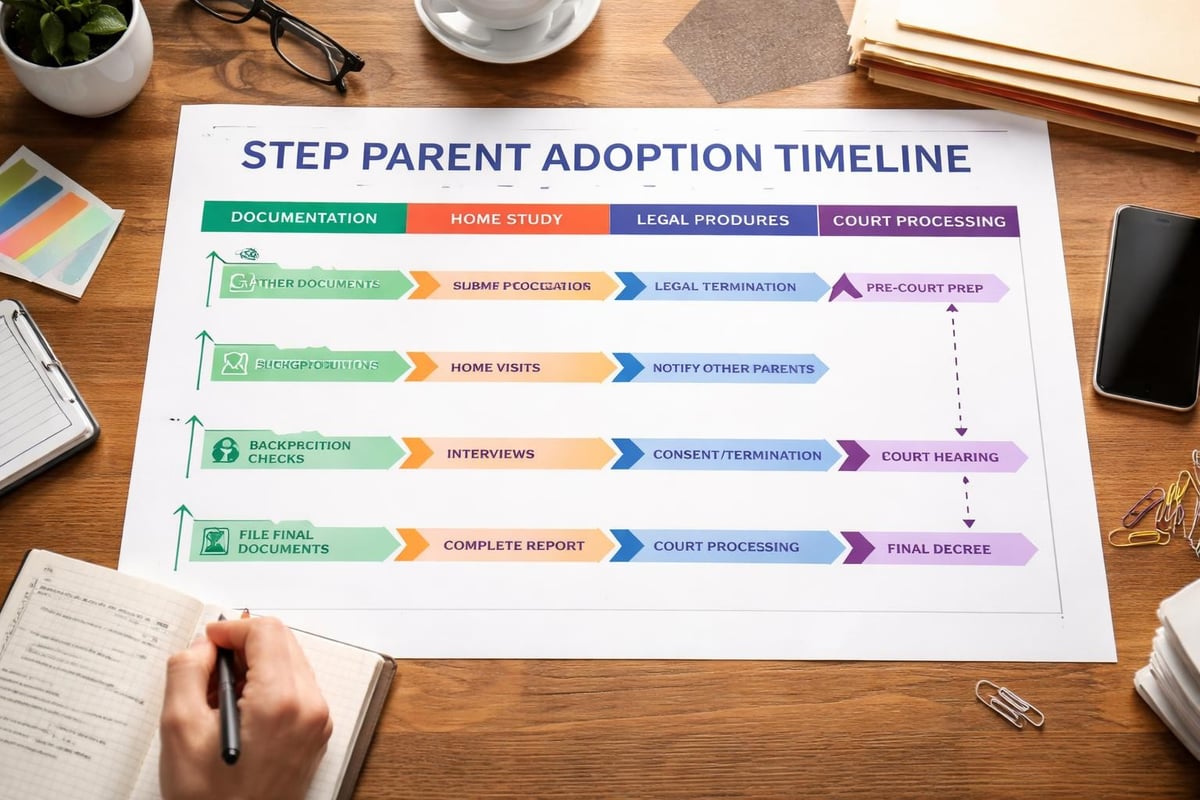
The step parent adoption indiana timeline depends on multiple variables including court schedules, consent complications, and documentation completeness. Understanding realistic timeframes helps families plan appropriately and manage expectations.
Typical timeline breakdown:
- Initial consultation and decision-making: 2-4 weeks
- Document gathering and petition preparation: 4-6 weeks
- Home study completion: 6-10 weeks
- Court filing and hearing scheduling: 8-12 weeks
- Final hearing and decree: 1 day
Straightforward cases with voluntary consent often finalize within four to six months. Contested cases or situations requiring termination proceedings can extend the process to 12 months or longer.
Factors That Influence Processing Time
Court backlogs significantly impact adoption timelines across Indiana counties. Urban counties with higher case volumes may have longer waiting periods for hearing dates compared to rural jurisdictions.
The complexity of locating and serving notice to a non-custodial biological parent can add months to the process. If publication notice becomes necessary due to an unknown whereabouts, additional statutory waiting periods apply.
Families who work with experienced professionals and prepare documentation thoroughly typically experience shorter timelines. The home study process moves more efficiently when families gather required information proactively.
Common Challenges and How to Overcome Them
Step parent adoption indiana cases sometimes encounter obstacles that require strategic navigation. Recognizing potential challenges allows families to address them proactively and maintain forward momentum.
Dealing with a Resistant Biological Parent
The most common complication involves a biological parent who refuses to consent but hasn't legally abandoned the child. In these situations, families must either negotiate consent or pursue termination of parental rights through court proceedings.
Demonstrating abandonment requires clear evidence of one year without substantial contact or financial support. Documentation becomes crucial, including records of missed visits, unpaid child support, and failed contact attempts.
Stepparent adoption legal considerations include strategies for addressing contested adoptions and protecting the child's interests throughout the process.
Managing Emotional Considerations
Children may experience conflicting emotions about the adoption, even when they support it. The process requires sensitivity to their feelings about changing relationships with biological parents.
Supporting children through adoption includes:
- Age-appropriate conversations about what adoption means
- Acknowledging their feelings about all parents involved
- Maintaining appropriate boundaries with the biological parent
- Providing counseling or therapy when needed
- Celebrating the adoption without diminishing other relationships
The emotional dynamics of blended families require ongoing attention and communication. Professional support through counseling services helps families navigate these complex feelings successfully.
Post-Adoption Rights and Responsibilities
Once finalized, step parent adoption creates permanent legal rights and responsibilities identical to those between biological parents and children. Understanding these changes helps families embrace their new legal status confidently.
The adopting stepparent gains full legal authority to make educational, medical, and religious decisions for the child. They become responsible for financial support until the child reaches adulthood.
Inheritance and Legal Protections
Adopted children gain full inheritance rights from the adoptive stepparent and their extended family. This protection ensures children can inherit from grandparents, receive life insurance benefits, and access other family financial resources.
The child's legal surname can change to match the adoptive stepparent's name if desired, though this change is optional. Many families choose name changes to reflect their unified family identity.
| Legal Right/Responsibility | Before Adoption | After Adoption |
|---|---|---|
| Medical decisions | Biological parents only | Includes adoptive stepparent |
| Inheritance rights | One family line | Both family lines |
| Child support obligation | Biological parent | Adoptive stepparent |
| Custody rights | Limited | Full parental rights |
| Tax benefits | Varies | Full dependent status |
If the marriage ends in divorce, the adopted stepparent retains full parental rights including potential custody and required child support obligations. The adoption creates a permanent parent-child relationship that survives the marital relationship.
Working with Professional Support Services
Navigating step parent adoption indiana procedures benefits significantly from professional guidance. Experienced adoption agencies provide comprehensive support throughout the entire process.
Professional services streamline documentation, ensure legal compliance, and reduce stress for families. Agencies familiar with Indiana adoption law anticipate potential complications and address them proactively.
Choosing the Right Adoption Agency
Families seeking step parent adoption services should evaluate agencies based on their experience with this specific adoption type. Not all adoption agencies handle step parent cases, and expertise varies significantly.
Tapestry Adoption’s reviews demonstrate the value of working with professionals who understand both the legal requirements and emotional dynamics of adoption. Experienced agencies coordinate between families, attorneys, and courts to facilitate smooth processing.
The right agency provides clear communication, transparent pricing, and compassionate support throughout the journey. They handle home study coordination, document preparation assistance, and court hearing preparation.
Legal Representation and Attorney Selection
While not legally required, attorney representation proves invaluable for most step parent adoption indiana cases. Experienced adoption attorneys navigate complex legal requirements and protect families' interests throughout the process.
Attorneys prepare and file petitions correctly, ensuring all statutory requirements are met. They communicate with courts, opposing parties, and agencies on behalf of families.
What to look for in an adoption attorney:
- Specific experience with Indiana step parent adoptions
- Knowledge of local court procedures and preferences
- Clear fee structures and cost estimates
- Positive client testimonials and references
- Responsive communication and accessibility
Stepparent adoption procedures in Indiana vary slightly by county, making local legal expertise particularly valuable. Attorneys familiar with specific judges and court staff navigate the system more efficiently.
Initial consultations allow families to assess attorney compatibility and expertise before committing to representation. Most adoption attorneys offer free or low-cost consultations to discuss case specifics and provide preliminary guidance.
Age-Specific Considerations for Children
Children's ages significantly influence step parent adoption indiana processes and requirements. Indiana law recognizes that older children should have input into decisions affecting their legal relationships.
Children aged 14 or older must consent to their own adoption in Indiana. This requirement ensures adolescents support the legal formalization of their stepparent relationship.
Adoption of Teenagers and Young Adults
Teen adoption presents unique considerations including identity development, relationship with biological parents, and future plans. Courts carefully evaluate whether adoption serves teenagers' best interests, particularly when they've lived most of their lives without the stepparent.
However, teen adoption offers significant benefits including college financial aid considerations, inheritance protections, and health insurance coverage. Many families pursue adoption specifically to secure these practical advantages for older children.
Adult adoption, while possible in Indiana, follows different procedures than minor adoption. Stepparents seeking to adopt children who've reached age 18 file different petitions and face different requirements.
Impact on Biological Parent Relationships
Step parent adoption legally and permanently terminates the relationship between the child and one biological parent. Understanding this consequence helps families make informed decisions and prepare children appropriately.
The terminated parent loses all legal rights including visitation, decision-making authority, and access to information. They also lose all legal responsibilities including child support obligations.
Balancing Family Dynamics
Some families maintain informal relationships with biological parents even after adoption, particularly when the biological parent voluntarily consented. While no legal obligation for contact exists, families may choose continued connection based on the child's needs and preferences.
Frequently asked questions about stepparent adoption address concerns about ongoing relationships and how adoption affects existing family bonds. Courts cannot order post-adoption contact with terminated parents, though families can arrange it privately.
The decision to pursue adoption despite ongoing biological parent involvement requires careful consideration. Some families choose not to pursue adoption to preserve legal relationships, while others prioritize the security and benefits adoption provides.
Special Circumstances and Complex Cases
Certain situations create additional complications in step parent adoption indiana proceedings. Recognizing these special circumstances allows families to prepare appropriately and seek necessary resources.
When the Biological Parent is Deceased
If the non-custodial biological parent has died, the adoption process typically simplifies since consent is not required. However, families must notify the deceased parent's relatives who may have visitation rights under Indiana law.
Grandparents and other relatives sometimes object to adoptions that would terminate their legal connection to the child. Courts balance these competing interests while prioritizing the child's best interests.
Interstate and International Considerations
Children born in other states or countries may face additional documentation requirements. Birth certificates from other jurisdictions must be properly certified and sometimes translated for Indiana court acceptance.
Military families stationed in Indiana but with legal residence elsewhere should consult with attorneys about jurisdiction and applicable law. The step parent adoption process may vary based on these factors.
Building Your Case for Best Interests
Indiana courts approve step parent adoptions only when they serve the child's best interests. Building a compelling case requires demonstrating how adoption benefits the child specifically.
Evidence courts consider persuasive includes:
- Length and quality of the stepparent-child relationship
- Financial stability the stepparent provides
- Emotional bonds and family integration
- The child's wishes (when age-appropriate)
- Biological parent's involvement or lack thereof
- Benefits of formalizing the existing relationship
Documentation supporting these factors strengthens petitions significantly. Letters from teachers, counselors, and family members can demonstrate the positive impact of the stepparent relationship.
Photographs, family event documentation, and evidence of the stepparent's involvement in the child's activities all support the best interests argument. Courts respond positively to comprehensive evidence of genuine, beneficial relationships.
Step parent adoption in Indiana creates permanent legal bonds that reflect the emotional relationships blended families have already built. Understanding the requirements, preparing thoroughly, and working with experienced professionals makes the process manageable and rewarding for families committed to formalizing their relationships. Whether you need guidance through home study procedures or comprehensive support throughout the entire adoption journey, Tapestry Adoption provides the expertise and compassionate assistance Indiana families deserve as they take this meaningful step toward legal recognition of their family bonds.