



Infant Adoption Indiana: Your Complete 2026 Guide
Making the decision to adopt an infant is one of the most profound choices you'll ever make. If you're considering infant adoption Indiana, you're entering a journey filled with hope, careful preparation, and comprehensive legal steps designed to protect everyone involved. Indiana's adoption framework provides clear pathways for both expectant mothers exploring their options and families hoping to welcome a newborn into their homes. Understanding the state's specific requirements, timelines, and support systems will empower you to move forward with confidence and clarity.
Understanding the Infant Adoption Indiana Landscape
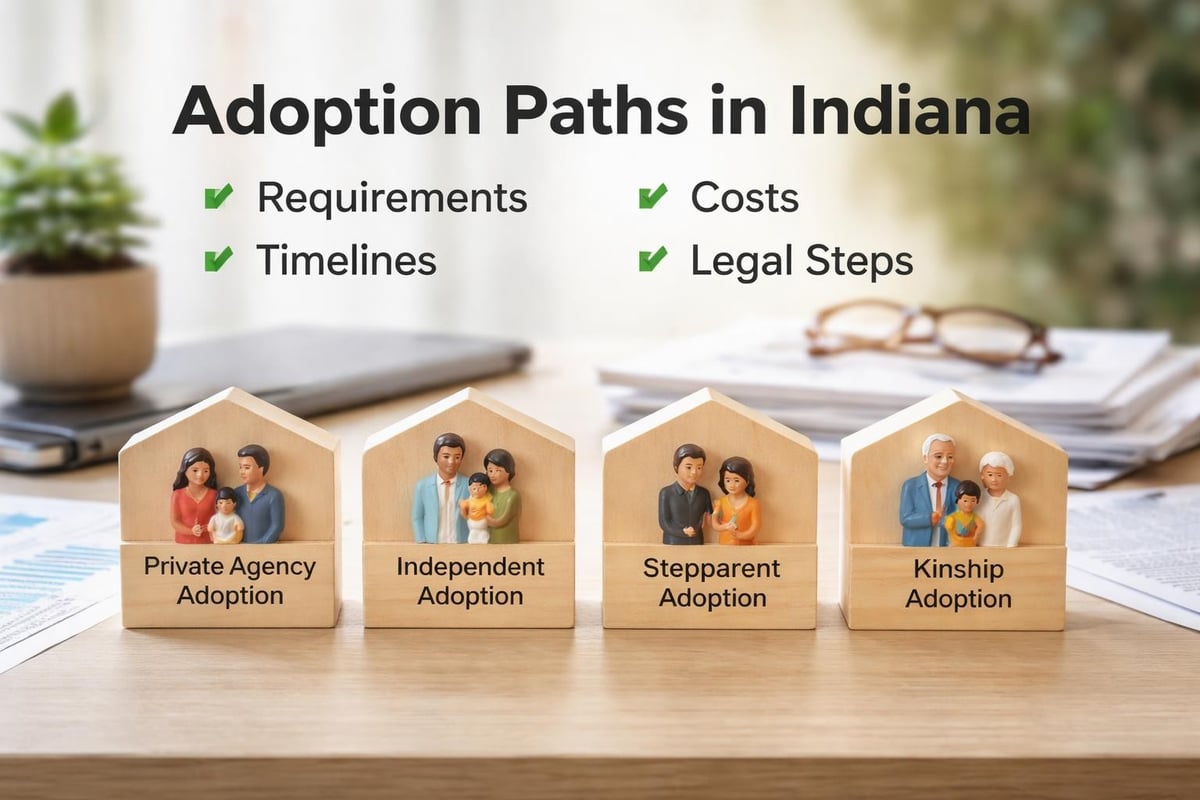
Indiana offers multiple pathways for families pursuing infant adoption, each with distinct characteristics and requirements. The state recognizes private agency adoptions, independent adoptions, and facilitator-assisted placements, giving families flexibility in how they approach building their family.
Private agency adoptions represent the most common route for infant adoption Indiana families. Licensed agencies like Tapestry Adoption provide comprehensive services including expectant mother counseling, family matching, home studies, and post-placement support. These agencies operate under strict state regulations that ensure ethical practices and proper documentation throughout the entire process.
Types of Adoption Available in Indiana
Different adoption types serve different family situations and needs. Understanding Indiana’s various adoption options helps you determine which path aligns with your circumstances.
- Private domestic infant adoption through licensed agencies
- Independent adoption facilitated by attorneys
- Stepparent adoption for blended families
- Relative or kinship adoption when family members step forward
- Foster-to-adopt programs through state agencies
Each pathway carries unique legal requirements, timelines, and cost structures. Private agency infant adoption Indiana typically ranges from $30,000 to $50,000, while independent adoptions may vary significantly based on attorney fees and expectant mother expenses.
Legal Requirements for Infant Adoption Indiana
Indiana law establishes specific prerequisites that prospective adoptive parents must meet before they can finalize an adoption. These requirements protect children's welfare while ensuring adoptive families are prepared for the responsibilities ahead.
Eligibility Criteria for Adoptive Parents
Age and residency requirements form the foundation of Indiana's adoption laws. At least one prospective adoptive parent must be at least 18 years old, though most agencies prefer applicants over 21. Indiana residency is not always required for agency adoptions, but it affects jurisdiction and court proceedings.
Background checks and clearances are non-negotiable elements of infant adoption Indiana. Every adult household member must complete:
- FBI fingerprint-based criminal history check
- Indiana State Police criminal history check
- Child protection services clearance
- Sex offender registry verification
These safeguards ensure children enter safe, stable environments. Most checks remain valid for 12 months, so timing matters when coordinating your adoption journey.
The Home Study Process
The home study represents the most comprehensive evaluation you'll undergo during infant adoption in Indiana. This assessment examines your readiness to parent, home safety, financial stability, and emotional preparedness.
| Home Study Component | What It Includes | Timeline |
|---|---|---|
| Application & Documentation | Financial records, medical exams, references | 2-3 weeks |
| Educational Requirements | Adoption training sessions | 8-12 hours |
| Home Visits | Safety inspection, family interviews | 2-3 visits |
| Background Checks | Criminal, child abuse clearances | 4-6 weeks |
| Final Report | Comprehensive family assessment | 2-4 weeks |
Total timeline: 3-5 months on average
The home study process requires transparency and authenticity. Social workers aren't looking for perfect families; they're seeking committed parents who understand adoption's unique aspects and demonstrate capacity for unconditional love.
Working with Expectant Mothers in Indiana
Infant adoption Indiana succeeds when expectant mothers receive comprehensive support and maintain full autonomy throughout their decision-making process. Ethical adoption practices prioritize the birth mother's wellbeing alongside the child's best interests.
Financial Support and Legal Protections
Indiana law permits adoptive families to provide pregnancy-related expenses to expectant mothers considering adoption. Allowable expenses include:
- Medical care not covered by insurance
- Maternity clothing
- Nutritional supplements
- Reasonable living expenses
- Counseling services
- Legal representation
Transparency is crucial. All financial assistance must be documented and disclosed to the court. Any appearance of coercion or payment beyond reasonable pregnancy expenses can jeopardize the adoption. Understanding finances and pregnancy-related expenses helps both parties maintain ethical boundaries.
Consent and Revocation Periods
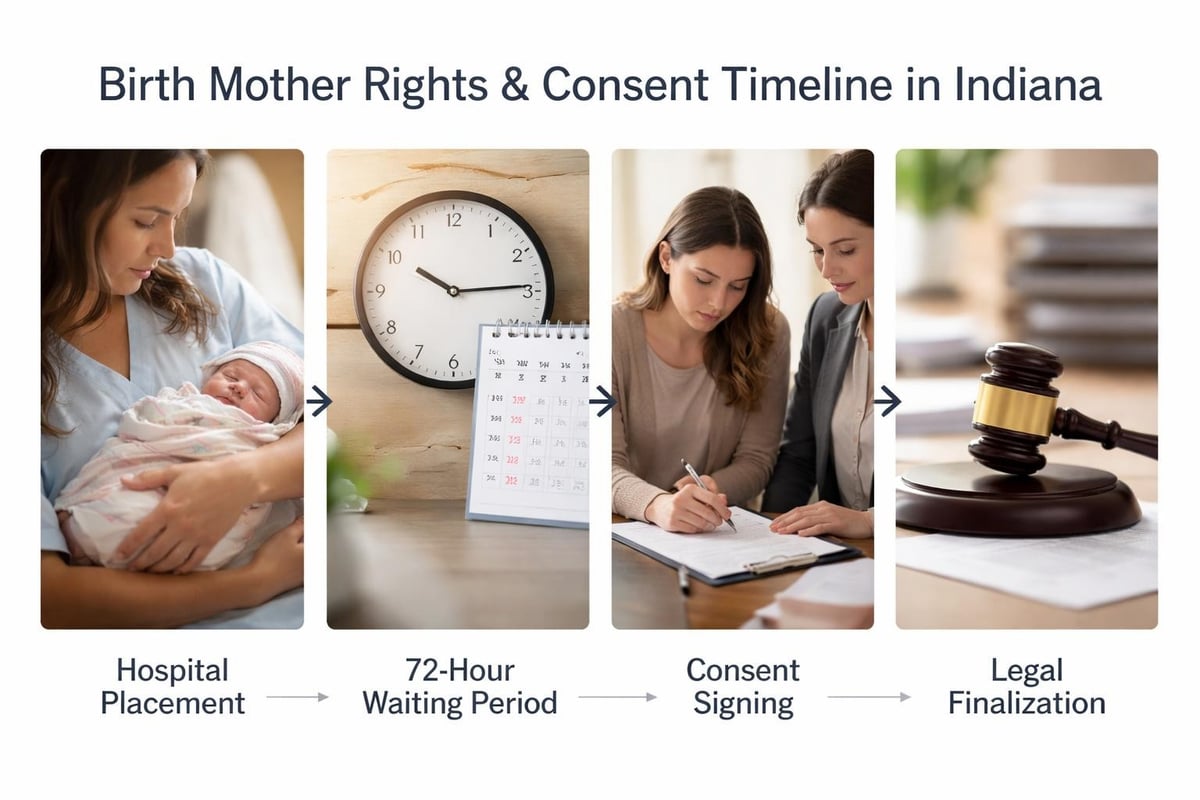
Indiana establishes clear timelines for birth parent consent that balance protection for all parties. Birth mothers cannot sign consent documents until at least 72 hours after the child's birth. This waiting period ensures decisions aren't made under immediate postpartum stress.
Once signed, consent becomes irrevocable in most circumstances, though Indiana law does provide limited windows for revocation under specific conditions. This legal framework offers adoptive families security while respecting birth mothers' rights during an emotionally intense period.
Matching Process and Communication Options
Modern infant adoption Indiana emphasizes relationship-building between adoptive families and birth parents. The matching process has evolved significantly from closed adoptions of previous generations.
Creating Your Adoptive Family Profile
Your family profile serves as your introduction to expectant mothers considering adoption. This document combines photos, personal narratives, and information about your home, values, and parenting philosophy.
Compelling profiles share authentic details:
- Your journey to adoption and why you're choosing this path
- Daily life routines and family traditions
- Extended family relationships and support systems
- Community involvement and interests
- Your vision for raising an adopted child
- Openness to ongoing contact with birth family
Professional guidance in creating this profile makes a substantial difference. Many families working with private adoption agencies receive expert assistance in presenting their story effectively while maintaining authenticity.
Open vs. Closed Adoption Arrangements
Indiana supports various contact arrangements, from fully open adoptions with regular visits to closed adoptions with no identifying information shared. Most infant adoption Indiana placements today involve some level of openness.
Benefits of open adoption include:
- Medical history access for the adopted child
- Answers to identity questions as children mature
- Reduced feelings of loss for birth mothers
- Genetic information for health decisions
- Reduced trauma through connection maintenance
Research consistently shows that age-appropriate openness benefits adopted children's development and identity formation. Many families discover that open adoption enriches their child's life in unexpected ways.
Navigating Indiana's Legal Adoption Process
Once you've been matched with an expectant mother, the legal aspects of infant adoption Indiana begin in earnest. Understanding these procedures reduces anxiety and helps you prepare appropriately.
From Placement to Finalization
The journey from bringing your baby home to legal finalization typically spans six months in Indiana. During this supervisory period, your agency conducts post-placement visits to ensure adjustment and wellbeing.
- Hospital placement or discharge directly to adoptive family
- Petition for adoption filed in Indiana court
- Supervisory period with required home visits
- Consent finalization from birth parents
- Court hearing before a judge
- Final decree granting legal adoption
- New birth certificate issued with adoptive parents' names
Each county in Indiana may have slightly different procedural requirements. Consulting the Indiana Administrative Code regulations provides detailed legal framework, though most families rely on their agency or attorney to navigate these technicalities.
Interstate Compact Considerations
If you're adopting across state lines, the Interstate Compact on the Placement of Children (ICPC) adds another layer of approval. This agreement between states ensures children aren't placed in unsafe situations when crossing state boundaries.
ICPC approval typically adds 1-2 weeks to your timeline. Your agency handles most paperwork, but understanding this requirement prevents surprises if you're matched with an expectant mother from outside Indiana.
Accessing Medical History and Background Information
Comprehensive medical information becomes critical for adoptive parents making healthcare decisions for their children. Indiana has established systems for obtaining medical history information for adopted children.
Indiana's Adoption Medical History Registry
The state maintains a voluntary registry where birth parents can submit medical information. This system allows ongoing updates as new health conditions emerge in the birth family, providing valuable information throughout the adopted person's lifetime.
Adoptive parents receive non-identifying medical and social history at placement. This typically includes:
- Birth parents' medical histories
- Genetic conditions or predispositions
- Pregnancy and birth circumstances
- Ethnic and cultural background
- Educational and career information
- Reasons for placement decision
Long-Term Information Access
As adopted children mature, they may seek additional information about their origins. Indiana law permits adopted adults to access information about birth parents through the state's Adoption History Program.
Understanding these future access rights helps adoptive parents prepare for conversations about birth family as their children develop questions about their identity and origins.

Financial Assistance and Tax Benefits
The financial commitment of infant adoption Indiana can seem overwhelming, but various support mechanisms exist to help families afford this journey.
Federal Adoption Tax Credit
The federal adoption tax credit for 2026 allows families to claim up to $15,950 in qualified adoption expenses per child. This credit applies to:
- Agency fees and application costs
- Court costs and attorney fees
- Travel expenses for adoption-related trips
- Document preparation and translation
- Required adoption studies and evaluations
This tax benefit phases out for higher-income families but provides substantial relief for most adopting households. Maintaining detailed records of all adoption-related expenses ensures you maximize this benefit.
Employer Adoption Benefits
Many employers now offer adoption assistance programs as part of their benefits packages. These programs may provide:
- Direct financial reimbursement ($5,000-$20,000 typical range)
- Paid adoption leave beyond standard parental leave
- Flexible work arrangements during the adoption process
- Employee assistance program counseling
Checking your employer's policy early in your journey helps you plan financially and take advantage of available resources.
Indiana-Specific Support Programs
Indiana offers adoption assistance through its guardianship assistance programs for children with special needs. While most infant adoption Indiana situations don't qualify for ongoing monthly subsidies, families should be aware these programs exist for children with documented medical or developmental needs.
Choosing the Right Adoption Professional
Your choice of adoption professional profoundly impacts your entire infant adoption Indiana experience. The relationship you build with your agency or attorney guides you through emotional highs and lows while ensuring legal compliance.
Licensed Agency vs. Attorney-Facilitated Adoption
Licensed agencies provide comprehensive services from initial consultation through post-adoption support. They offer:
- Pre-adoption education and preparation
- Home study completion
- Expectant mother counseling and services
- Family matching services
- Post-placement supervision
- Lifelong support and resources
Attorney-facilitated adoptions involve legal professionals connecting families with expectant mothers, often through networking or advertising. While potentially less expensive, this approach requires families to coordinate their own home study, counseling, and support services.
Most families pursuing infant adoption Indiana choose licensed adoption agencies for the comprehensive support and ethical oversight they provide.
Questions to Ask Potential Agencies
When evaluating adoption professionals, thorough vetting protects your interests and ensures ethical practices. Critical questions include:
About their experience:
- How many infant placements do you facilitate annually?
- What is your average wait time from home study completion to placement?
- What percentage of adoptions finalize successfully?
About their practices:
- How do you support expectant mothers throughout their decision-making?
- What post-placement counseling do you offer birth mothers?
- How do you handle disrupted adoptions or failed matches?
About costs and transparency:
- What is your total fee structure, including all potential costs?
- How are expectant mother expenses handled and documented?
- What happens to fees if an adoption doesn't proceed?
Understanding adoption services available in your area helps you compare options and select the professional that aligns with your values and needs.
Preparing Your Home and Heart
Beyond legal requirements and financial planning, successful infant adoption Indiana requires emotional preparation and practical readiness for welcoming a newborn.
Adoption Education and Training
Most agencies require prospective parents to complete adoption-specific training before placement. These sessions cover:
- Understanding trauma and attachment in adopted children
- Talking with children about adoption throughout development
- Managing relationships with birth families
- Addressing identity and belonging questions
- Transracial adoption considerations (when applicable)
- Grief and loss in adoption
This education equips you with tools and perspectives that general parenting classes don't address. The Indiana adoption resources library offers additional materials for ongoing learning.
Building Your Support Network
Adoption adds unique dimensions to parenting that benefit from connection with others who share similar experiences. Before placement, consider:
- Joining adoption-focused parenting groups
- Connecting with other adoptive families in your community
- Identifying adoption-competent therapists and pediatricians
- Establishing relationships with cultural communities if adopting transracially
- Educating extended family about adoption language and best practices
Your support system should include:
- Other adoptive families who understand your journey
- Adoption-competent mental health professionals
- Pediatricians experienced with adopted children
- Legal advisors familiar with adoption law
- Faith community members (if applicable to your family)
Special Circumstances in Infant Adoption Indiana
Not all infant adoptions follow the straightforward path of a planned placement with months of preparation. Understanding special circumstances helps you remain flexible and responsive to opportunities.
Hospital or Last-Minute Placements
Sometimes expectant mothers don't make firm adoption decisions until labor or shortly before birth. These last-minute hospital adoptions require families to be emotionally and practically prepared for rapid placement.
Preparing for potential hospital placements:
- Keep hospital bags packed with newborn essentials
- Maintain flexible work arrangements that allow sudden leave
- Have car seat professionally installed and ready
- Prepare your home's nursery in advance
- Brief extended family on standby protocols
While waiting can be challenging, many families find that rapid placements bring unexpected blessings and reduce the anxiety of prolonged waiting periods.
Stepparent and Relative Adoptions
Not all infant adoption Indiana cases involve unrelated parties. Stepparent adoptions occur when a spouse wishes to legally adopt their partner's biological child, and relative adoptions happen when family members step forward to provide permanent homes.
These adoption types often involve simplified processes with reduced waiting periods and lower costs. However, they still require home studies, background checks, and court proceedings to ensure children's best interests remain paramount.
Managing the Emotional Journey
Infant adoption Indiana involves emotional complexity for everyone involved. Expectant mothers face life-altering decisions, adoptive families navigate hope and uncertainty, and children eventually process their own adoption stories.
Coping with Waiting Periods
The time between home study approval and placement varies dramatically. Some families wait weeks; others wait years. Managing this uncertainty requires intentional strategies:
- Set realistic expectations about timelines
- Stay engaged in your life rather than putting everything on hold
- Connect regularly with your adoption professional for updates
- Process disappointment when potential matches don't proceed
- Celebrate milestones in the process rather than fixating solely on placement
Understanding that each family's journey unfolds uniquely helps reduce comparison and competition with other adoptive families.
Handling Failed Matches and Disruptions
Not every expectant mother who considers adoption ultimately places her child. Failed matches happen when birth mothers decide to parent after initially choosing adoption. While heartbreaking for waiting families, this represents the ethical adoption process working correctly.
If you experience a disrupted match:
- Allow yourself to grieve the loss of the expected placement
- Seek support from your agency counselor or therapist
- Remember that the birth mother's right to parent her child is paramount
- Recognize that the right match will come at the right time
- Don't rush back into the matching pool before processing your emotions
These experiences, while painful, remind adoptive families that infant adoption Indiana must always center on what's best for children and respect birth parents' decision-making authority.
Post-Placement Adjustment and Support
Bringing your baby home marks the beginning of your adoption journey, not the conclusion. The months following placement involve bonding, adjustment, and ongoing legal processes.
The First Six Months
During the supervisory period before finalization, your agency conducts regular home visits to ensure your family's adjustment proceeds smoothly. These visits typically occur monthly and assess:
- Infant health and development
- Parent-child bonding and attachment
- Family adjustment to new routines
- Any challenges or concerns requiring support
- Compliance with medical care and documentation
Rather than viewing these as inspections, consider them opportunities to receive professional support during the demanding newborn phase. Most agencies want to help you succeed and offer resources when challenges arise.
Finalization Day and Beyond
The adoption finalization hearing represents the legal conclusion of your infant adoption Indiana journey. This court appearance before a judge officially makes your child legally yours in every sense.
Many families treat finalization as a celebration, inviting extended family and friends to witness this momentous occasion. Judges often take photos and offer congratulations, recognizing the significance of this milestone.
After finalization, you receive a new birth certificate listing you as parents. Your agency relationship often continues through post-adoption support services, educational resources, and community connections.
Resources for Your Infant Adoption Indiana Journey
Successful navigation of infant adoption Indiana requires accessing reliable information and support throughout your journey. Multiple resources exist to guide you:
State-level resources provide official information about requirements and procedures:
- Indiana adoption program websites offering comprehensive guidance
- State health department for medical history registry information
- County court systems handling adoption petitions
Legal resources ensure compliance with all regulations:
- Licensed adoption attorneys specializing in family law
- Legal process overview guides explaining Indiana requirements
- State administrative code resources detailing regulatory framework
Support organizations connect you with community:
- Adoptive family support groups
- Birth parent support networks
- Adoption competent therapists
- Cultural and identity resources for transracial adoptions
Tapestry Adoption provides many of these resources directly to families throughout their journey, ensuring you're never navigating this path alone.
Infant adoption Indiana in 2026 offers multiple pathways for building your family while supporting expectant mothers through life's most difficult decisions. With proper preparation, ethical practices, and comprehensive support, this journey leads to the profound joy of welcoming your child home. Whether you're just beginning to explore adoption or you're ready to start your home study, Tapestry Adoption provides the counseling, financial guidance, legal support, and compassionate care that makes all the difference for both expectant mothers and hopeful families throughout Indiana.