


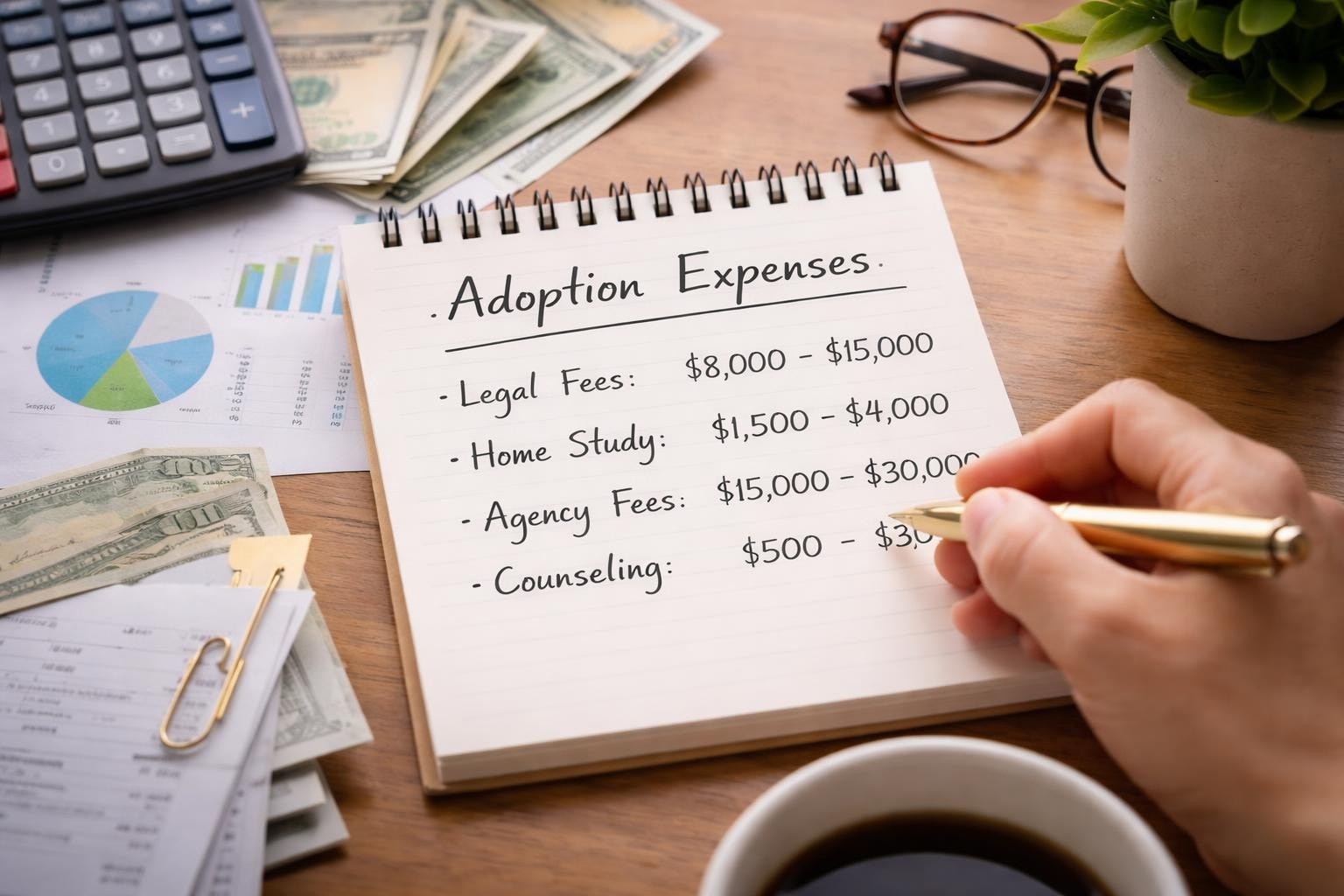
Adoption Process Cost: Complete 2026 Financial Guide
Understanding the financial commitment of building your family through adoption is essential for every prospective parent. The adoption process cost varies dramatically based on the type of adoption you pursue, your location, and the specific services you need. While the journey to parenthood through adoption is invaluable, being prepared for the financial investment helps you plan effectively and access the right resources. This comprehensive guide breaks down every expense category, reveals hidden costs you might not anticipate, and shows you exactly where your money goes throughout your adoption journey.
Breaking Down the Adoption Process Cost by Type
Different adoption paths come with vastly different price tags, and knowing which option aligns with your budget is the first step toward successful planning.
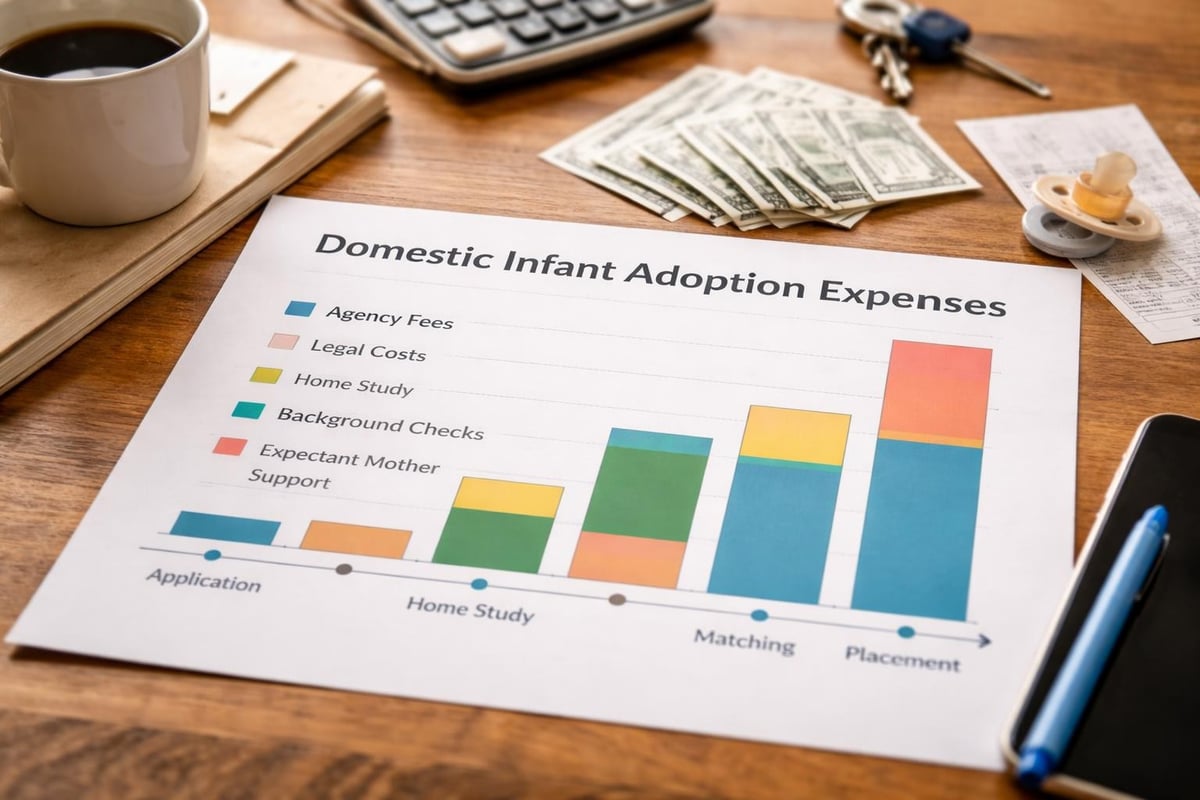
Domestic Infant Adoption Expenses
Domestic infant adoption typically represents one of the higher-cost adoption options, with expenses ranging from $30,000 to $60,000 or more. These costs reflect the comprehensive services provided throughout the journey.
Your investment includes:
- Agency fees covering professional counseling and support services
- Legal representation for both adoptive families and expectant mothers
- Home study preparation and approval (typically $2,000-$5,000)
- Background checks and safety clearances
- Birth mother expenses as permitted by state law
- Post-placement supervision and finalization services
The variation in adoption process cost for domestic infant adoption stems from several factors. Geographic location plays a significant role, with urban areas generally commanding higher fees than rural communities. Agency reputation, experience level, and the scope of services provided also impact the total investment.
Foster Care and Special Needs Adoption
Foster care adoption presents the most affordable path to parenthood, often costing little to nothing for families. Many states cover the majority of expenses and even provide ongoing subsidies for children with special needs.
| Expense Category | Typical Cost | Often Covered By |
|---|---|---|
| Home Study | $0-$2,500 | State Agency |
| Legal Fees | $0-$2,000 | State Agency |
| Background Checks | $0-$500 | State Agency |
| Training Programs | $0 | State Agency |
| Post-Adoption Support | $0 | Ongoing Subsidies |
Working with your state's foster care system dramatically reduces the adoption process cost while providing crucial support services. Families pursuing adoption services should explore all available state resources and subsidies before assuming they cannot afford to adopt.
Stepparent and Relative Adoption Costs
Stepparent adoptions represent a more streamlined process with significantly lower costs, typically ranging from $1,500 to $5,000. These adoptions simplify the legal requirements while still ensuring proper evaluation and protection of the child's best interests.
The reduced adoption process cost reflects fewer required services: simplified home studies, abbreviated background checks, and more straightforward legal proceedings. However, families still need qualified legal representation to navigate consent requirements and termination of parental rights when necessary.
Hidden Costs That Impact Your Adoption Budget
Beyond the obvious fees quoted by agencies and attorneys, several unexpected expenses can significantly increase your total adoption process cost.
Travel and Accommodation Expenses
Interstate adoptions often require multiple trips to the child's birth state. These expenses add up quickly and catch many families off guard.
- Multiple visits: Initial meetings, birth, and finalization hearings
- Extended stays: ICPC waiting periods can require 1-2 week stays
- Last-minute flights: Birth notifications require immediate travel
- Lodging costs: Extended-stay hotels for compliance periods
- Meal expenses: Eating out during extended travel periods
Budget at least $3,000-$8,000 for travel-related adoption process cost increases, particularly for interstate placements. Some agencies provide temporary housing, which can reduce these expenses considerably.
Document Preparation and Processing Fees
The paperwork required for adoption approval involves numerous fees that many families overlook during initial budgeting.
Document costs include:
- Birth certificates and marriage licenses ($20-$50 each)
- Notarization fees for multiple documents ($5-$15 per document)
- Apostille services for international recognition ($20-$50 per document)
- Medical examinations and health clearances ($100-$500 per family member)
- Fingerprinting and FBI background checks ($50-$150 per adult)
- Professional reference letters and verifications
These seemingly small expenses collectively add $500-$2,000 to your adoption process cost. Gathering documents early and understanding exactly what you need prevents last-minute rush fees.
Post-Placement and Finalization Expenses
Your financial commitment continues after placement until finalization is complete. Post-placement supervision typically costs $1,000-$3,000 and includes required home visits, progress reports, and counseling support.
Court finalization fees, while relatively modest at $150-$500, may also include additional legal representation costs. Some families invest in professional photography or celebration expenses to commemorate finalization day, though these personal choices vary widely.
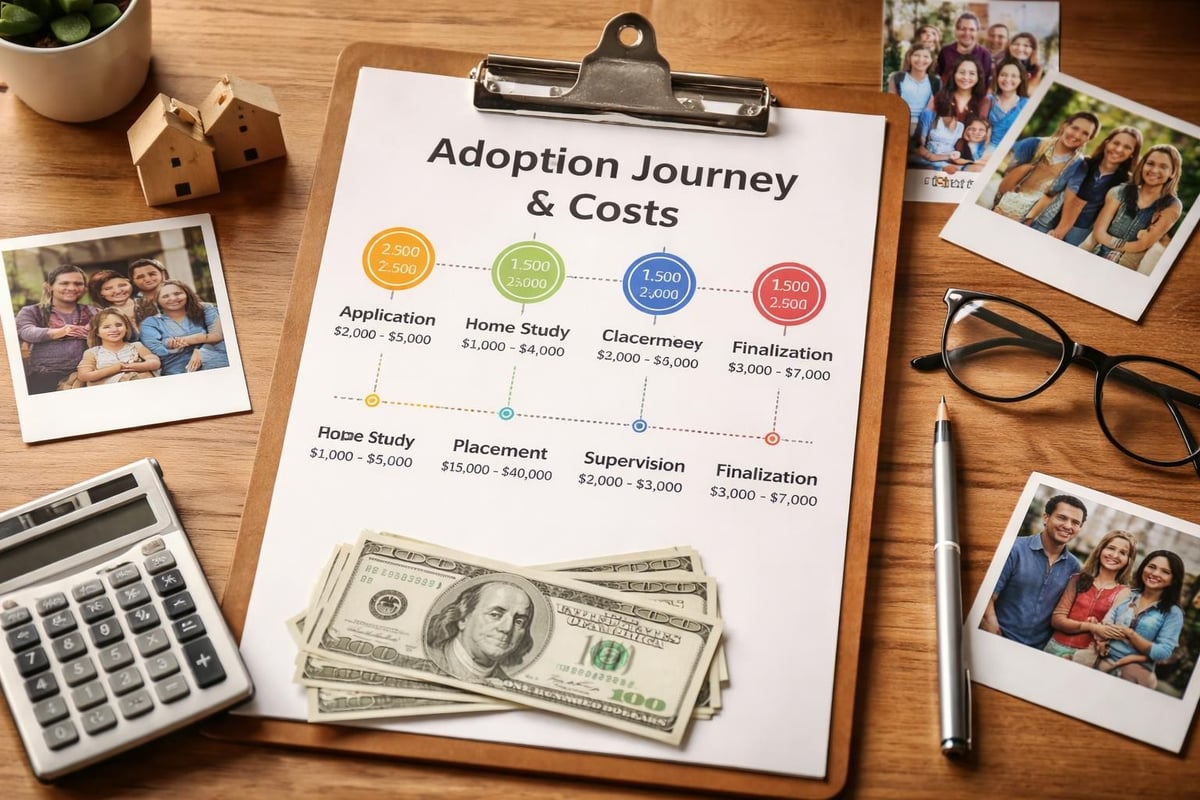
Financial Assistance and Cost-Offset Strategies
Understanding the full adoption process cost is only half the equation. Knowing how to access financial assistance makes adoption achievable for many more families.
Federal Adoption Tax Credit for 2026
The federal adoption tax credit significantly reduces the net adoption process cost for qualifying families. According to current tax regulations, families can claim up to $16,810 per child for qualified adoption expenses in 2026.
Qualifying expenses include:
- Agency and legal professional fees
- Court costs and attorney expenses
- Travel and lodging while away from home
- Required document preparation fees
- Home study and background check costs
This credit is non-refundable but can be carried forward for up to five years, making it valuable even for families with limited tax liability. Income phase-outs begin at $252,150 of modified adjusted gross income, so higher-earning families may receive reduced benefits.
Employer Adoption Assistance Programs
Many employers now offer adoption benefits as part of their family-building support programs. These benefits can provide $5,000-$15,000 in direct reimbursement for qualified adoption expenses.
Contact your human resources department early in your adoption journey to understand your benefits. Some programs require pre-approval or specific documentation, and knowing these requirements prevents missed opportunities. The combination of employer benefits and the federal tax credit can cover 40-60% of your total adoption process cost.
Grants and Fundraising Options
Numerous nonprofit organizations provide adoption grants to qualifying families. Understanding available financial resources helps you identify opportunities specific to your situation.
| Grant Type | Typical Amount | Best For |
|---|---|---|
| General Adoption Grants | $1,000-$10,000 | All domestic adoptions |
| Faith-Based Grants | $2,000-$8,000 | Religious families |
| Special Needs Grants | $5,000-$15,000 | Children with special needs |
| Military Family Grants | $3,000-$10,000 | Active duty/veteran families |
| Minority Family Grants | $2,000-$7,000 | Underrepresented adopters |
Most grants require applications 6-12 months before your anticipated adoption, so early planning is essential. Many families also successfully fundraise through online platforms, community events, and family contributions to offset their adoption process cost.
State-Specific Cost Variations and Requirements
Where you live dramatically impacts your total adoption process cost. State regulations, average professional fees, and local market conditions create significant geographic variations.
Regional Cost Differences
Adoption costs vary considerably by state, with families in the Northeast and West Coast typically paying 20-40% more than those in the Midwest or South.
High-cost regions (averaging $45,000-$65,000):
- California, New York, Massachusetts
- Major metropolitan areas nationwide
- States with complex regulatory requirements
Moderate-cost regions (averaging $30,000-$45,000):
- Texas, Florida, Illinois
- Mid-sized cities and suburban areas
- States with streamlined processes
Lower-cost regions (averaging $25,000-$40,000):
- Indiana, Tennessee, Oklahoma
- Rural and small-town communities
- States with competitive agency markets
Understanding Your State's Legal Requirements
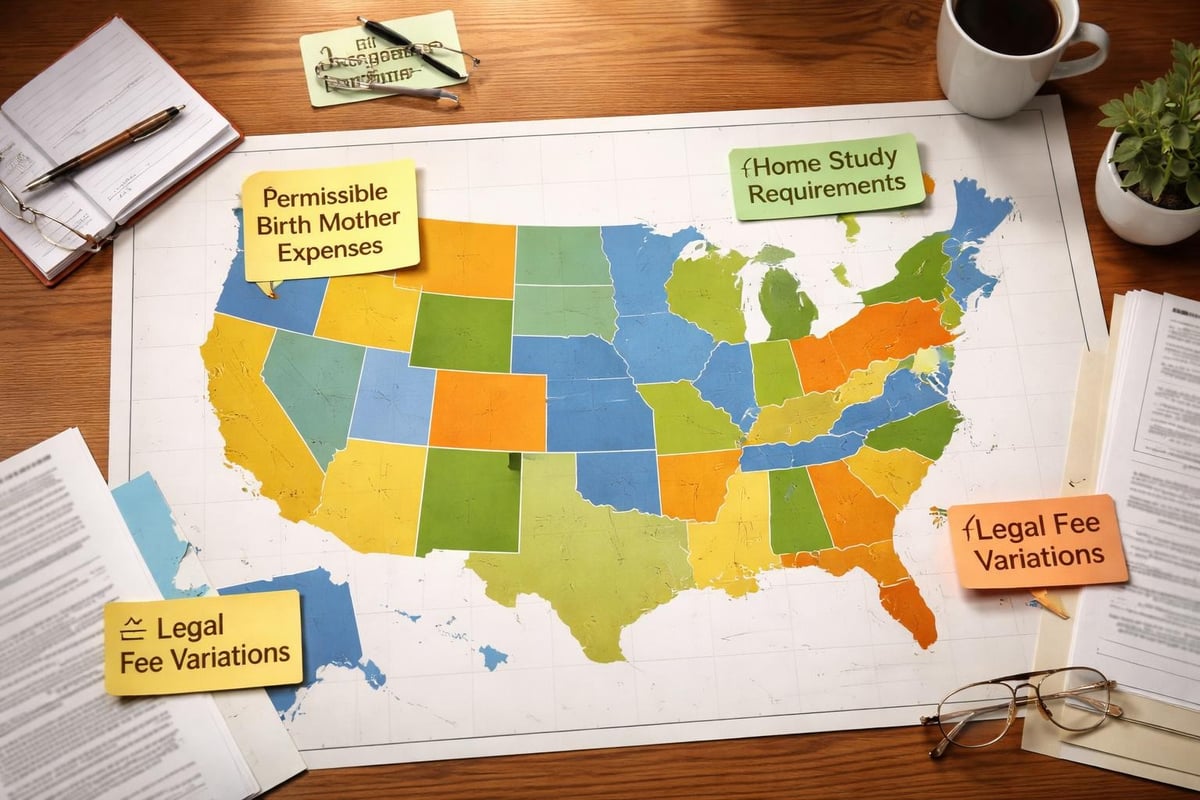
Each state maintains unique regulations affecting the adoption process cost through varying requirements and restrictions. For example, Florida adoption costs differ from Nevada adoption expenses based on different home study requirements, background check protocols, and legal filing fees.
States also differ in what expenses adoptive families can legally pay on behalf of expectant mothers. Some states permit comprehensive living expenses, medical care, and counseling services, while others restrict payments to medical and legal fees only. Understanding your state's regulations prevents budget surprises and ensures legal compliance.
Planning Your Adoption Budget Successfully
Creating a realistic budget requires understanding both expected costs and building in cushions for unexpected expenses that inevitably arise.
Building a Comprehensive Budget
Start by requesting detailed fee schedules from multiple agencies and attorneys in your area. Compare not just total costs but what specific services each fee includes. Some agencies bundle services while others charge separately for each component, affecting your total adoption process cost significantly.
Your budget should include:
- Application and profile preparation ($500-$3,000)
- Home study and background checks ($2,000-$5,000)
- Agency or attorney fees ($15,000-$35,000)
- Birth mother expenses ($5,000-$15,000 where permitted)
- Legal representation and court costs ($3,000-$8,000)
- Travel and accommodation ($2,000-$8,000)
- Post-placement services ($1,000-$3,000)
- Contingency fund (10-15% of total budget)
That contingency fund is crucial. Adoption timelines often extend longer than anticipated, birth mother situations change, or unexpected legal complications arise. Having financial flexibility prevents stress during an already emotional journey.
Timing Your Expenses Strategically
Unlike purchasing a home where most costs occur at closing, the adoption process cost distributes over 12-24 months or longer. This extended timeline actually benefits careful budgeters who can save and access resources gradually.
Typical payment timeline:
- Months 1-3: Application, background checks, initial fees ($5,000-$10,000)
- Months 4-6: Home study completion and approval ($2,000-$5,000)
- Months 7-12: Waiting period, profile marketing ($0-$3,000)
- Match and placement: Birth mother expenses, travel ($10,000-$25,000)
- Post-placement period: Supervision, finalization ($2,000-$5,000)
Understanding this timeline helps you coordinate employer benefits, tax advantages, and personal savings effectively. Many families use 0% introductory APR credit cards strategically for specific expenses, knowing they can pay off balances when receiving employer reimbursements or tax credits.
Comparing Agency vs. Private Adoption Costs
Choosing between agency-facilitated adoption and private attorney-led adoption significantly impacts both your adoption process cost and the services you receive.
Full-Service Agency Benefits
Working with experienced adoption agencies like Tapestry Adoption typically costs more upfront but provides comprehensive support that reduces risks and stress. These agencies handle counseling for expectant mothers, legal coordination, home study services, and post-placement support as integrated services.
The higher adoption process cost reflects:
- Professional counseling for all parties throughout the journey
- 24/7 availability for birth notifications and crisis support
- Experienced matching based on years of successful placements
- Legal expertise navigating complex interstate regulations
- Post-placement care ensuring smooth transitions and finalization
Agencies also typically offer more predictable costs with fewer surprise expenses, as their fee structures bundle most required services together.
Private Attorney Adoption Considerations
Private attorney adoptions may appear less expensive initially, with legal fees ranging from $8,000-$15,000. However, families must separately arrange counseling services, home studies, background checks, and expectant mother support, which collectively can exceed agency bundled pricing.
| Service Component | Agency Model | Private Attorney Model |
|---|---|---|
| Legal Representation | Included | $8,000-$15,000 |
| Expectant Mother Counseling | Included | $2,000-$5,000 |
| Home Study | Included | $2,000-$5,000 |
| Matching Services | Included | Self-directed |
| Post-Placement Support | Included | $1,000-$3,000 |
| Crisis Management | 24/7 coverage | Limited availability |
Private adoptions work well for families with existing connections to expectant mothers or those willing to invest significant time in self-directed matching. However, understanding the adoption process thoroughly is essential before choosing this path.
Managing Birth Mother Expenses Within Legal Limits
One of the most variable components of adoption process cost involves expenses paid on behalf of expectant mothers. These expenses must comply strictly with state law to avoid any appearance of baby buying or coercion.
Legally Permissible Expenses
Most states permit adoptive families to pay reasonable and necessary expenses related to the pregnancy and adoption. These typically include:
- Medical costs: Prenatal care, delivery, and postpartum recovery
- Legal fees: Birth mother's independent legal representation
- Counseling services: Professional support throughout the decision process
- Living expenses: Rent, utilities, groceries during pregnancy
- Maternity clothing: Reasonable clothing needs
- Transportation: Travel to medical appointments and legal meetings
Tapestry Adoption provides guidance on finances and pregnancy-related expenses to ensure all payments comply with Indiana law and ethical standards. This protection benefits both adoptive families and expectant mothers by creating transparent, legal financial arrangements.
Setting Reasonable Expense Budgets
Birth mother expenses typically range from $5,000-$20,000 depending on the expectant mother's circumstances, state regulations, and the length of support needed. Creating clear budgets and documentation protects everyone involved.
Work with your agency or attorney to establish:
- Pre-approved expense categories with specific limits
- Documentation requirements for all payments
- Payment schedules tied to verified needs
- Contingency plans if circumstances change
- Final accounting for tax and legal purposes
Remember that these expenses are investments in ensuring expectant mothers receive proper care and support while making their adoption decisions. Adequate support leads to more confident decisions and better outcomes for everyone involved.
Maximizing Your Adoption Investment
While adoption process cost represents a significant financial commitment, strategic planning ensures your investment creates the family you've dreamed of building.
Questions to Ask Before Committing
Before signing contracts or paying substantial fees, ask agencies and attorneys specific questions about their fee structures:
- What exactly does your quoted fee include? Get itemized breakdowns.
- What additional costs should we anticipate? Understand potential variables.
- How do you handle failed matches? Know if fees transfer to new matches.
- What refund policies exist? Understand protections if circumstances change.
- When are payments due? Plan cash flow around payment schedules.
- What payment plans do you offer? Explore financing options available.
Agencies with transparent pricing and clear communication about the adoption process cost demonstrate the professionalism and ethical standards you want in an adoption partner.
Avoiding Costly Mistakes
Common financial mistakes increase adoption process cost unnecessarily and create stress during your journey:
Don't rush into contracts without comparing multiple agencies or attorneys. Spending extra time on research saves thousands of dollars and ensures better service.
Don't underestimate expenses by using minimum cost estimates. Build budgets around realistic mid-range costs with contingency funds.
Don't skip professional guidance to save money. Experienced agencies like Tapestry Adoption in Indiana prevent expensive mistakes that DIY approaches often create.
Don't ignore tax benefits by failing to track qualified expenses. Detailed documentation maximizes your federal tax credit and employer reimbursements.
Don't commit to expenses you cannot afford. Ethical agencies work within your budget rather than pressuring families beyond their means.
Long-Term Financial Planning for Adoptive Families
Your adoption process cost represents just the beginning of your financial journey as parents. Planning for ongoing expenses ensures your family thrives long after finalization.
Immediate Post-Adoption Expenses
New parents often overlook immediate costs following placement that extend beyond the adoption process cost itself:
- Nursery setup and baby gear ($2,000-$5,000)
- Initial clothing and supplies ($500-$1,500)
- Pediatric care and vaccinations ($500-$2,000 first year)
- Childcare arrangements ($500-$2,000 monthly)
- Health insurance additions ($100-$500 monthly)
Planning for these expenses alongside your adoption budget prevents financial strain during those crucial first months home with your child.
Building Your Family's Financial Future
Consider how adoption affects your long-term financial planning beyond immediate costs:
- Update estate planning documents naming guardians and beneficiaries
- Review life insurance ensuring adequate coverage for your growing family
- Adjust savings goals for college education and future needs
- Revisit budgets reflecting new family expenses and priorities
- Plan for siblings if you hope to adopt again
Many families successfully adopt multiple children by applying lessons learned from their first experience, refinancing resources wisely, and maximizing available assistance programs for subsequent adoptions.
Understanding adoption process cost empowers you to plan effectively, access available resources, and move confidently toward building your family. While the financial investment is substantial, countless families successfully navigate these expenses through careful budgeting, strategic use of assistance programs, and partnership with experienced professionals. Whether you're an expectant mother seeking counseling and support or a family pursuing home study services, Tapestry Adoption provides transparent guidance on costs, comprehensive service packages, and compassionate support throughout your adoption journey.